Clean Energy in the United States: Reasons for Optimism for Patient People
Those of us in the clean energy-industrial complex had a great run during the past four years. China doubled down on renewables, electric vehicles, and other clean technologies. In the United States, the Biden administration’s Inflation Reduction Act (IRA) gave domestic clean energy a big push.
In contrast, 2025 has been a tough year. While China continues to push forward with authoritarian decisiveness, federal policy puts clean energy subsidies at risk. The House of Representatives put forward a One Big Beautiful Bill Act that would remove almost all of the clean energy support. The Senate version phases out clean energy tax credits slightly more gradually but still amounts to a clear change of direction.
President Trump is also aggressively dismantling environmental regulations that would have forced older, inefficient coal-fired power plant to retire promptly. At this time, the Trump administration is attempting to repeal the Environmental Protection Agency’s limits on pollution from power plants.
Despite these setbacks, I believe that the outlook for clean energy is still very good in the United States. In what follows, I outline reasons for optimism for those with patience.
1. Electricity demand is growing fast
At the most fundamental level, American electricity demand is again growing fast. Between artificial intelligence, other data centers, electric vehicles, heat pumps, and other electric technologies, the need for more power generation is greater than in decades.
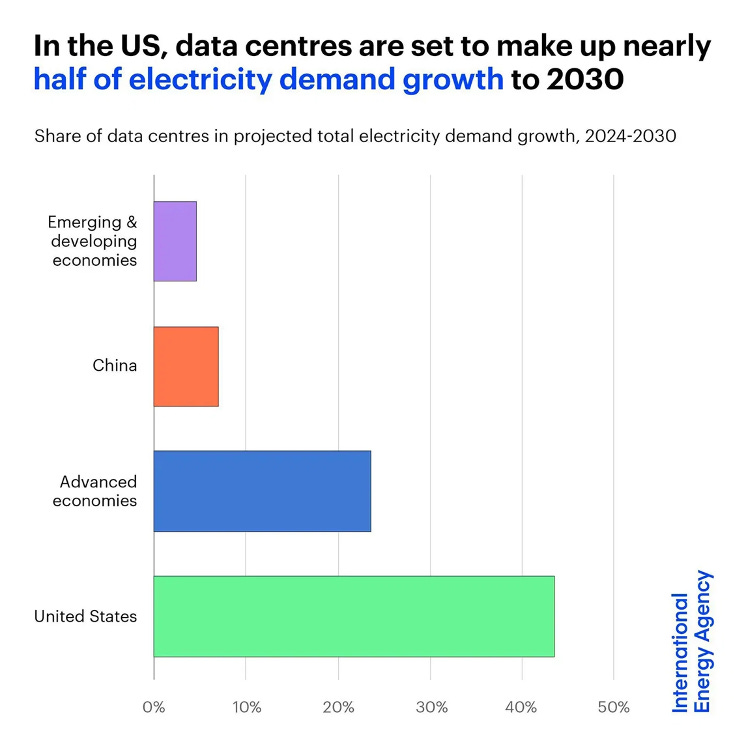
According to a December 2024 report by Grid Strategies, peak load-growth forecasts over five years have increased fivefold between 2022-2024, from 23 gigawatts to 127 gigawatts. As shown in the figure below, the International Energy Agency estimates that over 40% of the electricity demand growth in the United States till 2030 will come from data centers.
This is critical because clean energy is far more competitive against new fossil fuel capacity than in replacing existing fossil fuel capacity. Recent estimates of clean energy costs show that even without federal subsidies, a combination of clean energy and battery storage is close to competitive with new natural gas generation (though these measures do not consider the full system cost of adding variable renewables).
In this situation, opportunities to deploy clean energy abound. Because we need more power generation than ever before, clean energy will prove competitive in many an instance.
Across the country, there will be many opportunities to deploy solar or wind power with battery storage. Consider Texas. By the end of
...This excerpt is provided for preview purposes. Full article content is available on the original publication.