😀😱 Of 'Pluribus' and progress
Deep Dives
Explore related topics with these Wikipedia articles, rewritten for enjoyable reading:
-
Pluribus (TV series)
15 min read
Linked in the article (12 min read)
-
Pirate Lady
10 min read
Linked in the article (5 min read)
-
Guggenheim Museum Bilbao
15 min read
Linked in the article (12 min read)
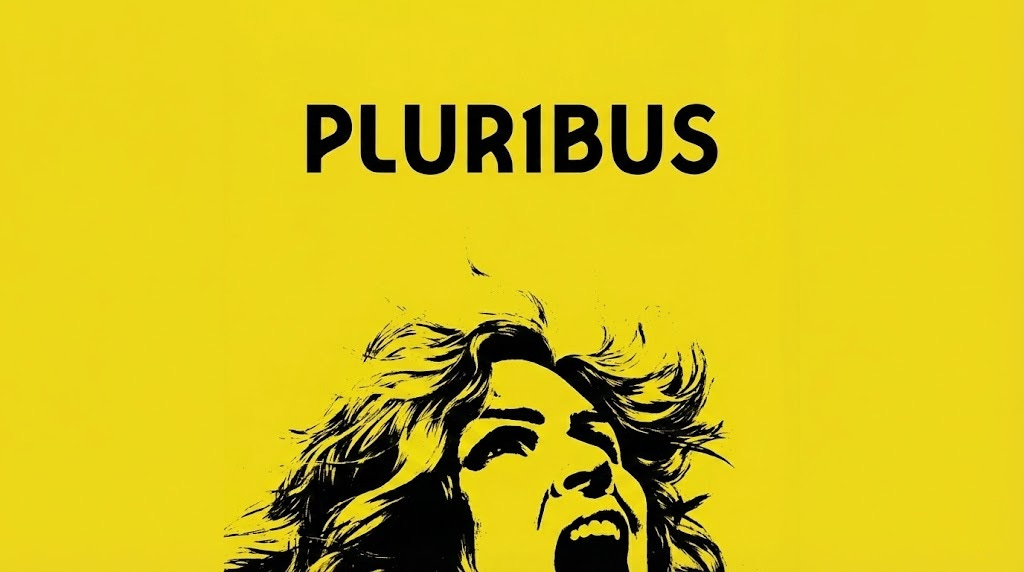
My fellow pro-growth/progress/abundance Up Wingers in America and around the world:
Is Pluribus, the well-reviewed, much-watched series created by Vince Gilligan (Breaking Bad, Better Call Saul) for Apple TV, an Up Wing or Down Wing show?
Or is it perhaps orthogonal to the entire concept?
Hard to really know. Six episodes in and it’s still up for grabs as to what exactly Gilligan is trying to say with his tale of romance-fantasy novelist Carol Sturka (Rhea Seehorn) — a miserable misanthrope and one of the few people left uninfected after an alien virus sweeps across humanity, absorbing nearly everyone into an apparently blissful hive mind.
Is it commentary on social media, artificial intelligence, or late capitalism? A parable about Trump?
Round up the usual suspects — all of which, in this case, are probably innocent.
I haven’t read a dozen Gilligan interviews or anything. And I’m not speculating about where the show is heading — though, to be clear, I have thoughts.
A world of stultifying sameness
Caveat: I’m reading the show on its own terms, as I interpret them. And the scene that crystallized my thematic take occurs in the second episode, “Pirate Lady.” Carol and a handful of other uninfected survivors gather at the Bilbao airport in Spain. There, someone mentions popping over to the Guggenheim for a look around. Yeah, it’s the apocalypse, but that doesn’t mean you can’t take in the sights, you know? Carol, who wants to mount a resistance movement, ASAP, takes a hard pass.1
That brief moment has stuck with me. These end-of-the-world-as-we-know-it leftovers — other than Carol — still want to stroll through galleries full of the strangeness that radiates from the human condition. Yet everything around them suggests they now live in a uni-mind world where no one will ever again make art — especially after the Happy Shiny Others eventually figure out how to forcibly bring the immune into the collective. (It’s their biological imperative.)
In that instant, IMHO, Pluribus quietly poses its most unsettling questions: What does a society lose when the conditions for creativity collapse? And what are those conditions exactly?
Death by status quo
At minimum, creativity — in art, in science, in entrepreneurship — requires individuality (a private interior space where ideas can form without a vote), friction (the freedom to upset norms, to be “wrong” or
...This excerpt is provided for preview purposes. Full article content is available on the original publication.