Interpreting the Carney Doctrine
This post is unpaywalled. If you enjoy it and have the means, please consider becoming a paid subscriber to support my work.
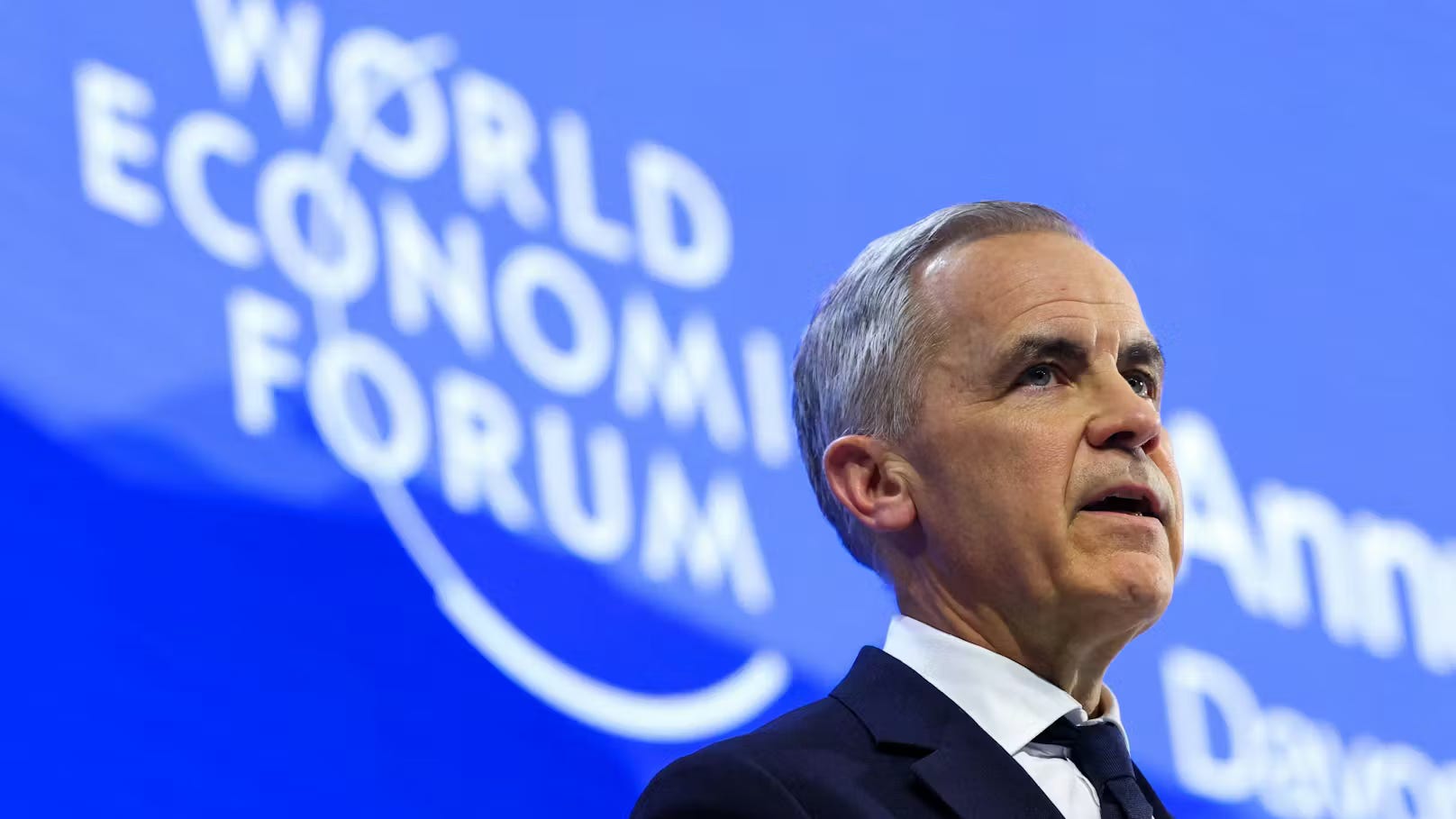
Mark Carney’s speech at the World Economic Forum in Davos this week has already generated a flurry of media commentary, the vast majority of which — at least from what I’ve seen — has ranged from positive to gushing. Given the speech’s content, this deluge is unsurprising and, to some extent, it’s also perfectly justified. For as long as most of us have been alive, the default register at international gatherings like the WEF has been one of vaporous meliorism. Much is signified but very little is said.
Carney’s address, in contrast, said a great deal and traded the standard bafflegab of liberal geopolitics for a language of candour and blunt realism. Its substance aside, I think this is one reason the speech has earned such a warm reception. Carney, in contrast to both the raw power rhetoric of Donald Trump and the limp triangulation European elites have offered in response to it, communicated in a tenor of grandness and statesmanship; one that suggests states still possess agency, and that international affairs can be something other than a clash of competing vanities.
In what was certainly the most striking (and, in my own circles, the most talked about) part of the speech, he also saw fit to include a critique of what the now-defunct liberal consensus actually meant in practice:
We knew the story of the international rules-based order was partially false. That the strongest would exempt themselves when convenient. That trade rules were enforced asymmetrically. And we knew that international law applied with varying rigour depending on the identity of the accused or the victim. This fiction was useful. And American hegemony, in particular, helped provide public goods: open sea lanes, a stable financial system, collective security and support for frameworks for resolving disputes. So, we placed the sign in the window. We participated in the rituals. And we largely avoided calling out the gaps between rhetoric and reality.
These are, to say the least, not the sentiments one generally hears uttered from a lectern in Davos. And, when it comes to the speech’s reception, there is clearly something of an “only Nixon could go to China” logic at work. That the messenger here is Mark Carney — an ur figure of liberal globalism and finance capital
...This excerpt is provided for preview purposes. Full article content is available on the original publication.