Ideology Isn't About Ideas (2)
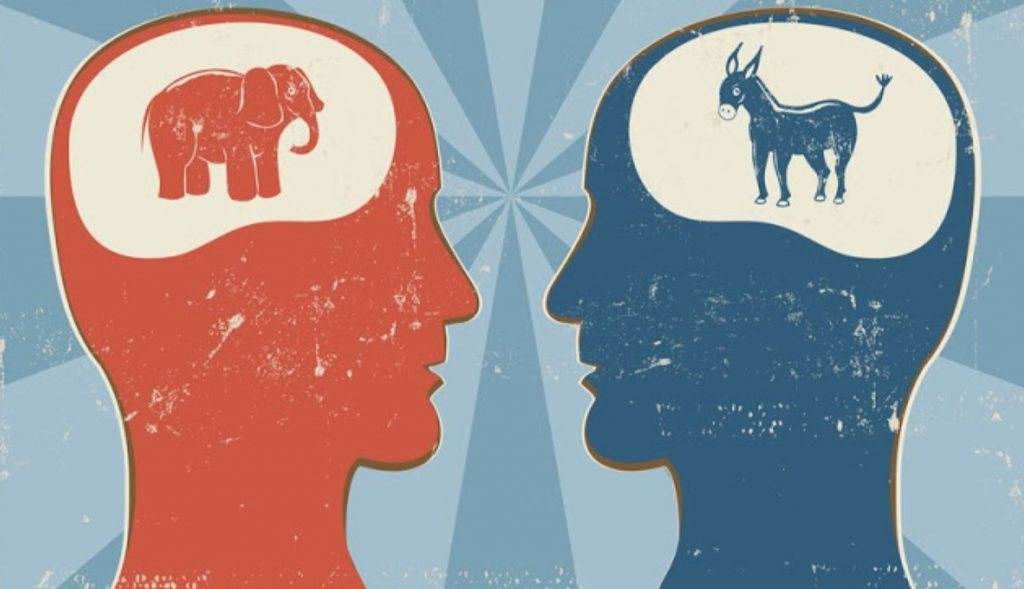
When I first encountered ideologies and religions, I took them at face value, as attempts to understand the world. I assumed that people sincerely believed them and would use them to infer further consequences—or, in the event that they couldn’t accept a consequence, would admit that they were wrong and change their ideology. I tried to evaluate ideologies based on evidence and correspondence with reality, which I assumed was what one was supposed to do.
Over a period of years, I realized that, for the rest of the world, it wasn’t really about ideas and understanding the world.
1. How Can Ideology Not Be About Ideas?
Wait, an ideology is a certain kind of system of ideas. How could it “not be about ideas”? What I mean is that
a. The reasons people choose an ideology are extraneous to the intellectual characteristics of the ideology (the arguments, the evidence, the explanatory virtues) and more to do with arbitrary extrinsic characteristics, like who else holds that ideology, or what vague emotional associations it carries.
b. Most people don’t take the contents of their ideology all that seriously—they don’t actually use it to understand the real world. It’s mostly something to say, and to berate other people for not saying. They use ideological debate as a proxy for tribal contests. They don’t support group G because of idea I; they support I because it’s the idea associated with G.
I observed in an earlier post (“Do Religious People Believe Religion?”), that people who profess some religion often don’t appear to take the major tenets of that religion seriously. Many self-described Christians fail to attend church, or read the Bible, or follow its teachings. Few of them really turn the other cheek, nor do they seem to eagerly anticipate death (as one should if one expects to go to heaven).
Many people are like that about politics too. E.g., people who said the Covid lockdowns were essential, but then they went out to big gatherings. Or people who say the elections are rigged, but they still go to vote.
2. What Is It About?
2.1. Personality
Ideology is about a lot of things, but one of the big ones is: personality. Adopting an ideology is a form of self-expression.
There are psychological studies that measure the correlation between political ideology and personality traits. Especially the “big 5” personality
...This excerpt is provided for preview purposes. Full article content is available on the original publication.