The Moratorium That Was None – Russia's Final INF-Range Missile Scam
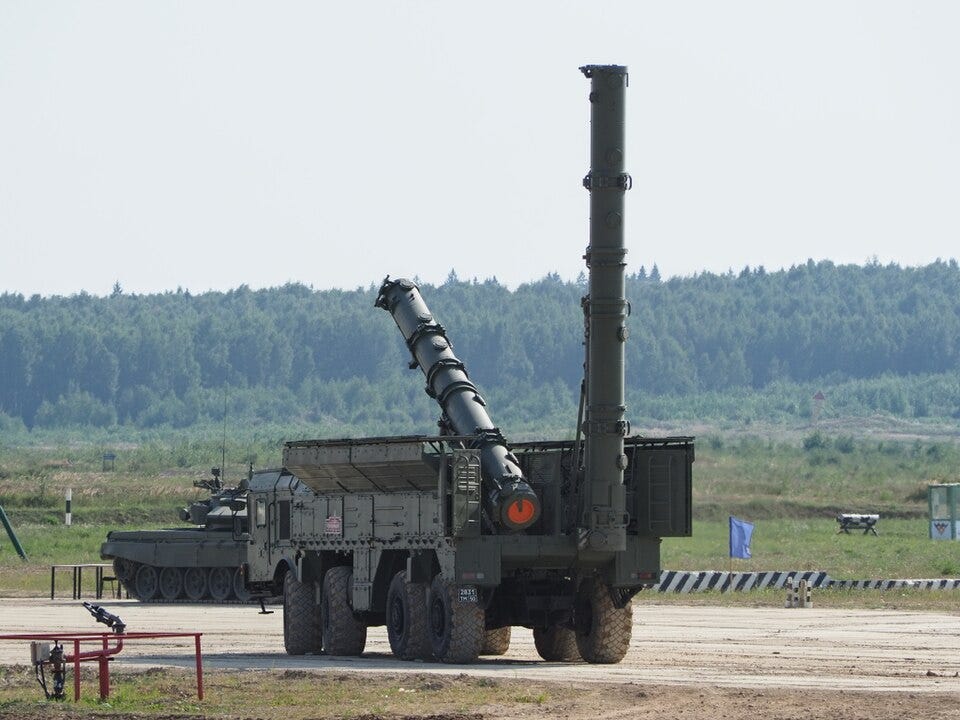
Picture: Wikimedia Commons
On Monday, 4 August 2025, Russia announced it would no longer adhere to its “self-imposed” moratorium on deploying INF-range missiles (ground-launched missile systems with ranges between 500 and 5,500 kilometers) previously banned under the Intermediate-Range Nuclear Forces (INF) Treaty, which has been defunct since 2019 following U.S. withdrawal.
To show that Russia was never in a position to issue such a moratorium credibly, this post presents a technical analysis of the 9M729 cruise missile’s range. The findings strongly indicate that the 9M729 exceeds the INF range limits by a significant margin.
History of non-compliance
The key issue surrounding the INF Treaty centers on the 9M729 (NATO designation SSC-8) ground-launched land-attack cruise missile. Russia claims the 9M729 has a range of less than 500 kilometers and was therefore INF-compliant. The United States and its NATO allies have rejected this assertion.
The United States first publicly raised concerns about the missile in 2013. In total, it engaged Russian counterparts on the 9M729 more than 30 times before deciding to withdraw from the treaty, with Russia unable and unwilling to address its concerns.
U.S. assessments of Russian noncompliance rest on two main points. First, the United States claims to have tracked test launches of the 9M729 from both fixed and mobile launchers, demonstrating missile trajectories above and below 500 kilometers.
The specific collection methods and launch site locations have not been publicly disclosed, but U.S. statements indicate that satellite imagery, telemetry (interception and analysis of the missile’s in-flight data transmissions), and other intelligence sources were involved.
Second, U.S. assessments are probably also based on a technical assessment of the missile’s characteristics, notably its maximum range in standard trajectories.
Technical assessment of Russian non-compliance
From an outside perspective, relying only on unclassified data, it is impossible to verify U.S. claims of having collected testing data proving Russian noncompliance with the INF Treaty.
However, we do have reasonably good technical information on the missile and its components, which allows for an independent assessment of the technical side of the issue. It is unclear how much weight the United States placed on such technical evaluations in its engagements with Russia — likely less, given that it could share classified test launch data directly with Russian counterparts, which in any case would have carried greater weight.
From a technical perspective, the key factor is the overall length of the 9M729, as this ultimately
...This excerpt is provided for preview purposes. Full article content is available on the original publication.