‘Christ presented without compromise’ - the legacy of Benedict XVI
In 2027, the Church will mark the centenary of the birth of Joseph Ratzinger, who would become known as Pope Benedict XVI.
The first pope to resign in nearly 700 years, Benedict was also known as one of the most consequential Catholic intellectuals of the modern era. His work ranged across the realms of fundamental theology, Scripture, philosophy, political theology, and liturgical theology.
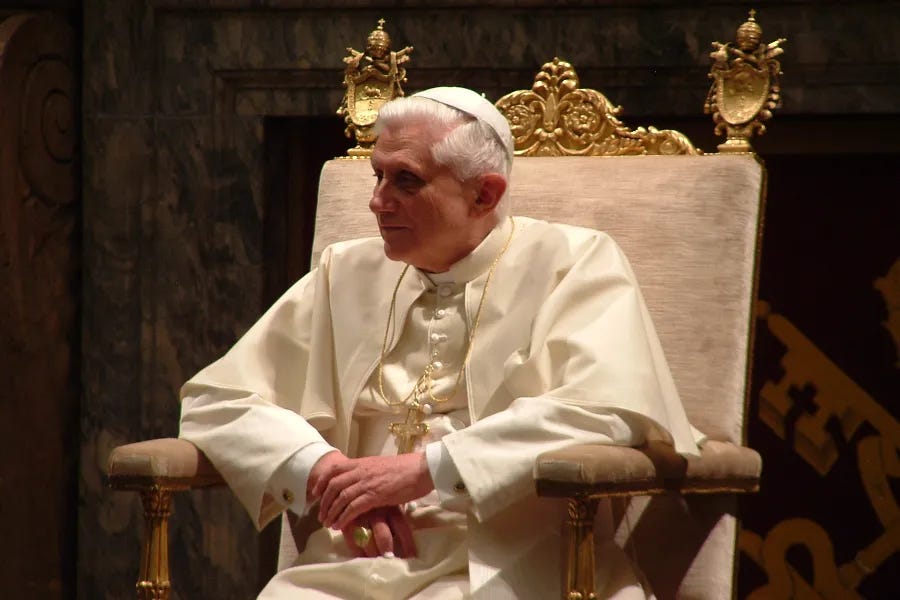
Ratzinger served as a theology professor in Germany, a peritus at the Second Vatican Council, archbishop of Munich and Freising, prefect of the Congregation for the Doctrine of the Faith, and ultimately pope. He leaves behind a body of scholarship that continues to shape theological debate today.
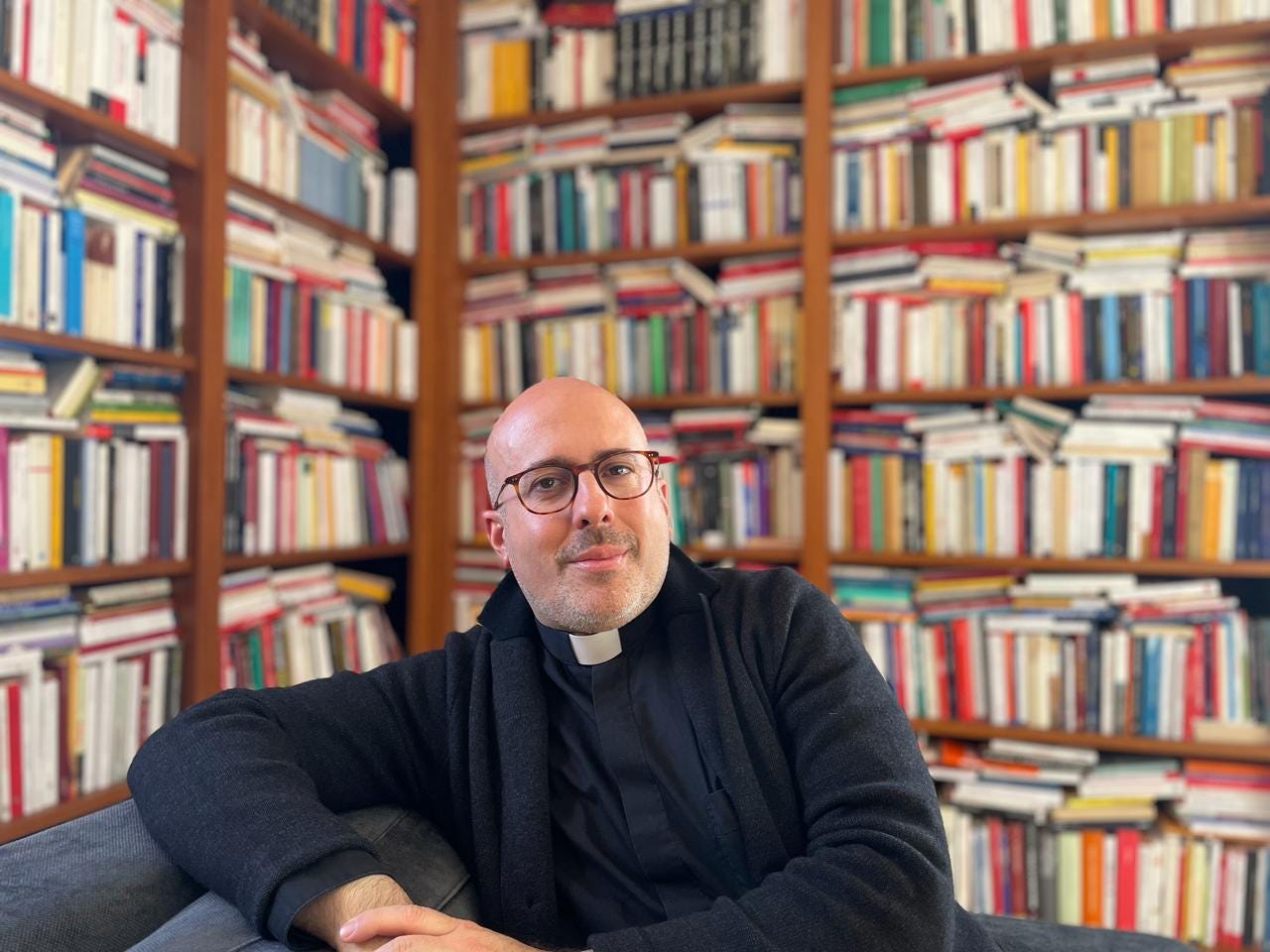
To discuss the enduring impact of his intellectual legacy, The Pillar spoke with Fr. Roberto Regoli, who in January was appointed as president of the Ratzinger Foundation.
Regoli earned his doctorate in Church history from the Pontifical Gregorian University in 2001 and has taught contemporary Church history there since 2005. He served as director of the university’s department of church history from 2015 to 2024 and is editor of the journal Archivum Historiae Pontificiae.
He is also the author of “Beyond the Crises in the Church: The Pontificate of Benedict XVI” (St. Augustine’s Press, 2024), among other works on modern and contemporary Church history.
Regoli is currently a Global Catholic Research Initiative visiting fellow at the de Nicola Center for Ethics and Culture at Notre Dame University, researching Vatican diplomacy from the French Revolution to the present.
The interview was conducted in Italian and has been edited for length and clarity.
Now that it has been nearly 100 years since Ratzinger’s birth, what do you believe is his main intellectual legacy?
It’s a very broad question, but we can narrow it down in the sense that his legacy concerns the faith, which may seem like a very trivial answer for a pope or for any Christian. But what’s so special about him? That he – as a young theologian, archbishop of Munich, cardinal prefect of the Holy Office, and pope – focused all his theological research and governing activity on presenting the figure of Christ in an immediate way to all the faithful.
Even as pope, when he wrote the three volumes on Jesus of Nazareth, this already makes us
...This excerpt is provided for preview purposes. Full article content is available on the original publication.