Making Art in a Noisy World
Deep Dives
Explore related topics with these Wikipedia articles, rewritten for enjoyable reading:
-
Augustine of Hippo
21 min read
The article directly quotes Alan referencing St. Augustine's philosophy on will, love, and desire from 1600 years ago. Understanding Augustine's actual teachings on human will and the nature of desire would give readers deeper context for this psychological framework being applied to social media habits.
-
Natsume Sōseki
13 min read
The article quotes from Kusamakura by Natsume Sōseki (misspelled as 'Netsuke' in the article). Sōseki was one of Japan's most important modern writers, and understanding his philosophical approach to art and retreat from society directly informs the article's theme of making art in a noisy world.
-
Compound interest
1 min read
The article uses compound interest as a metaphor for how small daily creative work accumulates not just additively but exponentially over time. Understanding the actual mathematics and history of compound interest would help readers grasp why this growth pattern is so powerful for creative practice.
Hey y’all,
I enjoyed this hour-long chat with Panio Gianopoulos of Author Insider. The topic — “Making Art in a Noisy World” — could’ve been a subtitle for my book Keep Going.
Here are 10 highlights from our conversation, in case you don’t have time to watch:

1. Try a “bookends” approach to your day.
I start and end my day without looking at my phone. In the morning, I don’t look at my phone until I’ve had breakfast and written in my diary. In the evening, I plug my phone in on the kitchen counter and head off to bed with a book.
(This is very similar to literacy scholar Maryanne Wolf’s bookends approach to reading.)
I believe that if you try this approach you will get addicted to how it makes you feel and you’ll want to spend less and less time on your phone.
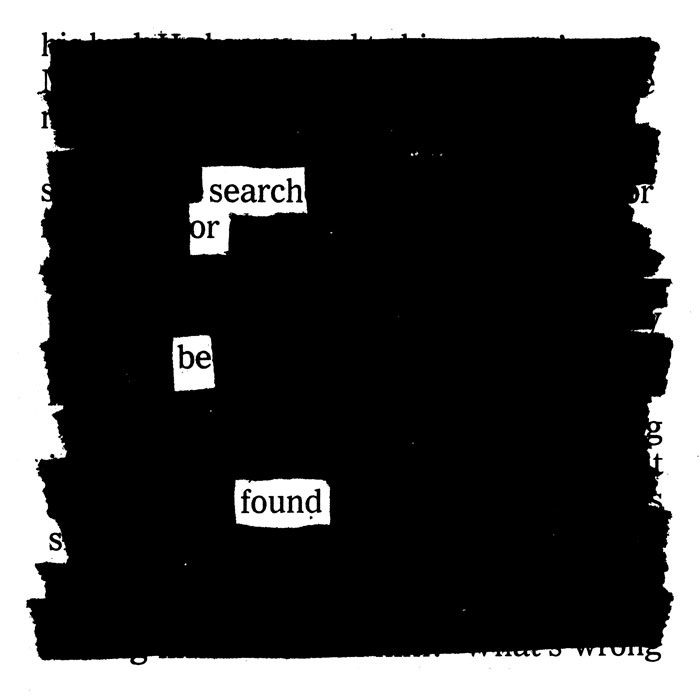
2. More search, less feed.
You’ll notice they call them social media “feeds.” We’re like pigs being fattened at the trough.
You want to try to be more like a pig out in the wild — go foraging!
One way to do this is to go to the search box more often. (I used to do this with the “People You Follow” search on Twitter, although it doesn’t work quite as well these days.)
But basically: More search, less feed. (See also: pushing and pulling.)
3. “Everybody knows.”
Everybody knows how bad social media is for us. We don’t need to litigate it anymore. The question is: What are you going to do about it?
My friend Alan wrote about this a while back:
[O]ur problem is not a lack of knowledge; it’s a deficiency of will and a malformation of desire. St. Augustine explained it all to us 1600 years ago: My actions are determined by my will, and my will is driven by what I love.
Which brings me to the next point:
4. You can’t just run away from things, you need to have something to run to.
A thought from my friend Mark Larson:
Advice on leaving (your place of birth, social media platforms, etc.): Make sure you’re running toward something, and not just away from something!
As Netsuke Sōseki writes in Kusamakura, “It would be of no use to move into a land of mosquitoes, when you got sick
...This excerpt is provided for preview purposes. Full article content is available on the original publication.