Exile's Reign
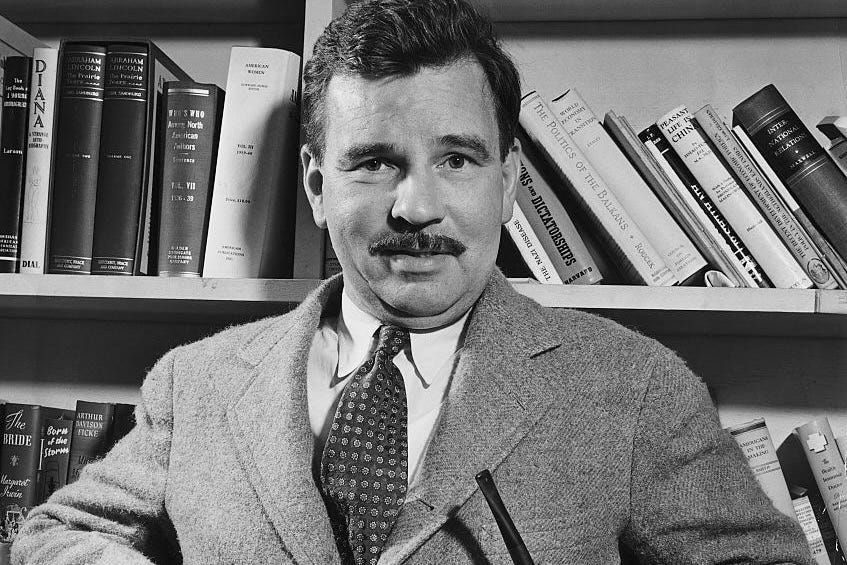
“The Mysticism of Money”: that was the brassily alliterative title of a 1922 essay published by Harold Loeb in Broom, the magazine he co-founded and bankrolled. Contemporary American culture, Loeb observed, had positioned commerce as its new religion. Europeans made money as a means to old-school ends; Americans had started to make it for the sake of making it. This was strange and unsettling, but the upside was an emerging metropolitan culture of startling energy — as Loeb put it, “vigorous, crude, expressive, alive with metaphors, Rabelaisian.” You could object to the economic system underpinning this boom, its inequities and vulgarities, but there was no denying its vitality.
Aged 24 when he read Loeb’s essay, Malcolm Cowley sat up. By the end of his long life he had become a fixture of the American metropolis, a grand old man of the New York literary establishment. But his roots — as he puts it in Exile’s Return (1934), the first and most enduringly popular of his nonfiction books — were “west of the mountains,” in the hilly woods and streams of Cambria County, Pennsylvania. He was often exasperated with America, and for long stretches found himself radically at odds with its prevailing political mood. But he never fell out of love with his country, in the sense of its places and people. When he read Loeb’s essay he was living in France, during two formative years among the much-mythicized community of expatriate Americans. Perhaps Loeb’s paean to America made him homesick; it definitely clarified his vision of his life’s work.
During his schooldays at Peabody High in Pittsburgh, Cowley fantasized of becoming a newspaper’s theatre critic. As it happened, his literary career scaled greater heights. He played a central role in the formation of the 20th century American canon. As Gerald Howard shows in this lucid and enthralling biography, The Insider: Malcolm Cowley and the Triumph of American Literature, there’s a persuasive case to be made that — as professional critic, political activist, essayist and editor — his was the central role.
Cowley strove unflaggingly for a genuinely modern and authentically American literature, and a world in which those two qualities did not exist in tension. He wanted a new scene, a subculture within American letters, which would speak to the alienated generation born around 1900 and confirm Loeb’s sense that
...This excerpt is provided for preview purposes. Full article content is available on the original publication.