How China Courted Iran
Deep Dives
Explore related topics with these Wikipedia articles, rewritten for enjoyable reading:
-
Saadi Shirazi
11 min read
Linked in the article (24 min read)
-
Hua Guofeng
15 min read
Linked in the article (21 min read)
-
Iran–Iraq War
10 min read
The article mentions China selling arms to both Iran and Iraq during 'the brutal war between Iran and Iraq' (1980-1988), which was foundational to Zhang Guoqing's career and China's initial foothold in Iran. Understanding this devastating eight-year conflict provides essential context for why Iran was desperate for weapons suppliers and how China exploited this to build lasting relationships with Tehran.
Happy New Year! This is your reminder to fill out the ChinaTalk audience survey. The link is here. We’re here to give the people what they want, so please fill it out! ~Lily 🌸
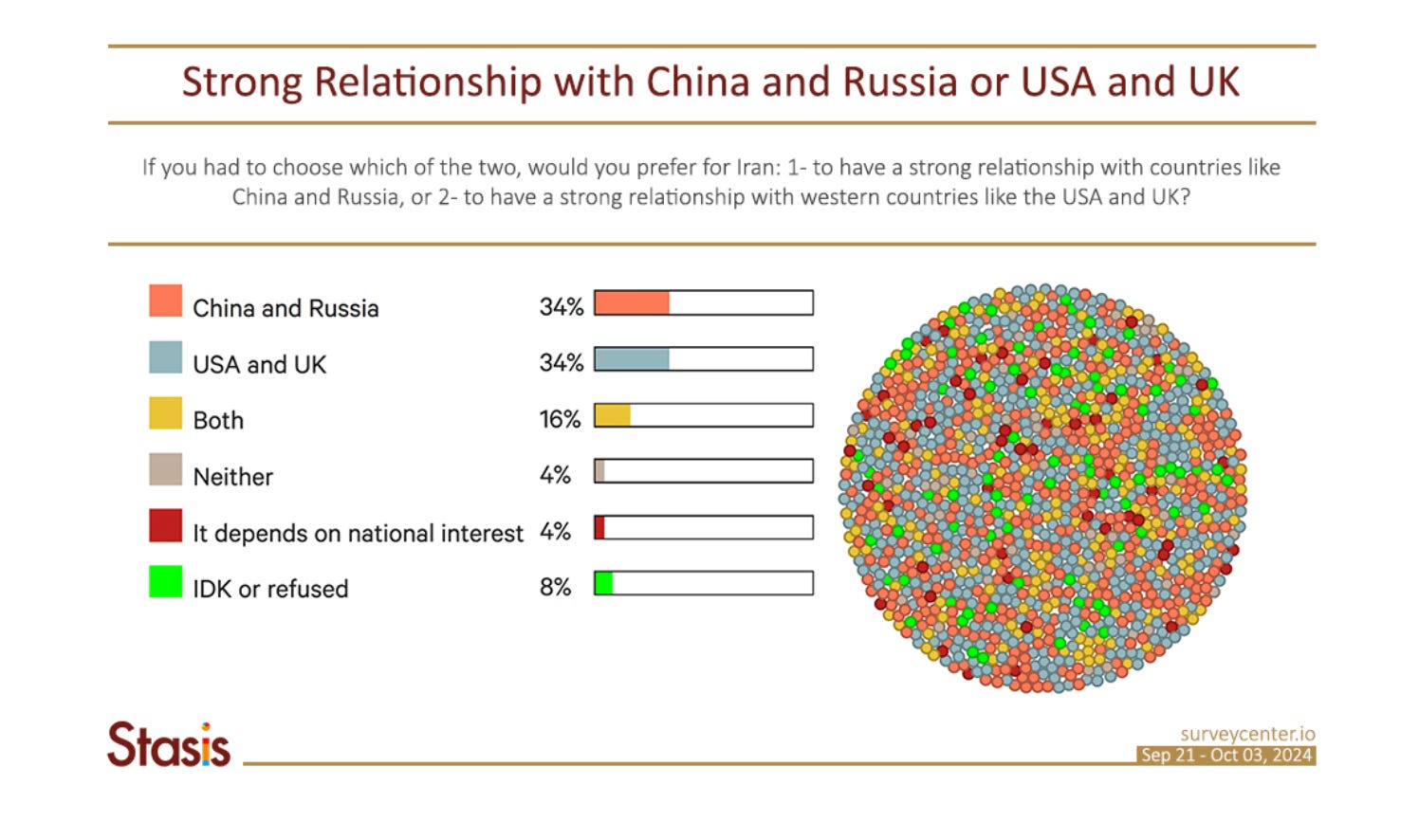
Anti-government protests are tearing through Iran, and the regime has responded with an internet blackout of unprecedented scale. Even Starlink access has been disrupted, thanks to military-grade jammers that may have been supplied by China or Russia. But between China’s insubstantial responses to the bombing of Iranian nuclear sites and Maduro’s kidnapping, has Tehran started to doubt the benefits of partnering with Beijing?
For two countries so closely aligned, China and Iran don’t have all that much in common. In theory, Iran’s theocratic government shouldn’t look too kindly on China’s treatment of Uyghur and Kazakh muslims in Xinjiang, and Chinese academics are often skeptical of the reputational costs that come from aligning with a state sponsor of terrorism.
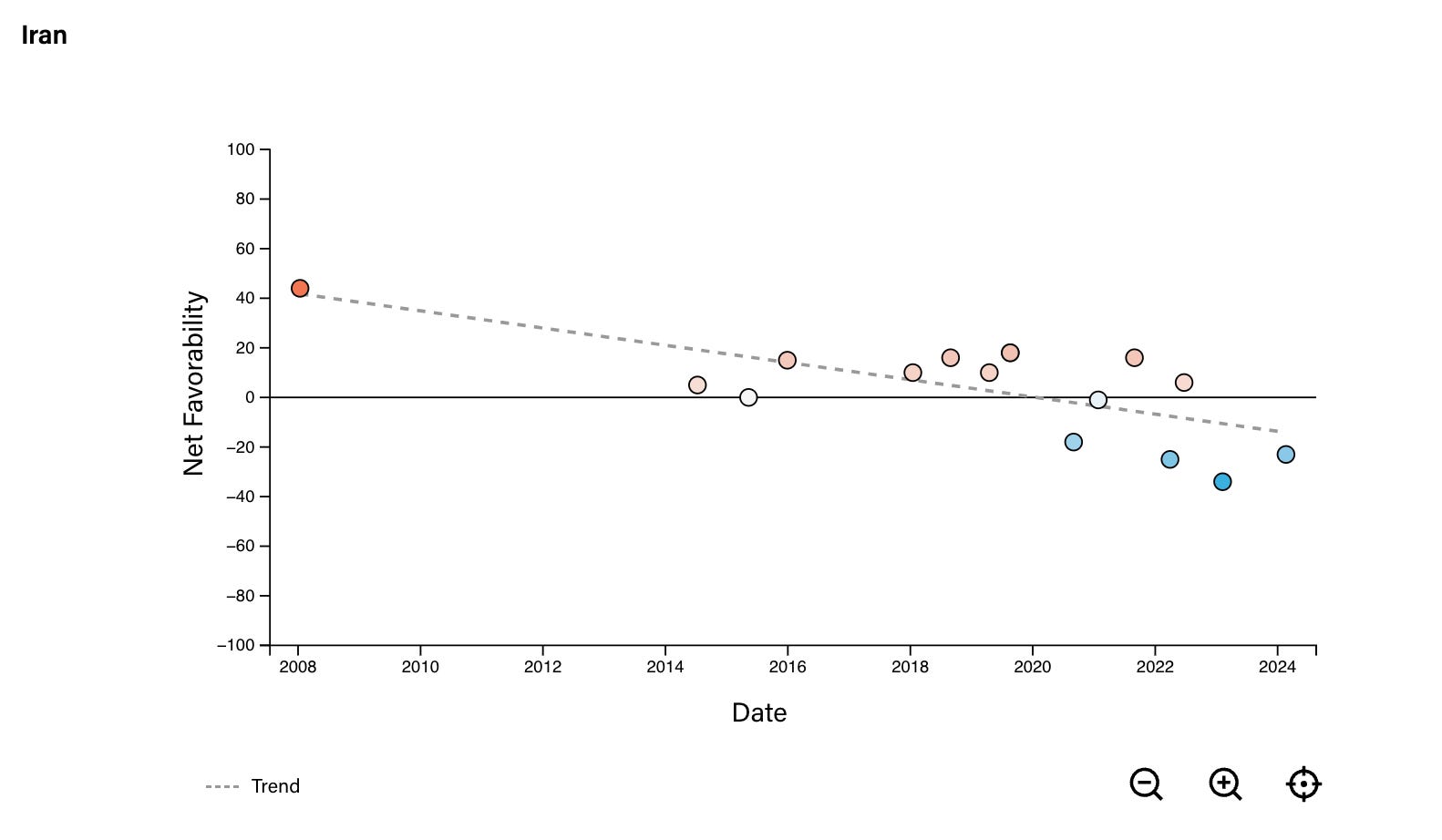
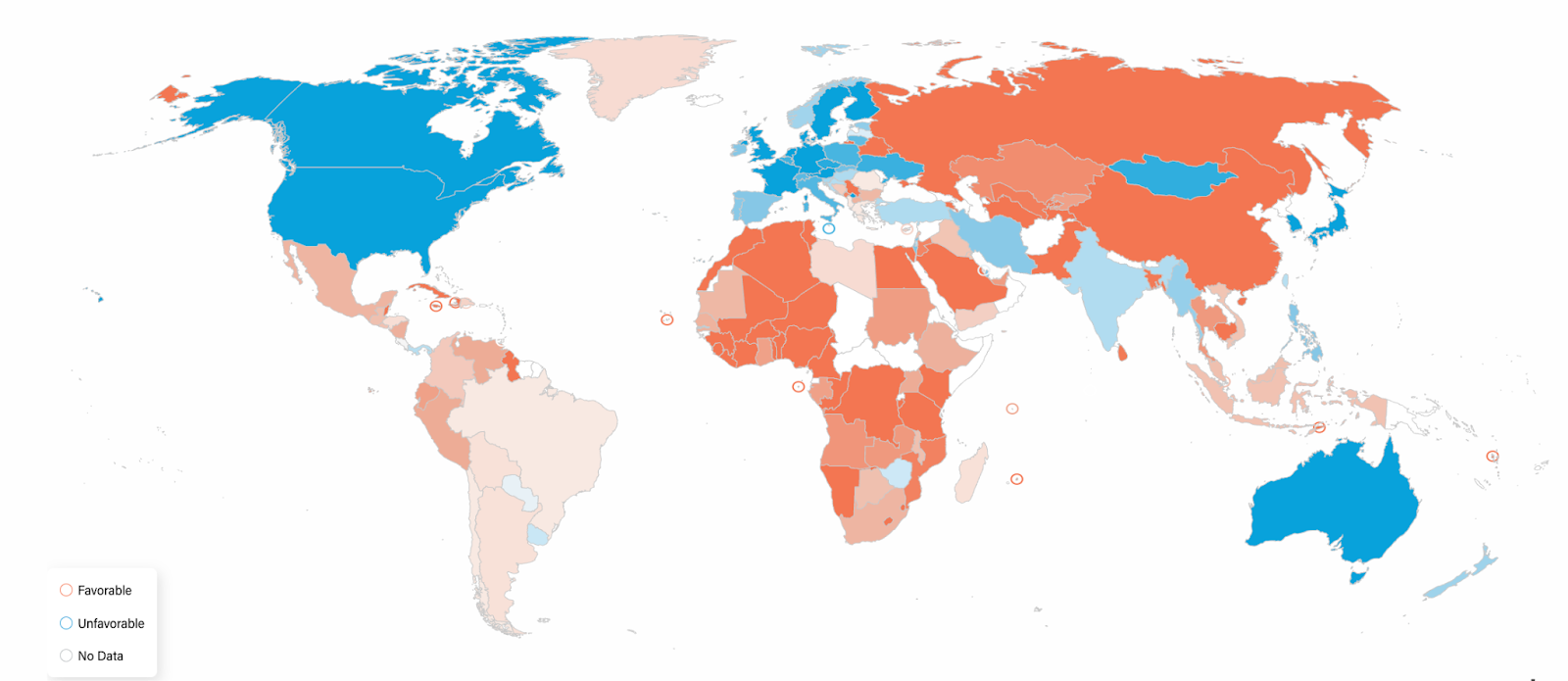
While their relationship has been punctuated by scandals, China has taken them in stride, using a combination of material incentives, narrative control, and appeals to specific power centers within Iran to manage relations, even as China’s favorability declines among the Iranian people.
Today, we’ll explore how China forged a relationship with Iran, how the two countries manage tensions, and the extent to which Beijing can influence Iran’s decision-making.
«بدعهدم اگر ندارم این دشمن دوست»
“With friends like these, who needs enemies?”
Post-Revolution Tension
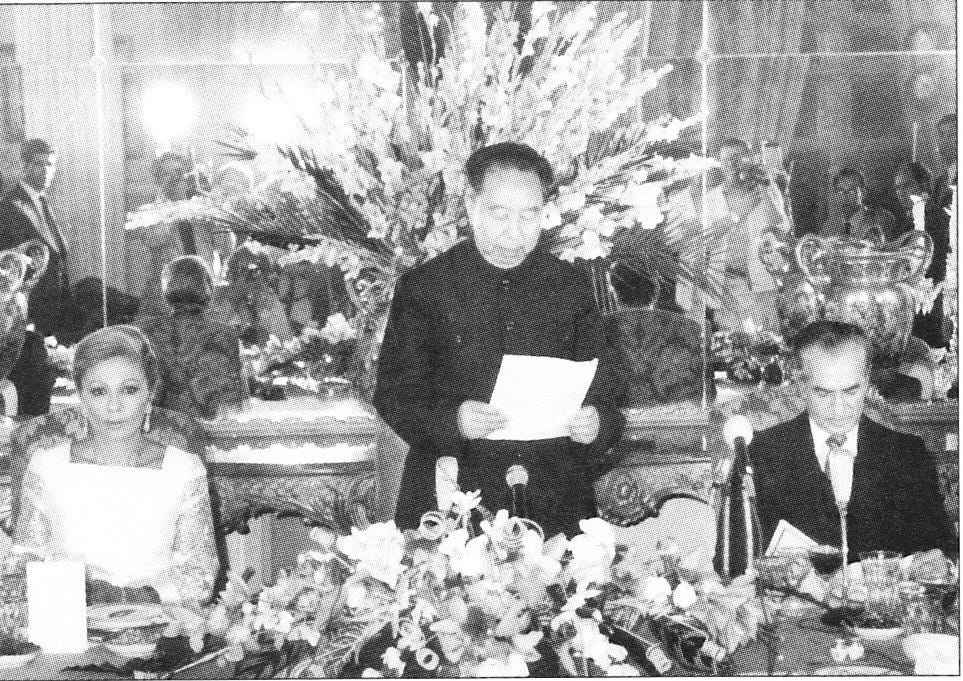
After the Islamic Revolution in 1979 — during which protesters shouted slogans denouncing foreign influence, such as “Neither East nor West” («نه شرقی، نه غربی») — Iran’s new government was distrustful of foreign powers that had close relations with the Pahlavi dynasty. This included China, which backed the Shah since Iran and China had a common enemy in the Soviet Union. Chairman Hua Guofeng was among the last foreigners to meet with the Shah before he was deposed by the revolution.

The story of modern relations begins with the personal charisma of Zhang Guoqing 张国清, who
...This excerpt is provided for preview purposes. Full article content is available on the original publication.