Have you found your axe yet?
Deep Dives
Explore related topics with these Wikipedia articles, rewritten for enjoyable reading:
-
Confirmation bias
13 min read
The article explicitly discusses confirmation bias as a key psychological phenomenon illustrated by the missing axe parable. A deep dive into the research behind this cognitive bias would help readers understand the mechanisms by which our beliefs shape our perceptions.
-
Attribution (psychology)
15 min read
The article references attribution theory and how we judge others' mistakes versus our own. Understanding the fundamental attribution error and related concepts would give readers scientific grounding for the folk wisdom in the parable.
-
Maya Angelou
14 min read
The article quotes Angelou's memoir 'All God's Children Need Travelling Shoes' on prejudice. Her remarkable life story and body of work on identity, racism, and human dignity would provide rich context for the themes of projection and prejudice explored in the article.
A folk story has been coming to mind.1
A man whose axe was missing suspected his neighbour’s son. The boy walked like a thief, looked like a thief, and spoke like a thief. But the man found his axe while he was digging in the valley, and the next time he saw his neighbour’s son, the boy walked, looked and spoke like any other child.
The story is not hard to understand, but only recently did I realise that we are all looking for our missing axes.
Most of the time, there is something we have lost, or wish were otherwise, something we want back, something we need, something that would make us feel more powerful, something that would make things better…
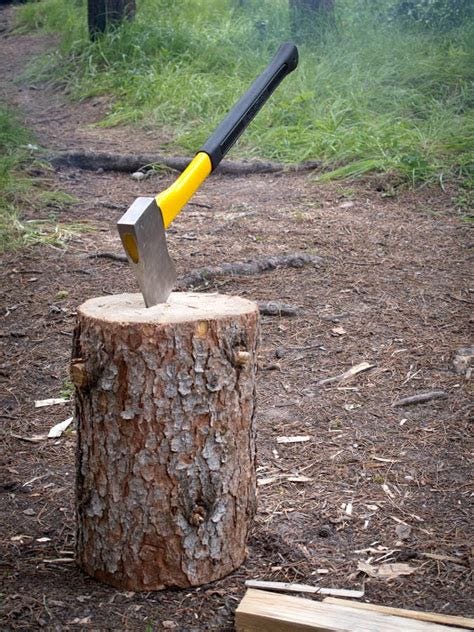
Abraham Lincoln did not say that if he had six hours to chop down a tree, he would spend the first four hours sharpening the axe, but that idea is part of our cultural inheritance. The axe is an archetypal tool for getting things done, so to be missing our axe is to be estranged from ourselves, unable to go on by normal means.
On the other hand, there is more to life than getting things done, and it’s sometimes a relief to be free from that cultural imperative.
Those who understand forestry (not me) recognise that the discerning cutting down of trees can be part of protecting tree habitats, but there is definitely a case for befriending trees rather than cutting them down. We don’t need an axe to befriend a tree. Yet sometimes we may feel the need, figuratively at least, for an axe to defend ourselves. To be ready, y’know?
Though we can’t always say what we are guarding against.
*
Missing axes are dangerous because we carry their absence unconsciously as we look for them. And they can be very sharp - even more dangerous than real axes.
We don’t always know how to hold our missing axes carefully, nor can we appreciate what damage we might unwittingly do to the people around us if they don’t realise we are carrying a missing axe; even more so if we don’t know either.
We go into therapy to find our axes.
*
The missing axe story is also about how our expectations shape perception.
It’s essentially a parable about bias, projection, and the subjectivity of judgment, which we are all vulnerable to. Racism, sexism,
...This excerpt is provided for preview purposes. Full article content is available on the original publication.