A country can’t get rich by making housing scarce
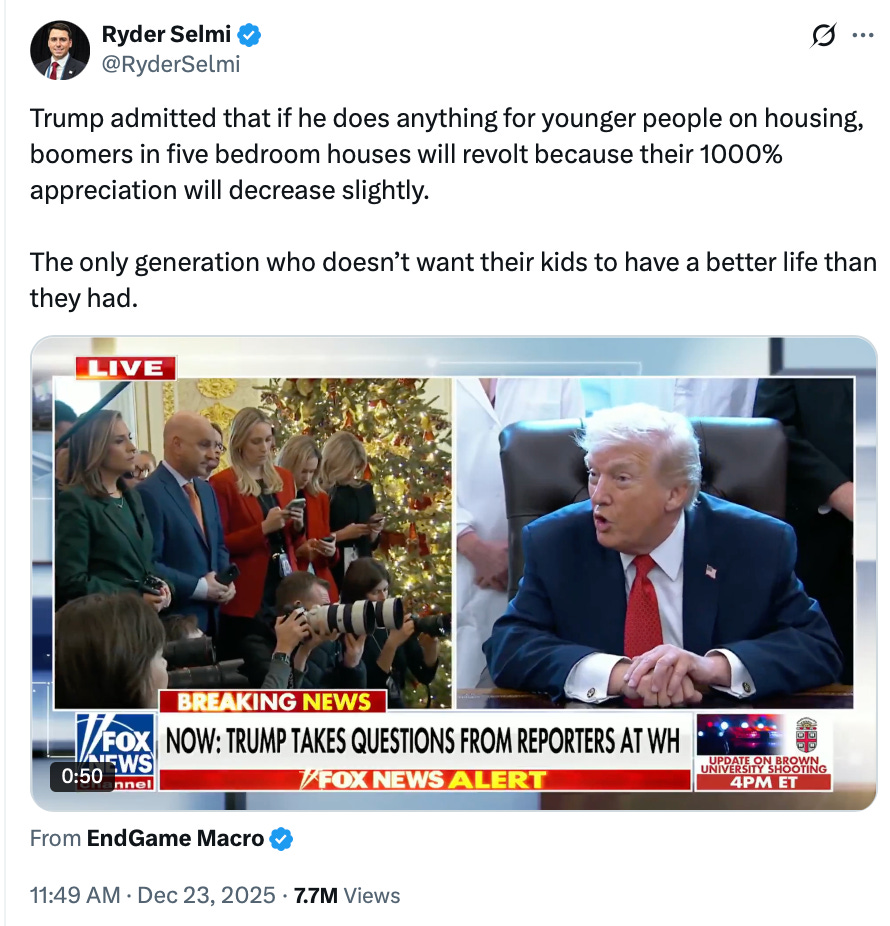
Late last year, the Trump administration claimed they were going to roll out ideas on housing affordability. But shortly before Christmas, the president himself let slip that he actually wants to protect incumbent homeowners’ investments and thus doesn’t particularly want to make housing more affordable.
At a January 29 cabinet meeting, Trump was even more explicit, saying that the only housing proposal he’s really enthusiastic about is lower interest rates because this will make prices go higher: “I don’t want to drive housing prices down. I want to drive housing prices up for people that own their homes. And they can be assured that’s what’s going to happen.”
I’m glad Trump joined the argument on this, because my guess is that these concerns about protecting homeowners’ equity are about 100 times more influential in the real world than stuff that gets more play in the media.
Yes, it’s true that some people think that new development raises rents, and that’s bad. And there are many left-wing ideologues who are annoyed when we talk about housing supply because the only political issues they want to discuss are ones that frame billionaires as the bad guys.
But Trump is pointing here to a much more mainstream concern. For millions of middle-class Americans, not only is their owner-occupied housing their largest investment, but they’ve also been told over and over again that purchasing a home to live in is the key to building long-term wealth.
And when I say “told” I don’t mean in a vague cultural script sense; a lot of public policy is aimed at specifically advantaging this particular form of investment.
So of course it’s jarring if public officials turn around and start saying they want to make it cheaper for young people with no money to buy homes. Your unaffordable housing is my lucrative investment. Your accessible starter home is my nest egg collapsing in value.
Right?
Not really.
Part of the story here is that American policy toward saving, investment, and homeownership is kind of misguided. But the bigger problem is that we’re dealing with a wrongheaded zero-sum worldview. Restrictions on the supply of housing are not a simple transfer from renters to homeowners or from young to old. They are an incredibly value-destroying leaky bucket of redistribution that makes people a lot poorer on average.
Rebooting your intuitions on housing wealth
Most people in Washington, D.C., myself
...This excerpt is provided for preview purposes. Full article content is available on the original publication.