How Cloudflare Eliminates Cold Starts for Serverless Workers
Cut Code Review Time & Bugs in Half (Sponsored)

Code reviews are critical but time-consuming. CodeRabbit acts as your AI co-pilot, providing instant Code review comments and potential impacts of every pull request.
Beyond just flagging issues, CodeRabbit provides one-click fix suggestions and lets you define custom code quality rules using AST Grep patterns, catching subtle issues that traditional static analysis tools might miss.
CodeRabbit reviews 1 million PRs every week across 3 million repositories and is used by 100 thousand Open-source projects.
CodeRabbit is free for all open-source repo’s.
Cloudflare has reduced cold start delays in its Workers platform by 10 times through a technique called worker sharding.
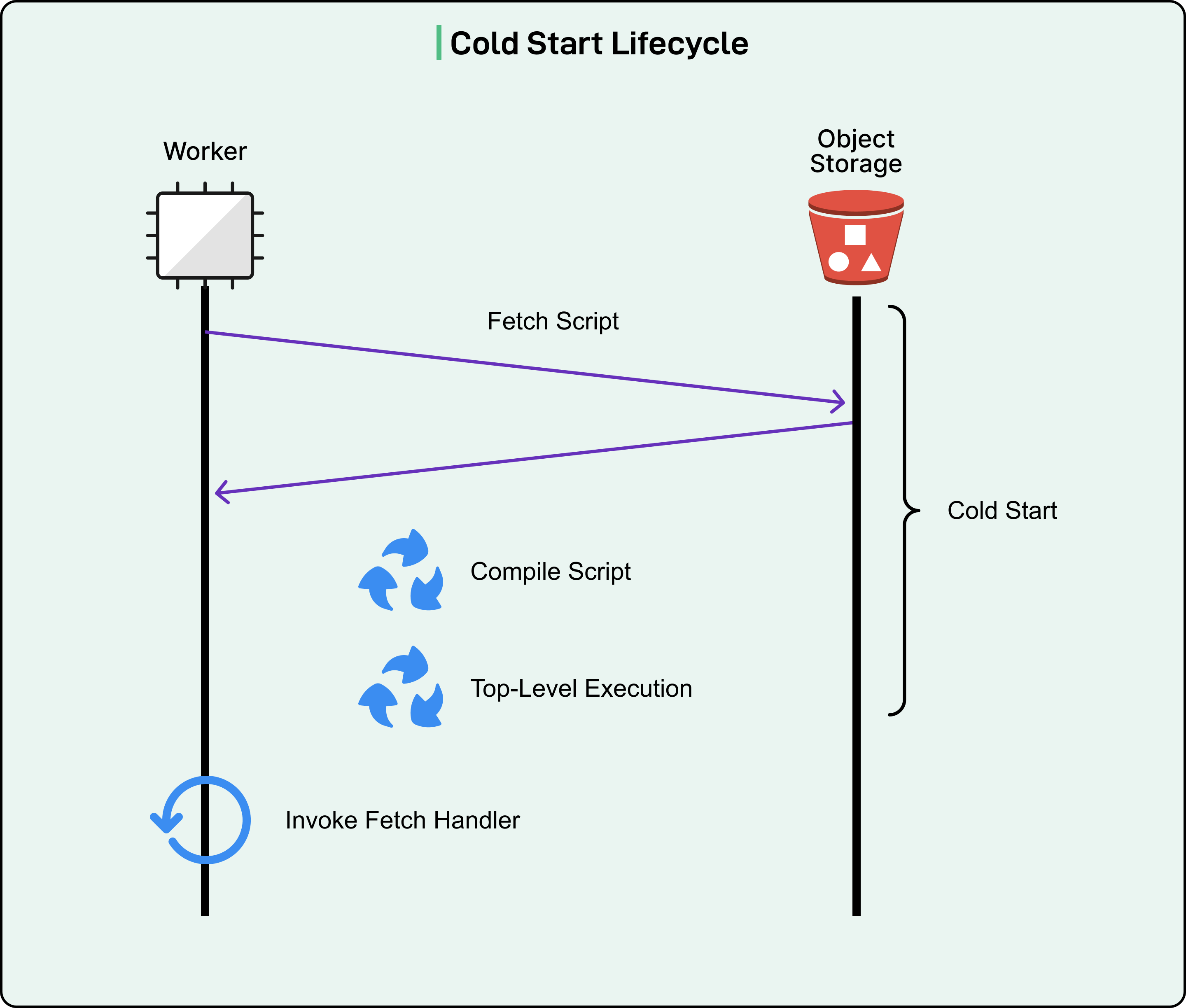
A cold start occurs when serverless code must initialize completely before handling a request. For Cloudflare Workers, this initialization involves four distinct phases:
Fetching the JavaScript source code from storage
Compiling that code into executable machine instructions
Executing any top-level initialization code
Finally, invoking the code to handle the incoming request
See the diagram below:
The improvement around cold starts means that 99.99% of requests now hit already-running code instances instead of waiting for code to start up.
The overall solution works by routing all requests for a specific application to the same server using a consistent hash ring, reducing the number of times code needs to be initialized from scratch.
In this article, we will look at how Cloudflare built this system and the challenges it faced.
Disclaimer: This post is based on publicly shared details from the Cloudflare Engineering Team. Please comment if you notice any inaccuracies.
The Initial Solution
In 2020, Cloudflare introduced a solution that masked cold starts by pre-warming Workers during TLS handshakes.
TLS is the security protocol that encrypts web traffic and makes HTTPS possible. Before any actual data flows between a browser and server, they perform a handshake to establish encryption. This handshake requires multiple round-trip messages across the network, which takes time.
The original technique worked because Cloudflare could identify which Worker to start from the Server Name Indication (SNI) field in the very first TLS message. While the rest of the handshake continued, they would initialize the Worker in the background. If the Worker finished starting up before the handshake completed, the user experienced zero visible delay.
See the diagram below:
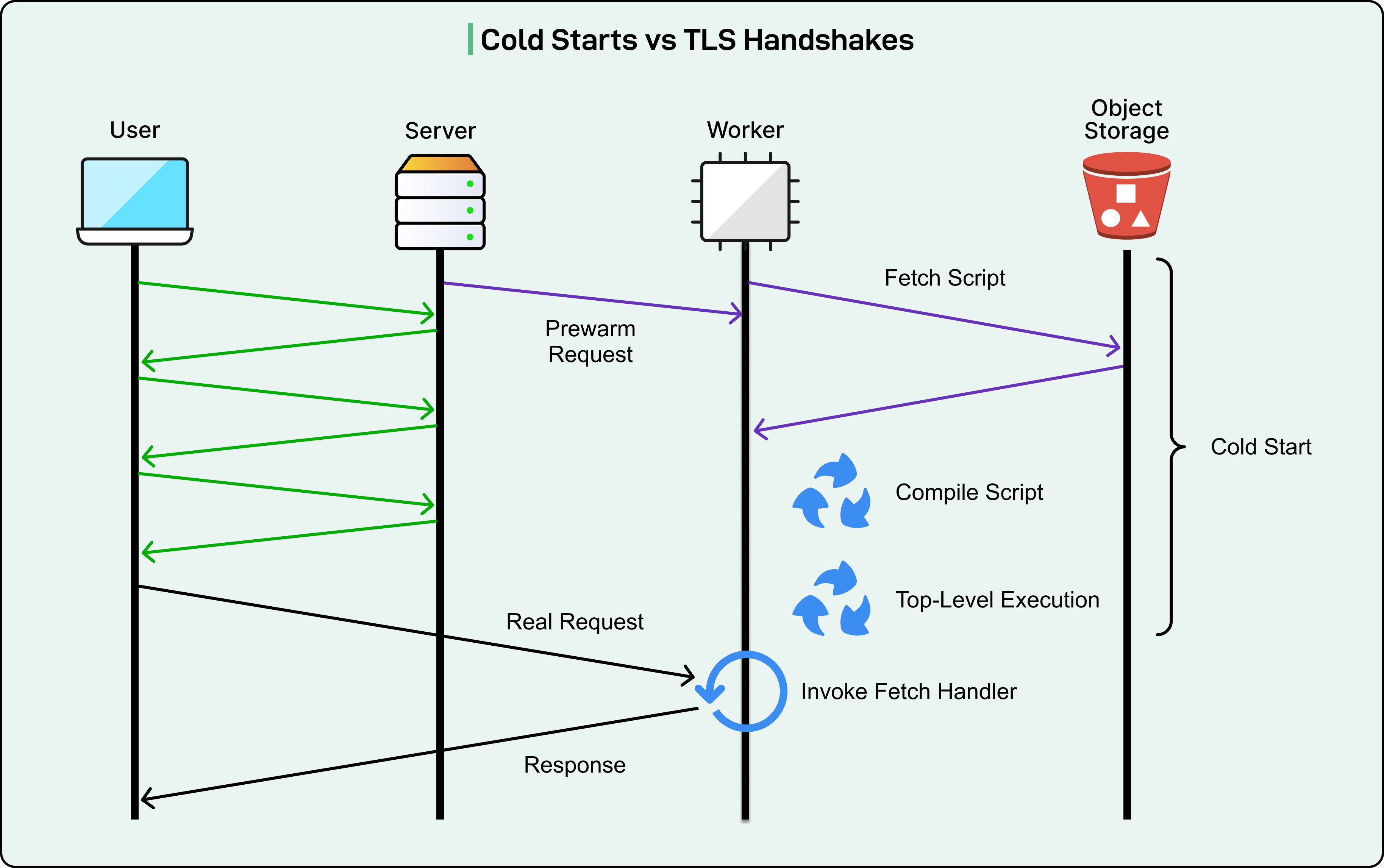
This technique succeeded initially because cold starts took only 5 milliseconds while TLS 1.2 handshakes required three network round-trips. The handshake
...This excerpt is provided for preview purposes. Full article content is available on the original publication.