The Week Observed: August 22, 2025
What City Observatory Did This Week
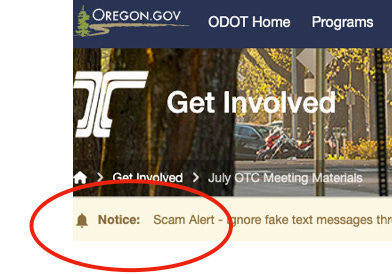
Caution: Scam Alert. The Oregon Department of Transportation's plans to move ahead with the I-5 Rose Quarter project when it lost over $400 million in federal grants, was refused additional funding by the 2025 Oregon Legislature and doesn't have any toll revenue constitutes a scam.
No Guardrails: The Oregon Department of Transportation (ODOT) remains fundamentally unaccountable despite repeated legislative attempts at oversight. When lawmakers imposed strict "sideboards" in 2013 to control costs on the Columbia River Crossing—including caps on spending, required federal funding commitments, and mandatory financial reviews—ODOT simply had them quietly repealed in 2023 with no public debate.
The agency routinely evades, subverts, or eliminates accountability measures while claiming legal restrictions prevent it from funding basic services like snow plowing or retaining staff. This reveals ODOT's true priorities: protecting expensive megaprojects while sacrificing core transportation functions. Without real enforcement mechanisms, legislative accountability measures remain toothless.
Must Read
Transportation Re-authorization: Streetsblog has terrific reporting on Transportation for America's advice on how to influence the upcoming transportation re-authorization legislation Congress will consider in 2025. "Re-authorization" is beltway-speak for re-writing the controlling legal language that specifies how tens of billions in federal transportation funds are spent. Buried in the seeming minutiae of this legislation are a host of policy decisions that determine what gets built--and what doesn't--and where.
Transportation for America has many valuable recommendations for improving the nation's transportation laws, starting with devolving responsibility down to the local level, rather than granting so much power to car-centric state highway departments. T4A also suggests ways to change the metrics of transportation policy to get better results, notably by emphasizing the uses of accessibility measures (i.e. how we make it easier to reach common destinations) rather than promoting vehicle speeds and traffic volumes. As Streetsblog reports, regulatory reform will require major changes:
T4A says the answer isn't just to tweak the National Environmental Policy Act review process or remove steps from the permitting gauntlet, but to develop a radically new permitting and review framework based on the anticipated outcomes a project will have, like "how many jobs and essential services (like grocery stores, schools, banks, and medical care) people can access by all modes of transportation."
Transit is by far safer than car travel, though you'd never know if from the media. Todd Litman has a powerful commentary at Bloomberg, pointing out that the right-wing
...This excerpt is provided for preview purposes. Full article content is available on the original publication.