China needs to chart a new course to become world’s largest importer
In 2009, China surpassed Germany to become the world’s largest exporter of goods, a position it has maintained for the past 16 years. This export dominance has been instrumental in propelling China’s economy forward, enabling it to overtake Japan in 2010 as the second-largest economy in nominal GDP, trailing only the United States.
By 2013, China had also eclipsed the US as the world’s largest trading nation in goods, measured by the combined value of imports and exports. These milestones underscore its remarkable transformation from an inward-focused economy to a global powerhouse.
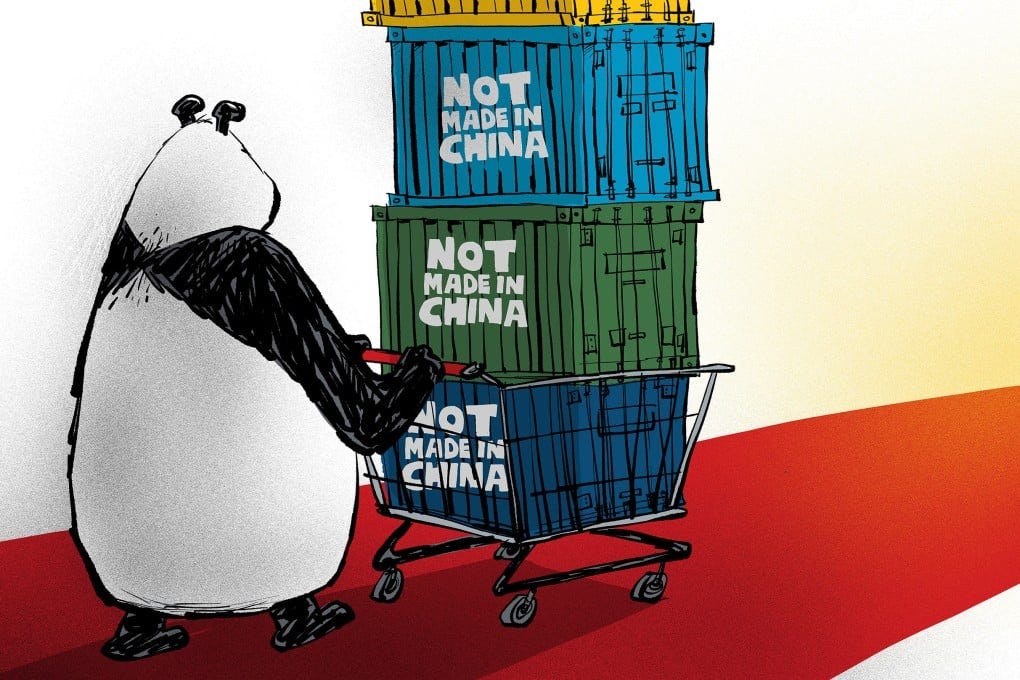
Now, as China’s leadership prepares to meet from October 20-23 to deliberate on the 15th five-year plan, it is imperative for Beijing to chart a new course: overtaking the US to become the world’s largest importer within the next five to 10 years.
This shift would not only mark a pivotal evolution in China’s economic strategy, it would also carry profound geopolitical and economic implications for the nation, its key trading partners and the rest of the world.
The five-year plan, a legacy of the Soviet-style planned economy, has evolved far beyond its original rigid production targets and ideological framework. Today, it serves as a comprehensive blueprint encompassing economic development, environmental protection, education and social welfare programmes.
The upcoming plan is particularly critical as China aims to achieve its goal of becoming a “modern socialist country”. Central to this ambition is accelerating the transition to a consumption-driven economy, addressing structural imbalances that have long prioritised investment and exports over domestic demand.
During the past four decades of “reform and opening up”, China’s growth has relied heavily on fixed-asset investments, such as infrastructure, real estate and exports. These engines have fuelled unprecedented expansion, but their sustainability has waned in recent years. Fixed-asset investments, particularly in the real estate sector, have lost steam amid overcapacity and debt concerns. While still robust, exports have sparked intensifying frictions with several trading partners.
China’s exports surged in 2024, contributing to a record trade surplus of nearly US$1 trillion. This surplus has drawn sharp criticism, with trading partners arguing that China is effectively exporting its overcapacity and relying on foreign demand to sustain growth, potentially at the expense of jobs and industries abroad.
A stark illustration of this imbalance is China’s steel sector, where production exceeded 1 billion tonnes in 2024, with exports reaching around 110 million tonnes. Such overproduction exemplifies the cutthroat “involution-style”
This excerpt is provided for preview purposes. Full article content is available on the original publication.