Sydney Sweeney Finally Caved and Addressed Her Eugenics-Coded American Eagle Ad
Deep Dives
Explore related topics with these Wikipedia articles, rewritten for enjoyable reading:
-
Eugenics in the United States
12 min read
The article references 'good genes' rhetoric being used to justify forced sterilizations and connects the ad controversy to 'a century of eugenics.' This Wikipedia article provides the historical context of American eugenics programs that the author is alluding to.
-
Cancel culture
14 min read
The article explicitly discusses cancel culture, distinguishing it from government censorship and arguing it represents legitimate consumer choice. The Wikipedia article provides comprehensive context on the phenomenon's history and debates.
-
Compulsory sterilization
14 min read
The article mentions 'forced sterilizations' as one consequence of 'good genes' rhetoric. This topic provides the specific historical and global context for how eugenics ideology translated into policy, deepening understanding of why genetic superiority language is considered dangerous.
Last week, Sydney Sweeney broke her silence in an exclusive interview with People magazine. After months of deflection, declining engagement, and watching four consecutive films tank, the actress finally addressed the controversy surrounding her American Eagle “Great Jeans” campaign. “I was honestly surprised by the reaction,” Sweeney told the outlet. “I don’t support the views some people chose to connect to the campaign. Many have assigned motives and labels to me that just aren’t true.”
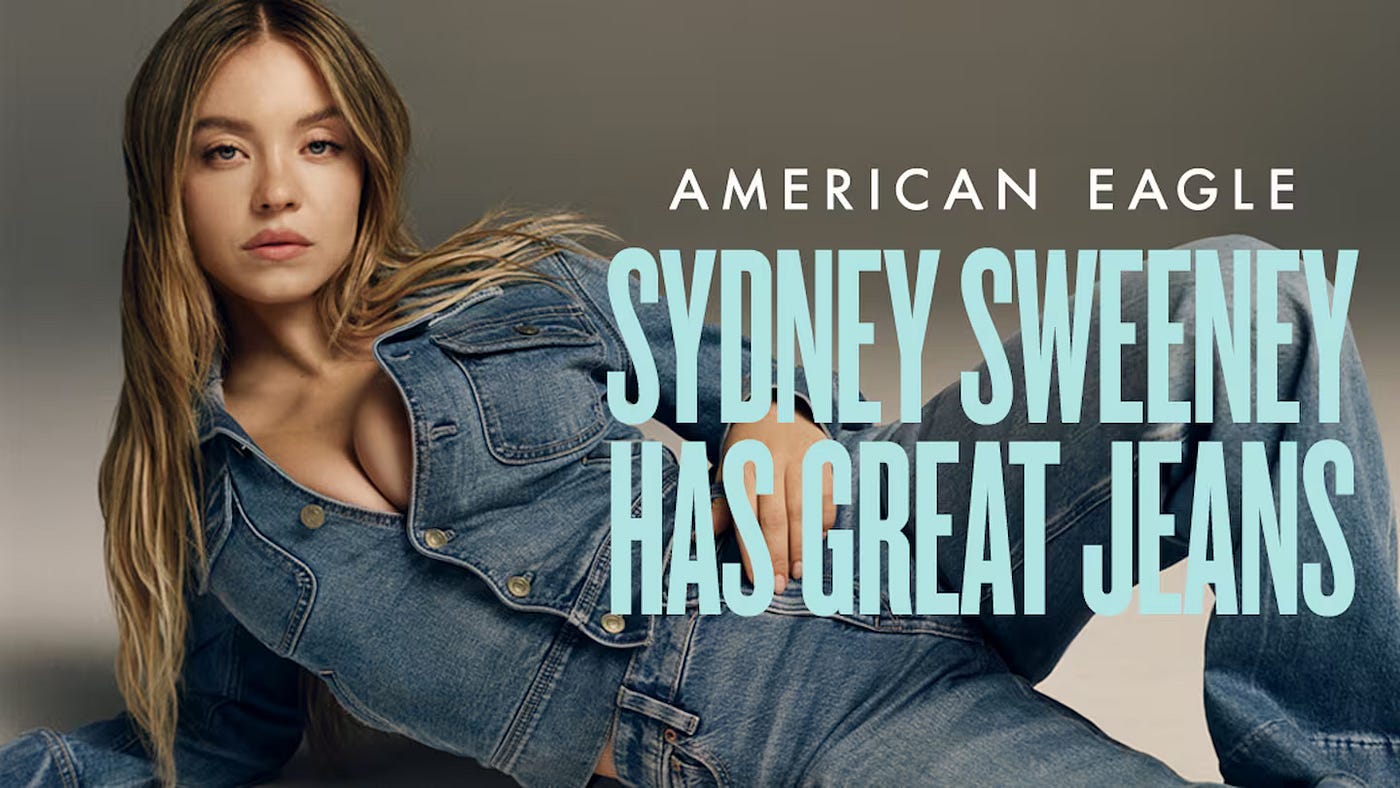
The statement was carefully worded, strategically vague, and arrived suspiciously close to the premiere of her upcoming thriller The Housemaid. And if you’re wondering whether this means cancel culture is officially back, the answer is yes.
And here’s why that’s a good thing.
I’m fighting to document how corporate messaging and celebrity silence normalize dangerous rhetoric before it gets dismissed as “woke overreach”, and I need your help.
With no corporate backing or wealthy sponsors, this work depends entirely on readers like you.
If everyone reading this became a paid subscriber, I could investigate these cultural flashpoints full-time, but right now less than 4% of my followers are paid subscribers.
If you believe in journalism that connects the dots between a jeans ad and a century of eugenics when others look away, please consider a paid subscription today.
The Art of Saying Nothing
Let’s be clear about what Sweeney actually said, and more importantly, what she didn’t. At no point in her People interview did she denounce white supremacy. She never acknowledged that Donald Trump praised her campaign. She didn’t address the fact that right-wing commentators weaponized her image as proof that “anti-woke” marketing sells. Instead, she offered the kind of statement a crisis PR team drafts at 2 a.m.
“Anyone who knows me knows that I’m always trying to bring people together. I’m against hate and divisiveness,” Sweeney said—a lovely sentiment that means absolutely nothing when the President of the United States has publicly endorsed your advertising campaign as a victory against diversity initiatives.

This wasn’t Sweeney’s first opportunity to clarify her position. In a November GQ interview, when asked directly about criticism that “in this political climate, white people shouldn’t joke about genetic superiority,” she responded: “I think that when I have an issue that I want to speak about, people will hear.” The implication was clear: this wasn’t an issue she wanted to speak about.
...This excerpt is provided for preview purposes. Full article content is available on the original publication.