How AI Demand Is Driving a Multi-Year Memory Supercycle
Today’s post is a discussion on a recent trend in semiconductor memory. If you’re new, start here! On Sundays, I write deep-dive posts on critical semiconductor technology for the AI-age in an accessible manner for paid subscribers.
Deep-dives related to this post:
New video posted on the YouTube channel:
In my recent guest post on the AI Supremacy newsletter (I will crosspost the article on this newsletter in the future), I explained why whoever gains control of the HBM memory supply dominates the AI race. This is highly relevant to where we are in memory today. Check it out below (partially paywalled).

AI’s insatiable demand for high performance memory along with other factors is creating demand across various parts of the AI infrastructure buildout. After 2023’s brutal dip in memory revenues primarily fueled by excess inventory, memory companies such as Micron, SK Hynix and Samsung are now in the driver’s seat and have increased DRAM prices by approximately 20%. NAND and SSD prices are higher too, by about 10%. With the release of OpenAI’s Sora-2 and Meta’s Vibes, the AI-generated video platform, the demand for NAND-based storage is set to skyrocket.
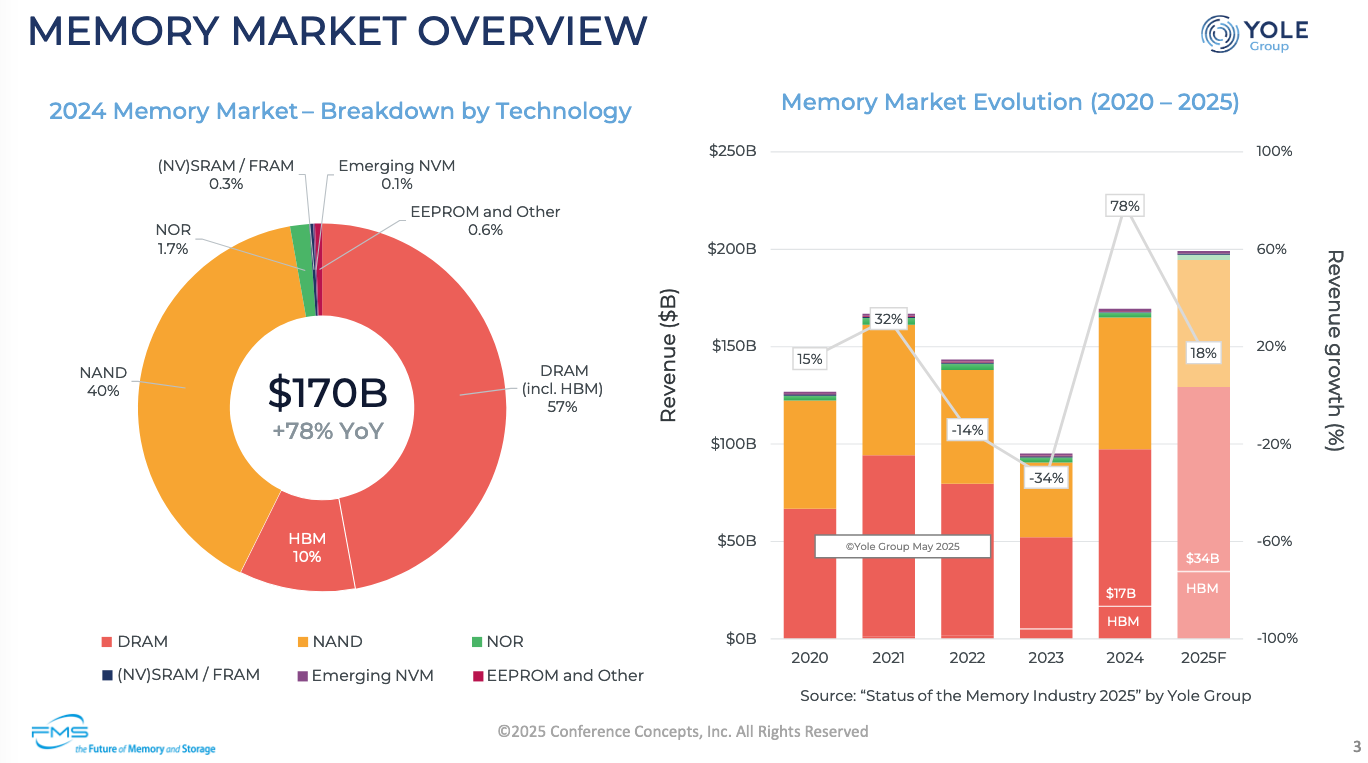
This has led to many people asking if we are now at the helm of a new “memory supercycle” where memory suppliers will see substantial revenue growth in the next 3-5 years. Let’s discuss various aspects of the recent memory market.
The DDR4 Backflip
Without question, the rise of HBM has given new life to an otherwise commodity business that is memory. Since it is built from stacked DRAM chips (read the HBM deep-dive if you need a detailed explanation of how HBM is built), there is more incentive for memory makers to build DRAM for HBM rather than standalone DRAM because they can command a higher price.
Memory makers declared that DDR4 is end-of-life so that they could make room for production of DRAM for HBM instead. This led to DDR4 prices spiking over four-fold because OEMs who
...This excerpt is provided for preview purposes. Full article content is available on the original publication.