Book Review: "Blank Space"
Deep Dives
Explore related topics with these Wikipedia articles, rewritten for enjoyable reading:
-
Long tail
17 min read
The article's central argument about cultural distribution hinges on the 'long tail' concept - the reviewer explicitly discusses how popularity may be becoming 'more leptokurtotic' with concentration at center and wider distribution at fringes. Understanding this statistical/economic concept is essential to following the debate about cultural stagnation.
“This is Bach, and it rocks/ It’s a rock block of Bach/ That he learned in the school/ Called the school of hard knocks” — Tenacious D
Has culture stagnated, at least in the United States? There are a number of prominent writers who argue that it has. For example, Adam Mastroianni blames cultural stagnation on risk aversion resulting from longer lives and lower background risk:

Ted Gioia, meanwhile, blames risk-averse entertainment companies for monopolizing content with IP and using dopamine-hacking algorithms to monopolize consumers’ attention:

This being the 2020s, both writers bring plenty of data to support their arguments. I won’t recap it here, but basically, they look at various domains of cultural production like books, movies, music, TV, and games, and they show that:
Old media products (including sequels, remakes, and adaptations) have taken over from new products.
Popularity is now more concentrated among a small number of products.
I find that evidence to be fairly convincing. The counterargument, delivered by folks like Katherine Dee and Spencer Kornhaber, is that creative effort has shifted to new formats like memes, short-form videos, and podcasts. I think that’s definitely true, but I can’t help thinking that this explanation is insufficient. Regardless of what’s happening on TikTok, the fact that the cost of making movies has declined by so much should mean that there are more good new movies being made; instead, we’re just getting flooded with sequels and remakes. Something else is going on, and maybe Mastroianni and/or Gioia are on to something.
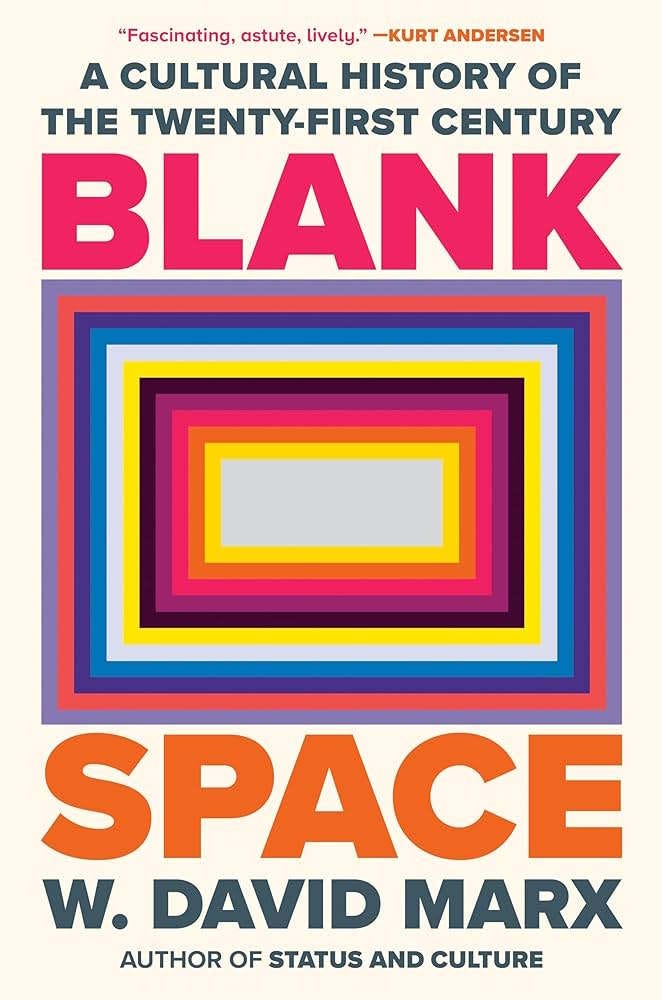
But anyway, there’s another thinker that I particularly like to read on cultural issues, and that’s David Marx. Marx, in my
...This excerpt is provided for preview purposes. Full article content is available on the original publication.