#15 Selective Solidarity: Are Citizens Willing to Help Some Foreign Countries More than Others?
The Trump administration has been moving to cut foreign aid worldwide, a shift that will impact many impoverished nations, including those heavily affected by AIDS. The U.S. State Department stated that "reviewing and realigning foreign assistance on behalf of hardworking taxpayers is not just the right thing to do, it is a moral imperative." This raises an important question: which foreign countries do citizens support their governments assisting financially?
Samir Negash and I recently published an article in the Journal of Common Market Studies, where we analyze data collected at the European University Institute to understand the characteristics of recipient countries that make citizens more or less supportive of their government providing financial aid. We do not argue that foreign assistance should be determined solely by public opinion—most Americans, for example, likely cannot locate many of the neediest countries on a map. However, public sentiment plays a role in shaping foreign aid decisions. But what factors influence citizen support for economic assistance? Is it based on the poverty levels of the target country, democratic governance, low corruption, or cultural and geographic proximity?
In recent years, international redistribution has expanded due to global crises such as the COVID-19 pandemic or the war in Ukraine. These events have forced governments to decide how much financial support they are willing to provide to other countries. However, do citizens support economic assistance equally across all countries? In our research, we show that public support for financial aid is selective: people are much more willing to support economic assistance for some countries than others.
Proximity and Cultural Similarity
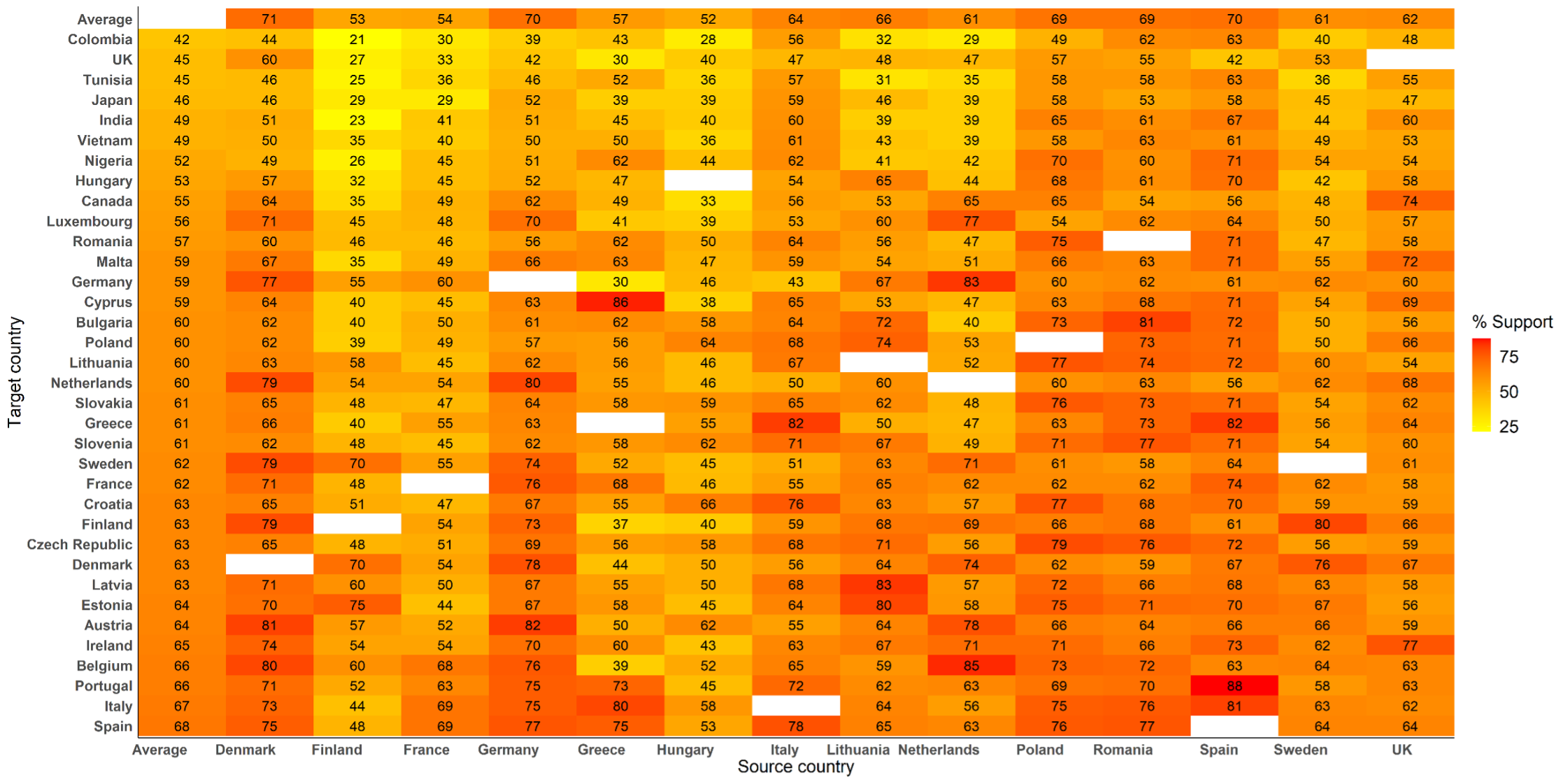
A key finding of our study is that citizens are more likely to support economic assistance for countries that are culturally and geographically closer to them. Countries that share a common language with the donor nation, for instance, receive significantly more public support. Similarly, neighboring countries garner more backing than those farther away. This suggests that solidarity is not purely altruistic but is shaped by a sense of familiarity and shared identity.
For example, Spanish respondents in our study expressed strong support for financial assistance to Portugal, while Dutch respondents were more likely to support aid to Belgium. By contrast, support for geographically distant countries, such as Nigeria or Vietnam, was much lower.
Economic Need and Perceived Deservingness
While proximity matters,
...This excerpt is provided for preview purposes. Full article content is available on the original publication.