Weaving Paths from Colonial Apocalypse to Ecological Revolution
Yesterday, 533 years ago, the Invasion began. It started in the Caribbean, and quickly spread to North and South America, what many of the peoples resisting the Invasion referred to as Turtle Island, Abya Yala, or a similar name in their own languages.
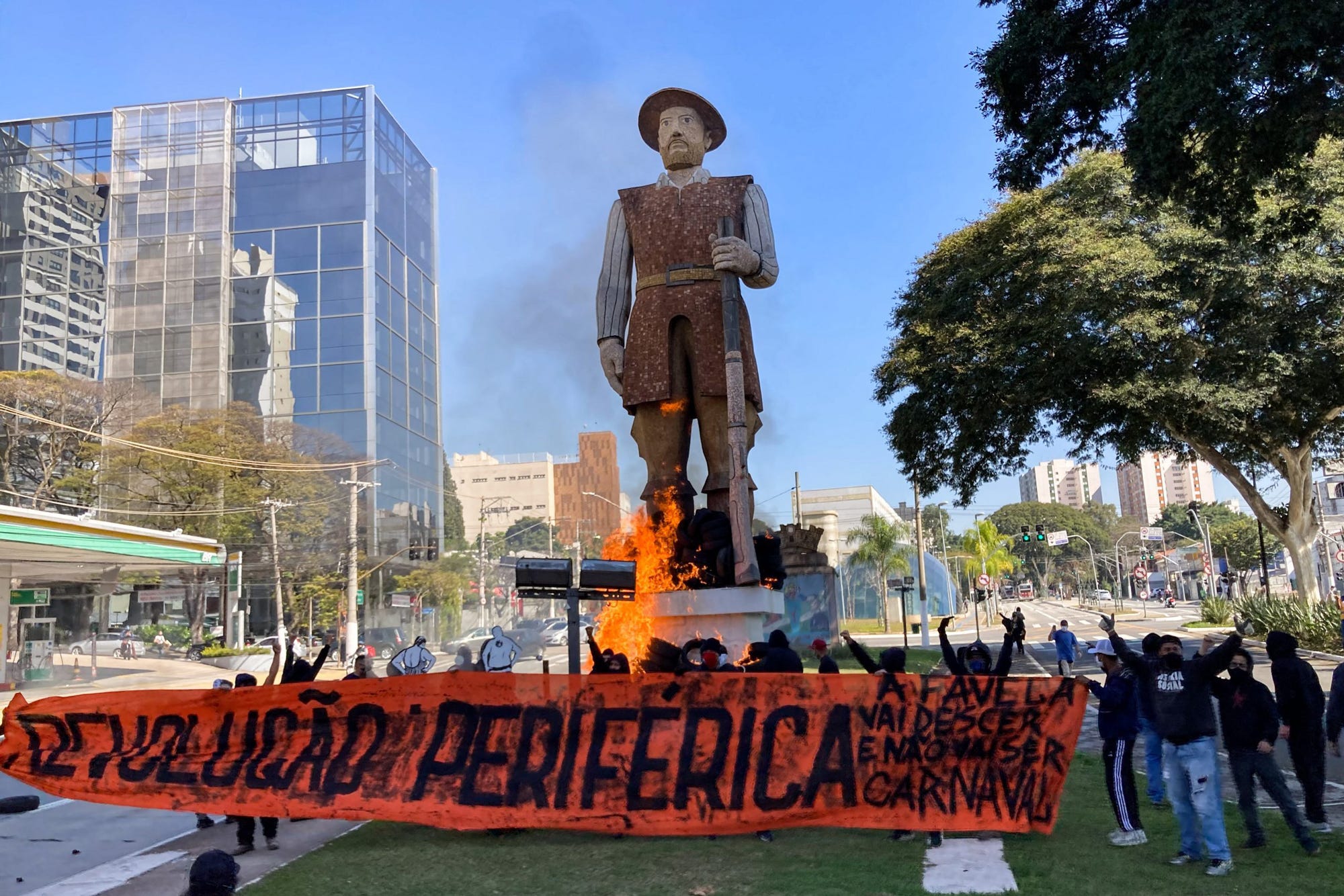
It was the largest, most extensive process of genocide in human history. Tens of millions of people were killed. Hundreds of languages, extinguished. Countless unique cultures and ways of relating with unique territories, criminalized. Most of those peoples are still here, resisting or surviving as best they can, but the opportunity for the military, religious, and economic elite of a dozen nascent nation-states in Europe to enslave millions, to cut down forests and dig mines and start plantations to plunder and despoil two continents, the opportunity to start a transatlantic cycle of intense profit and accumulation by also enslaving millions of people from Africa, the opportunity to practice and perfect a science of social control through the conquest and rule of one society after another – all of those things together allowed these European nations and the settler states they established to dominate the whole planet and to spread capitalism and the modern State globally.
At the time of the Invasion, four of the six human-inhabited continents were mostly stateless: Australia and Oceania, South America, North America, and Africa. They weren’t stateless through ignorance. Many of them, from the Mississippi to the Amazon to the Bío Bío to the Upper Niger, had already seen states arise in their midst, and overthrew them. Afterwards they organized themselves to prevent new states and better defend themselves against neighboring states. They were post-state. Anti-state. And even in Europe and Asia, where states had been developing for four thousand years, there were still many anti-state areas and pockets of resistance that thwarted the pretensions of state control. The Invasion and the globalization of the State erased so much of this knowledge, this history.
The first few invasions were led by a Genovese slaver and merchant named Colombo. His supporters called him an explorer but there is no historical record of him doing any exploring before he took three ships west. What we know is that he made his money selling enslaved human beings and, if he could find a source, precious metals or rare spices. And his sponsors in the Invasion were two monarchies that had joined together to build more
...This excerpt is provided for preview purposes. Full article content is available on the original publication.