The State of Defense Appropriations
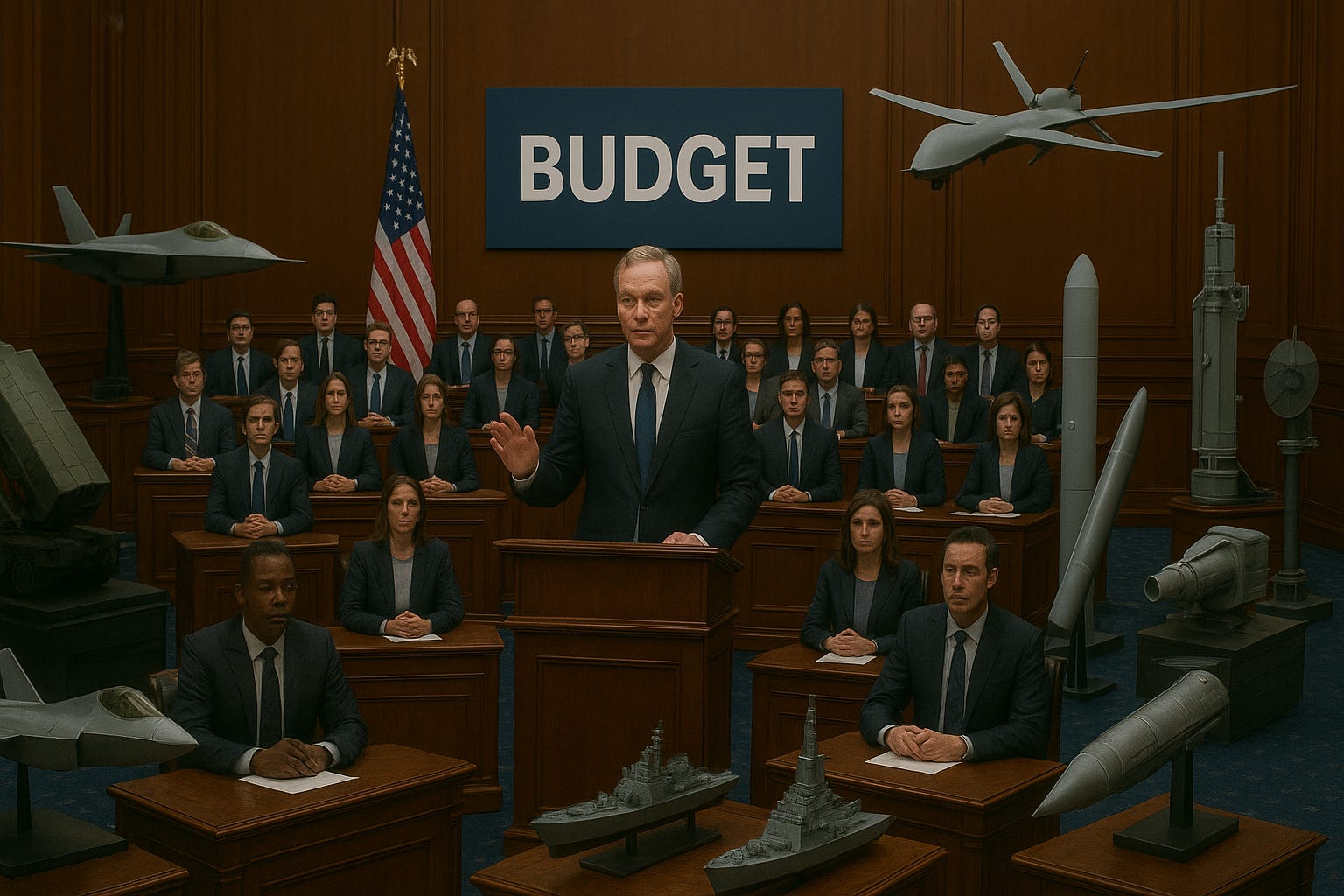
The Department of War begins FY26 today without a defense appropriation or a continuing resolution, thus a partial government shutdown. The reconciliation bill (aka OBBB act) was signed into law on July 4, providing substantial funding for many DoW priorities to include shipbuilding, Golden Dome, Munitions, low-cost weapons drones, AI, nuclear, Indo-Pacific, and air superiority. However, the House and Senate must still reconcile the differences in each of their defense appropriations bills.
This is the most unique budget year in a generation with a late President’s Budget (PB) that incorporated funding from a second source (OBBB). HAC-D also passed their version of the defense appropriations bill ahead of receiving the PB so there are many misalignments and new starts that were not captured. Also, few of the topline numbers from Comptroller, House, and Senate match creating other disconnects.
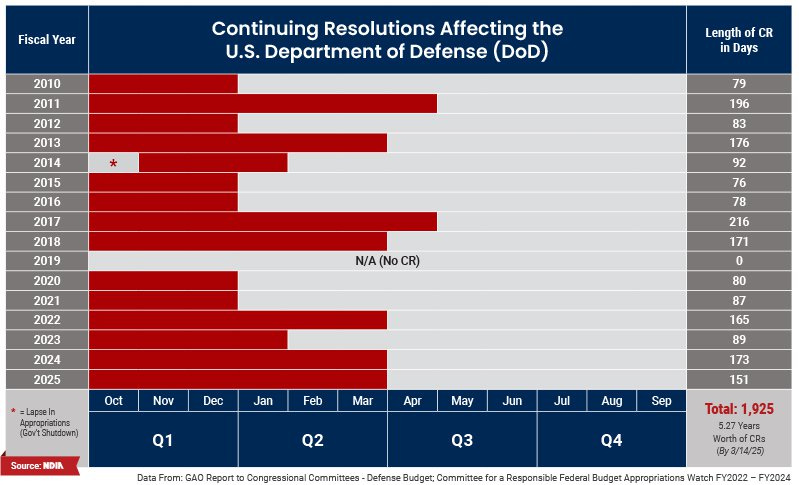
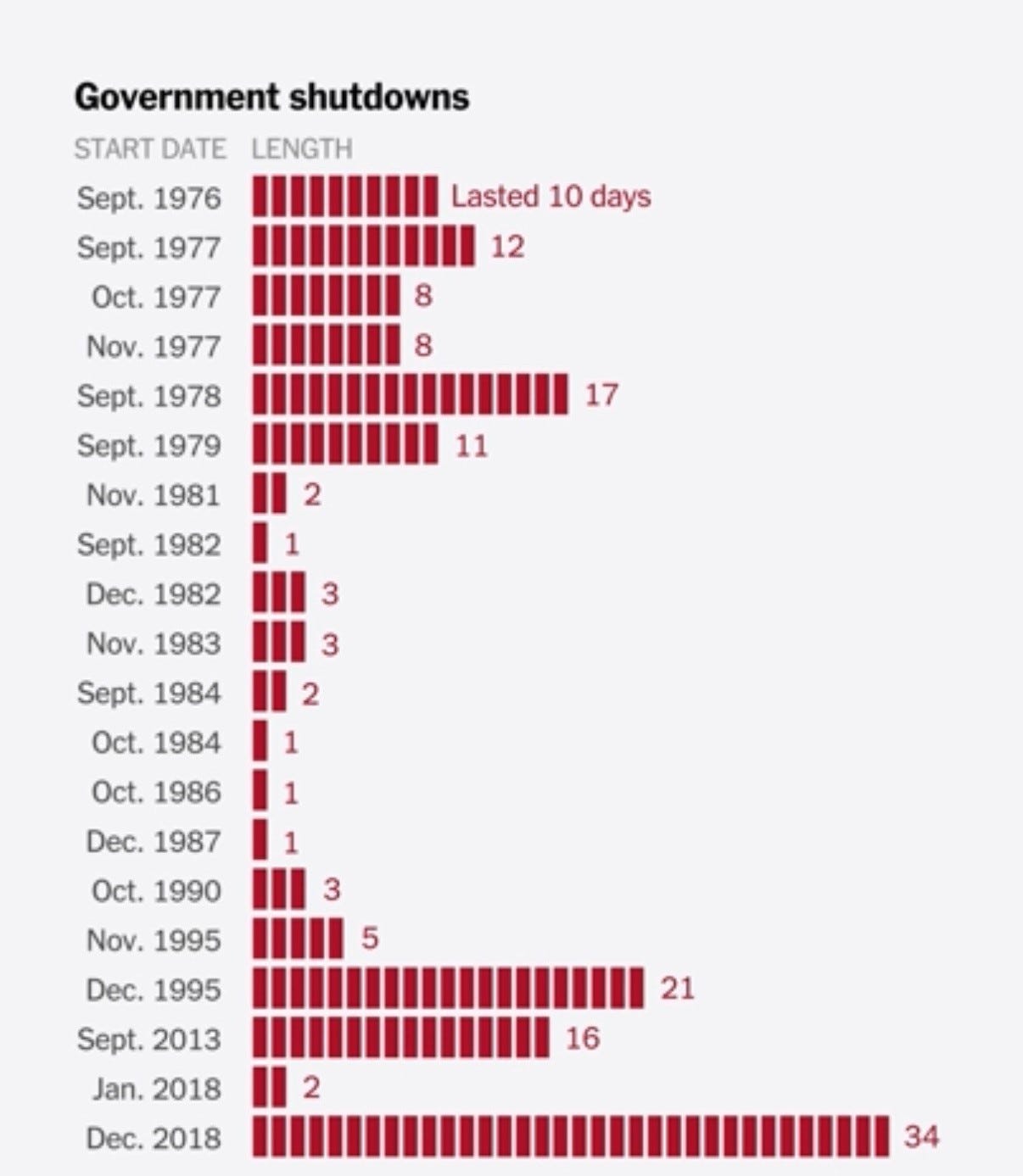
Continuing Resolutions have become the norm for the Defense/War Department but apart from some blips in the 1980’s and 90’s, shutdowns have been relatively rare - although 2013 and 2018 may have restarted an unhappy trend.
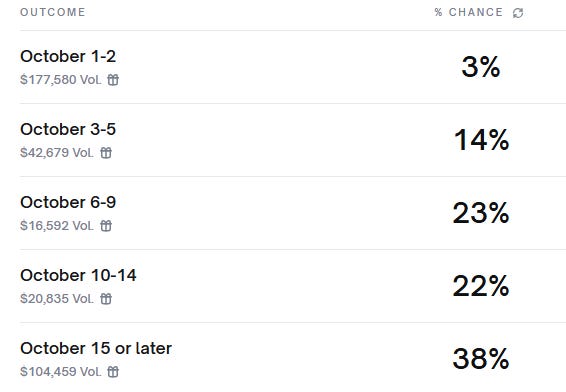
By some accounts, this shutdown could be a long one - given the politics of the moment and the wide gap between negotiation positions. Polymarket projects the Government shutdown will last two or more weeks - and we would put money on the more part of that selection.
But to support when members do return to the negotiation table, we’ve dove into the budget and appropriations bills to provide you in-depth analysis, tee up disconnects the House and Senate appropriators need to resolve, and provide additional insights for a decision edge, powered by Obviant.
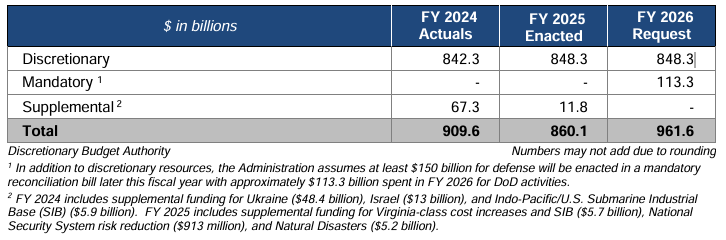
As previously mentioned, there are some discrepancies between what DoD reports as their budget total and what the Senate marked against. OSD Comptroller reports its FY26 request is $961.6B with $113.3B in mandatory funding from the One Big Beautiful Bill (see graph below) however the Senate tracks $830.74B including $514M in mandatory spending. Its not possible to rectify this discrepancy so for purposes of evaluating the congressional marks (through the appropriation lens), we will use the Senate’s numbers.
In comparing the toplines of the White House budget against the House and Senate, the SAC-D proposes adding over $21B in total funding. Even though the House topline numbers are not as generous, there is a consistent position between both appropriation committees to improve procurement funding levels (+$21B from the House
...This excerpt is provided for preview purposes. Full article content is available on the original publication.