Men Who Kill Themselves
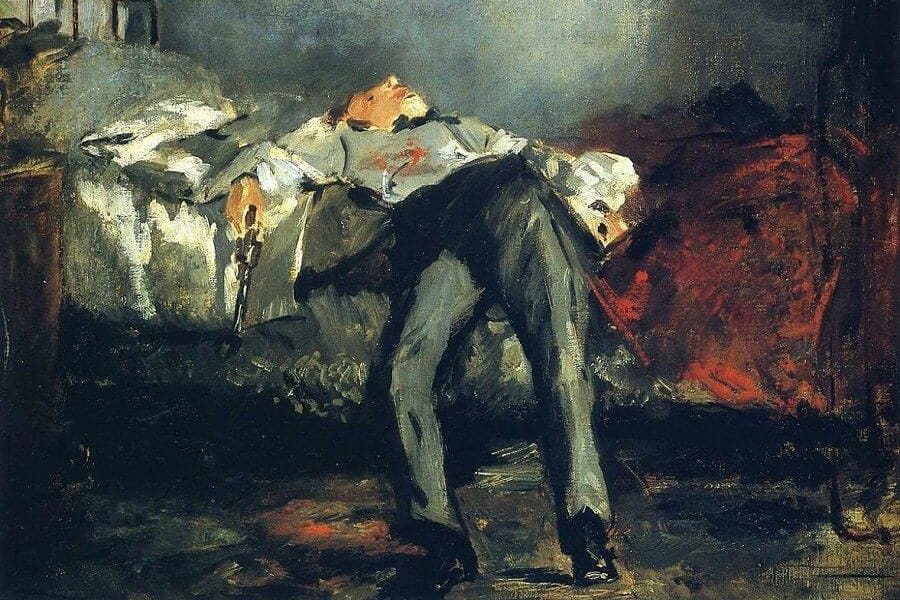
Django Ellenhorn, The Metropolitan Review’s Fiction Editor, returns today with a harrowing and brilliant work of memoir, a tale of his yearslong struggle with suicidal ideation and the violent, seemingly inescapable act itself. There are reams of mental illness writing in the world, but little of it can match Ellenhorn’s candor and sweep, his willingness to confront darkness with unflinching literary rigor. This is not a sentimental journey; there are knives, chemicals, a handgun, and no easy answers. Instead, Ellenhorn traces the actual shape and logic of suicidal thinking in a young man repeatedly drawn to the edge. We urge you to take caution when reading this essay — it contains graphic depictions of suicide attempts and explicit discussion of methods.
—The Editors

1.
He’d met a lot of people who loved to announce that they were failures, and then other people, usually friends, felt compelled to deny it, saying, No, no, you’re judging yourself too harshly, using bizarre and ridiculous standards, you have such good things going on, even if you feel in some way that you have fallen short! — but when it came to suicide, if you were still here then you could absolutely be considered a flop. He found something almost nice in the brutal clarity of that binary: you were either good at suicide and gone, or you were bad at it and remained, and he had incontestable evidence that he was talentless on this score, a batting average of nil, every attempt a whiff that sent him spinning in the dirt. He would take certainty wherever he could find it.
He did share a morbid embarrassment with friends who had made their own attempts, a wince at having failed to commit, of having under-researched and gone the wrong, ineffective route, and then in the end acted without conviction — which meant nothing ended. One friend even unnervingly credited him with being the reason they were still alive. He’d always suspected that nobody who knew him that well could like him that much, and so their gratitude felt like the symptom of another failure: he had not made himself known.
And if what they’d said was true, and he doubted it, then the only reason they were still here was because in a crucial moment he had lied.
When he needed to laugh about
...This excerpt is provided for preview purposes. Full article content is available on the original publication.