Nietzsche and Slavery
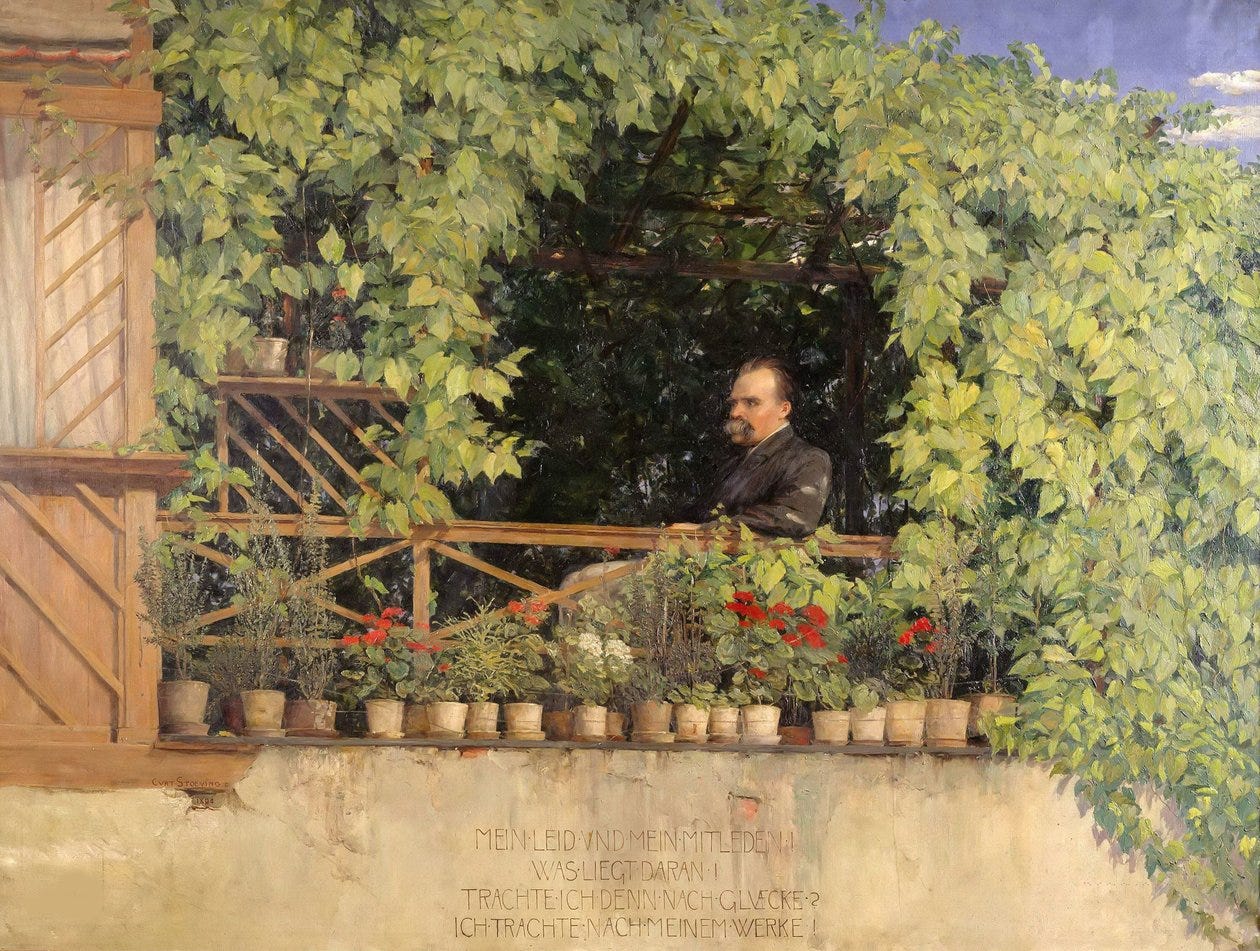
According to some on the left I have made it fashionable to reject Nietzsche’s philosophy which I find ironic given that to be “unfashionable” was something Nietzsche strived for in his own time. Whether Nietzsche would have wanted to be fashionable to the left or not is something we can leave to the reader of Nietzsche to decide. But as I have tried to suggest countless times, my reading method is centered on restoring the political thrust of Nietzsche’s thought in its full gravity of concern with the class struggle. Nietzsche is a robust political thinker whose thought must be assessed in its fullness and when that fullness is brought to the surface the left can learn a whole series of lessons, many of which have been ignored or buried by the Nietzsche industry in academia. By no means should Nietzsche be abandoned. He should be read differently than we have tended to read him.
To read Nietzsche anew in light of the seriousness by which he took political matters is the aim of a new book by Dimitri Safronov called Nietzsche’s Political Economy. Safronov’s book is a welcome contribution to the field of Nietzsche studies as it convincingly shows that despite what so many Nietzsche specialists have argued, he was a meticulous thinker of political economy. Safronov’s method is what he calls “triangulation”, an approach that aims to harmonize Nietzsche’s writings on political economy into three wider buckets: slavery, debt, and the division of labor. Nietzsche offers a wider “thematic topology” on these three themes that is continuous and integrated across his oeuvre. This topological approach resists reducing the core of Nietzsche to his unpublished material—as Heidegger argued is necessary—and nor does it read Nietzsche as aloof from politics and economy as the general consensus of Nietzsche scholars seem to generally insist.
In Safronov’s book Nietzsche is made into a thinker of the totality of the capitalist system. But unlike Domenico Losurdo who insists on the same point that Nietzsche thinks the totality, Safronov does not offer a full composite picture of Nietzsche’s political thought. Losurdo argues that Nietzsche’s thought is a ‘totus politicus’, i.e., a total focus of concern for politics and in particular a total focus on un-doing the revolutionary thrust of politics. If one were to identify one primary weak point in Safronov’s study of Nietzsche’s politics it would be that he does
...This excerpt is provided for preview purposes. Full article content is available on the original publication.