A Tough Question Indeed

Q.
Hi George,
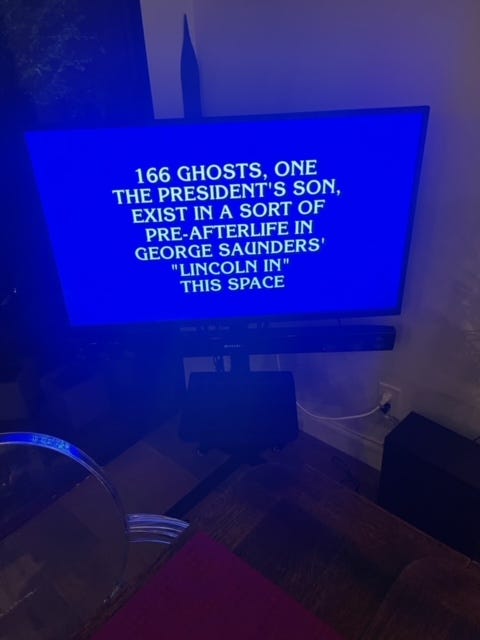
Pre. S. -- You were a clue on Jeopardy the other day! It made me once again reflect on how lucky we are to be able to just send you questions.
My question has to do with engaging with writing from authors we know to be some level of “problematic.” The list is (unfortunately) long -- Mary Karr describes abuse from David Foster Wallace, Cormac McCarthy had some kind of relationship with a 16-year-old when he was in his 40s, Alice Munro stayed with her child’s abuser, and so on.
You’ve written before about the incongruity of judging someone like Chekhov against today’s moral standards, but I think that’s different from this.
On the one hand, there’s lots of writers, and maybe we don’t need to spend time reading ones like those listed above. On the other hand, the idea of applying some moral purity test before deciding who to read feels anti-art and boring. And for that matter where does the line get drawn, do we have a list of moral transgressions which are okay, and some that aren’t, and if someone is an even better writer we’re ok with worse behavior because of their talent?
I’m curious for your thoughts on this! The “GS method,” and the way you generally talk about how a writer writes makes me think you’re not one to argue that art can be separated from the artist. At the same time, maybe the writing can exist in a vacuum, and its relationship to its writer doesn’t actually have to impact us as readers.
P.S. No one got the Jeopardy clue. Not story clubbers.
A.
I can always tell when I’m a Jeopardy clue because I hear from many old friends, from all over the country. Thanks, Jeopardy! Always a thrill.

First, let me say that my heartfelt answer to this question is simply: everyone should approach this in whatever way they want to, end of story. We can decide not to read a certain writer, for whatever reason, or we can decide to go ahead, ditto. It really isn’t for anyone else to say.
It’s interesting the way that the world these days seems to make us feel that we need to have an opinion on everything, even when having a certain opinion may not change anything we do, or anything about
...This excerpt is provided for preview purposes. Full article content is available on the original publication.