The contract fight in education unions
Deep Dives
Explore related topics with these Wikipedia articles, rewritten for enjoyable reading:
-
Chicago Teachers Union
13 min read
The article specifically references CORE's victory in the CTU election and the 2012 strike as the spark for the social justice teachers union movement. Understanding the CTU's history and tactics provides essential context for the broader narrative about contract fights.
-
No Child Left Behind Act
12 min read
The article identifies NCLB as a key moment when neoliberal education reforms 'boomeranged back' to the US from the World Bank's global project. Understanding this legislation's specifics illuminates the standardized testing and accountability regime the article critiques.
-
Collective bargaining
13 min read
The article's central argument revolves around the contract campaign as an organizing tool, discussing bargaining rights that some states outlaw for school employees. Understanding the legal and historical framework of collective bargaining enriches comprehension of what's at stake.
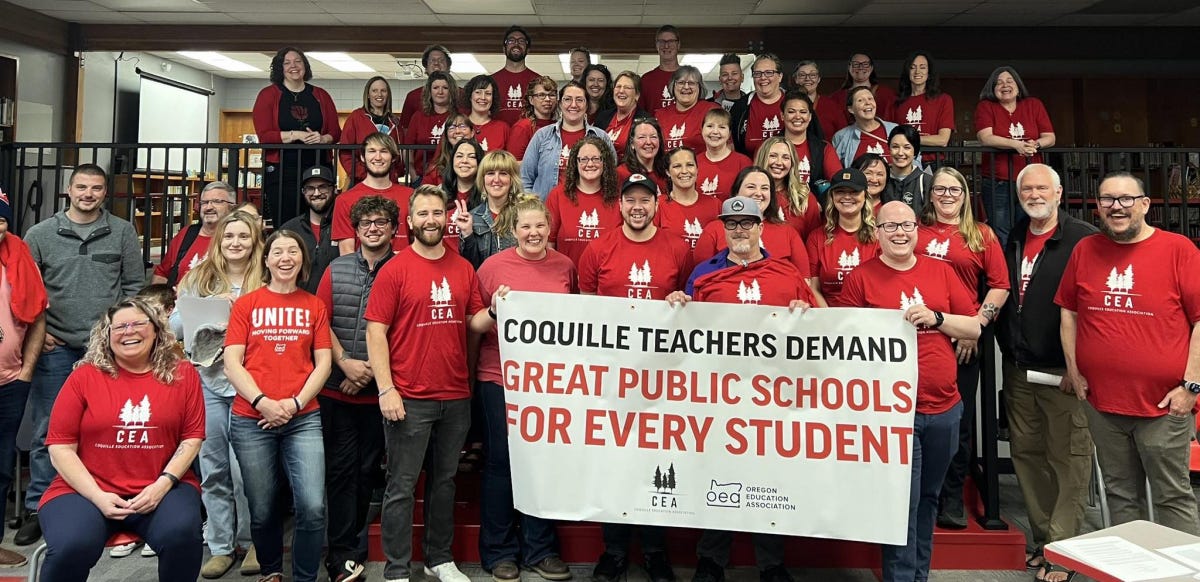
How do Trump's latest onslaughts, like sending the National Guard to DC and threatening to do the same to major cities with Black mayors, relate to US contract fights of education workers? The answers lie in how the Right's current assault relates to what preceded Trump1 and Trump2, starting with an international project in education, organized by powerful elites, supported by both US political parties. Though the global nature of the first neoliberal assault seems distant in time and space from our local contracts and Trump’s ideological, cultural, social, political, and economic offensive, that history configures what we face now.
A GLOBAL PROJECT COMMUNITIES CONTESTED, JOINED BY TEACHERS UNIONS - WITH A LEGACY EMBEDDED IN OUR SCHOOLS
Decades ago, bipartisan neoliberal reforms in US education began with the World Bank in Washington, spread globally, then boomeranged back to this country with No Child Left Behind. The rhetoric of the neoliberal policies, was - and is - that its program, privatizing schools and controlling what's taught with standardized tests, is essential for making the nation and individuals more competitive in the global economy, an especially vital change for historically under-served or poorly-served, low-income families of color. However, we know from copious evidence about harm done by these reforms, from school closures, to the narrowing of curriculum with testing, to privatization with charters, the policies most victimized the very communities they were touted as helping, low-income communities of color.
After years of resistance to policies destroying schools and the communities they served, parents and community activists battling school closures and funding cuts, along with the mostly separate struggles of education activists fighting charters and standardized testing, found a powerful ally in education workers demanding their unions embed social justice issues in fights for traditional contract demands. Sparked by CORE's victory in a union election to lead the CTU and its electrifying strike in 2012, a new movement of social justice teachers unions developed, winning contracts that protected schools, teachers, and students, naming and pushing back on neoliberal policies that intensifed "educational apartheid." Though not explicitly identified as such, these contract fights were challenges to a program of reforms imposed by the corporate managers of global capitalism, reforms that AFT and NEA accepted but were contested by education unions in much of the world, especially the global south. The courageous contract battles and strikes in the US that
...This excerpt is provided for preview purposes. Full article content is available on the original publication.