Life in the Fast Lane With Robinhood Markets
Deep Dives
Explore related topics with these Wikipedia articles, rewritten for enjoyable reading:
-
Payment for order flow
10 min read
The article's central critique of Robinhood revolves around this controversial practice. Understanding its mechanics, history, and regulatory debates would give readers crucial context for evaluating Tenev's business model.
-
High-frequency trading
17 min read
The article explains how Robinhood's founders came from HFT backgrounds and how market makers like Citadel profit from millisecond-speed trades. Deep knowledge of HFT illuminates why retail traders are at a structural disadvantage.
-
GameStop short squeeze
16 min read
Referenced as Robinhood's 'near-death experience in 2021,' this event sparked congressional hearings and public outrage over Robinhood's trading restrictions. Understanding this specific episode is essential context for the company's controversial history.
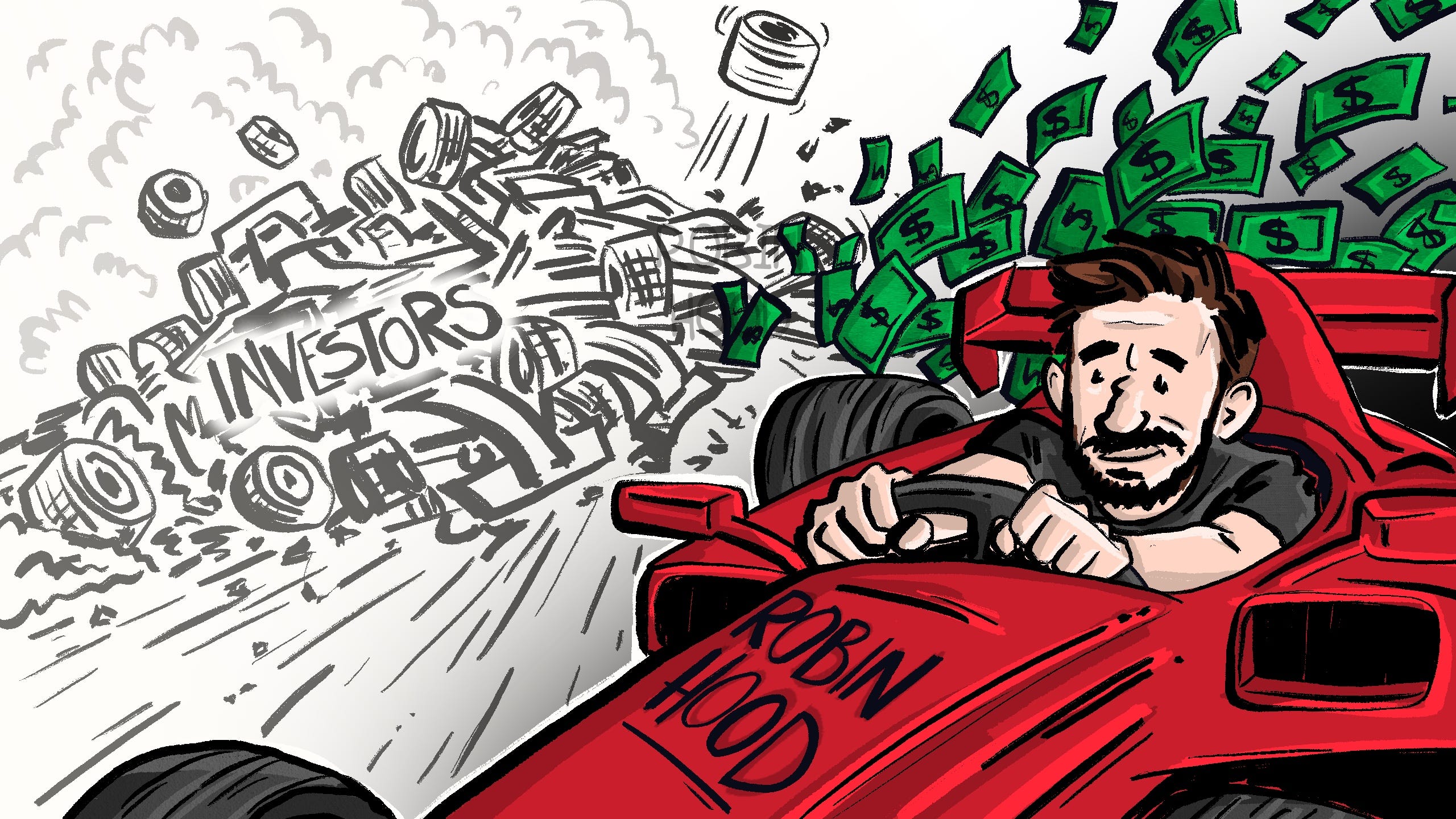
By just about any metric it has been a blowout year for the retail brokerage company Robinhood Markets. The company’s stock (HOOD) price is up about 220% in 2025, revenues and account growth have shot higher, and founder Vlad Tenev has become a multi-billionaire.
Robinhood was founded in 2013 but really burst onto the scene in 2020, changing the face of the retail brokerage industry. After a near-death experience in 2021 with the infamous GameStop episode, the company has become a phoenix, rising from the ashes, turning itself into a casino that can fit in a young man’s pocket. On the Robinhood app you can buy and sell stocks, options, crypto and bet on Monday Night Football all at the same time!
Robinhood is a pusher in plain sight and dopamine is the drug it peddles. It rounds up retail, non-professional traders and matches them up with the best and fastest traders in the world and gets paid handsomely to do it. Tenev continually claims he’s democratizing investing, but his customers are, in effect, profitable lab rats. Their order flow is sold to professional trading firms and studied. They’re more like marks than investors.
The Wall Street Journal recently reported:
The chief executive of Robinhood took the stage at the online brokerage’s annual summit in Las Vegas this fall decked out in a race-car driver’s jumpsuit and customized Nikes.
Vlad Tenev told the hundreds of cheering traders in the audience that they had chosen “one of the most intense lifestyles out there.” He compared trading to driving a race car. “A finely tuned machine can make all the difference,” he said, “and that’s the role we feel Robinhood plays for our active investors.”
Vlad is right about one thing: trading for a living is definitely intense. I’ve done it professionally until I realized I really wasn’t good at it (most people aren’t) and went back to sales and strategy! A veteran trader, who was actually very good at it, said to me once, “If it were easy, Girl Scouts would be doing it.”
As far as Vlad taking the stage in race-car driver get-up and talking about a finely tuned machine making the difference, the analogy only works if the driver knows how to handle the damn car. If you put 99.99% of us into a Formula One car, we’re going to run that thing
...This excerpt is provided for preview purposes. Full article content is available on the original publication.