How the UAE’s Decade-Long Project in Yemen Ended in 48 Hours
Deep Dives
Explore related topics with these Wikipedia articles, rewritten for enjoyable reading:
-
South Yemen
13 min read
The STC's demand for renewed southern independence directly references the historical People's Democratic Republic of Yemen (South Yemen), which existed as a separate socialist state from 1967-1990. Understanding this history explains why southern separatism persists and why the STC's 'State of South Arabia' declaration carries such weight.
-
2017–2019 Saudi Arabian purge
9 min read
The article directly references the Ritz-Carlton detention where princes and businessmen were coerced into surrendering assets. This event illuminates Mohammed bin Salman's consolidation tactics and explains why al-Zubaydi fled rather than attend the Riyadh conference.
-
Yemeni civil war (2014–present)
2 min read
While readers may know fragments, the full complexity of the multi-sided conflict—Houthis, Saudi coalition, UAE proxies, southern separatists, and the internationally recognized government—provides essential context for understanding how a Saudi-UAE split could emerge from their 2015 alliance.
Drop Site is a reader-funded, independent news outlet. Without your support, we can’t operate. Please consider making a 501(c)(3) tax-deductible donation today.
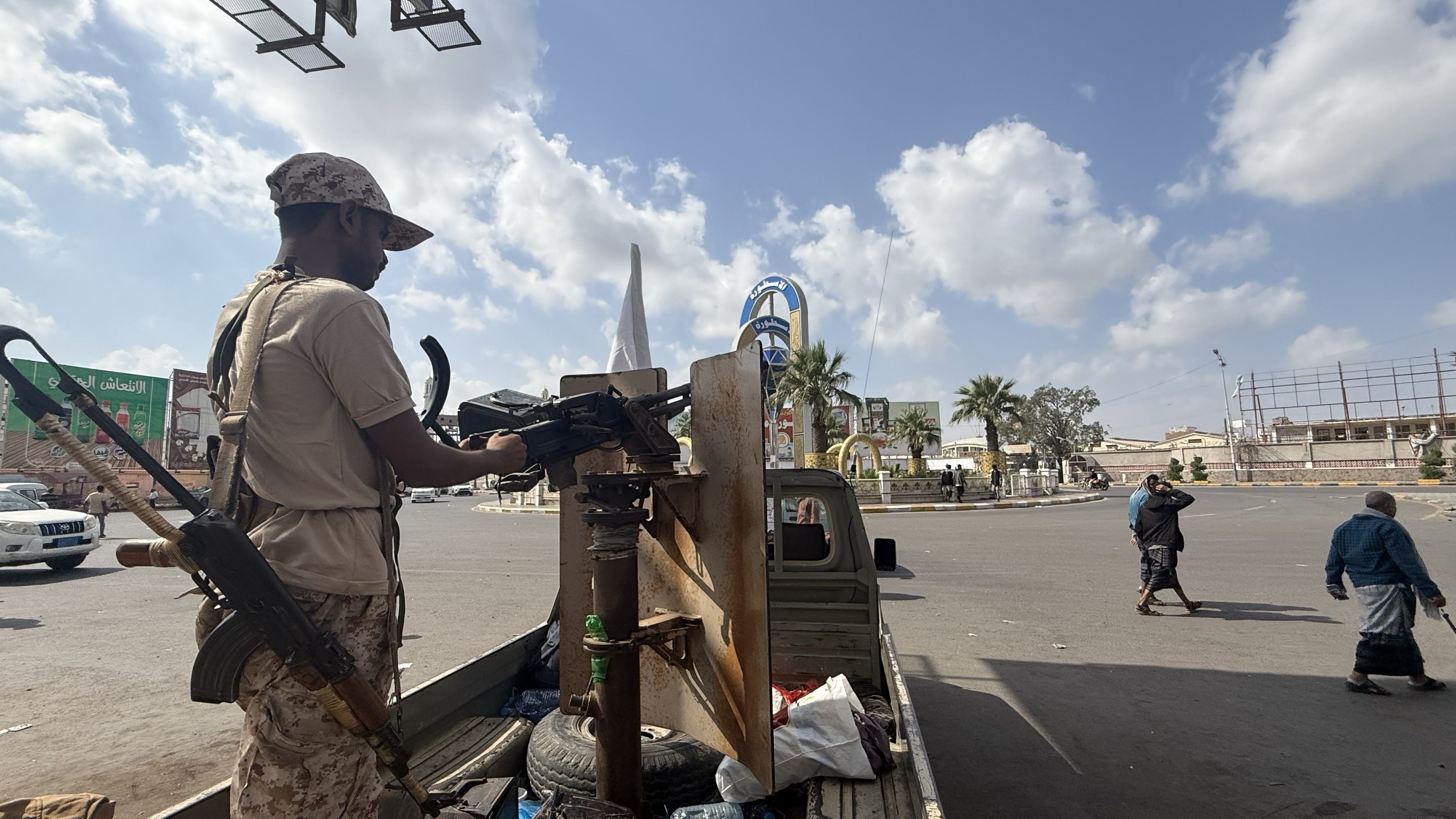
Saudi Arabia continued its consolidation of power in southern Yemen over the weekend as days of rapidly evolving Saudi military action against UAE-backed forces shifted into dramatic political change in the anti-Houthi side of the country’s unresolved civil war.
Thousands of demonstrators took to the streets of Yemen’s southern port-city of Aden on Saturday in support of the recently routed UAE-backed Southern Transitional Council (STC) and in response to a statement read from Riyadh by STC Secretary-General Abdulrahman al-Sebaihi that was broadcast on Saudi state TV on Friday, announcing the dissolution of the group.
Saudi Arabia and the UAE joined together in a coalition in 2015 to battle the Houthis who had taken control of Sana’a and much of the north. But divisions between forces on the ground in the south backed by Riyadh and Abu Dhabi reached a dramatic climax last month when the STC took control of much of southern and eastern Yemen, severely deepening a growing geopolitical rift between the UAE and Saudi Arabia. Since then, Saudi-backed forces have largely retaken the areas the STC had seized.
Any prolonged political crisis will severely impact Yemeni civilians already struggling to recover from a devastating humanitarian crisis, which peaked in 2017 during the Saudi-led war against the Houthis. Price hikes, extreme floods, and aid cuts have all contributed to worsening conditions in 2025. Half of the population in anti-Houthi territory is food insecure, with 15% classified as one step from the international classification of famine.
Controversy surrounds the supposed disbanding and the fate of the STC leadership. A delegation of more than 50 STC leaders flew from Aden to the Saudi capital on January 7 to take part in a conference Saudi Arabia said was being held to discuss Yemen’s southern issue and the separatist STC’s demand for renewed independence from Yemen’s north.
Instead of joining the group, STC leader al-Zubaydi instead secretly left by boat to Somaliland and then boarded a plane to the UAE. Saudi Arabia released the details of the smuggling operation, including the UAE’s involvement in the escape, hours after declaring
...This excerpt is provided for preview purposes. Full article content is available on the original publication.