The article extensively discusses Venezuela's oil reserves and specifically mentions the Orinoco Belt as 'the largest hydrocarbon accumulation in the world.' Understanding the geology, extraction challenges, and history of this region is essential context for the geopolitical discussion.
The article references the 'Donroe doctrine' as a play on Trump's name and the Monroe Doctrine. Understanding the original 1823 doctrine and its role in US foreign policy toward Latin America provides crucial historical context for the article's discussion of American influence over Western Hemisphere oil.
The article mentions PDVSA (Petróleos de Venezuela) as now being 'largely run by the armed forces' and needing wholesale reform. Understanding the history of Venezuela's state oil company, its nationalization, and decline is key context for the oil extraction challenges discussed.
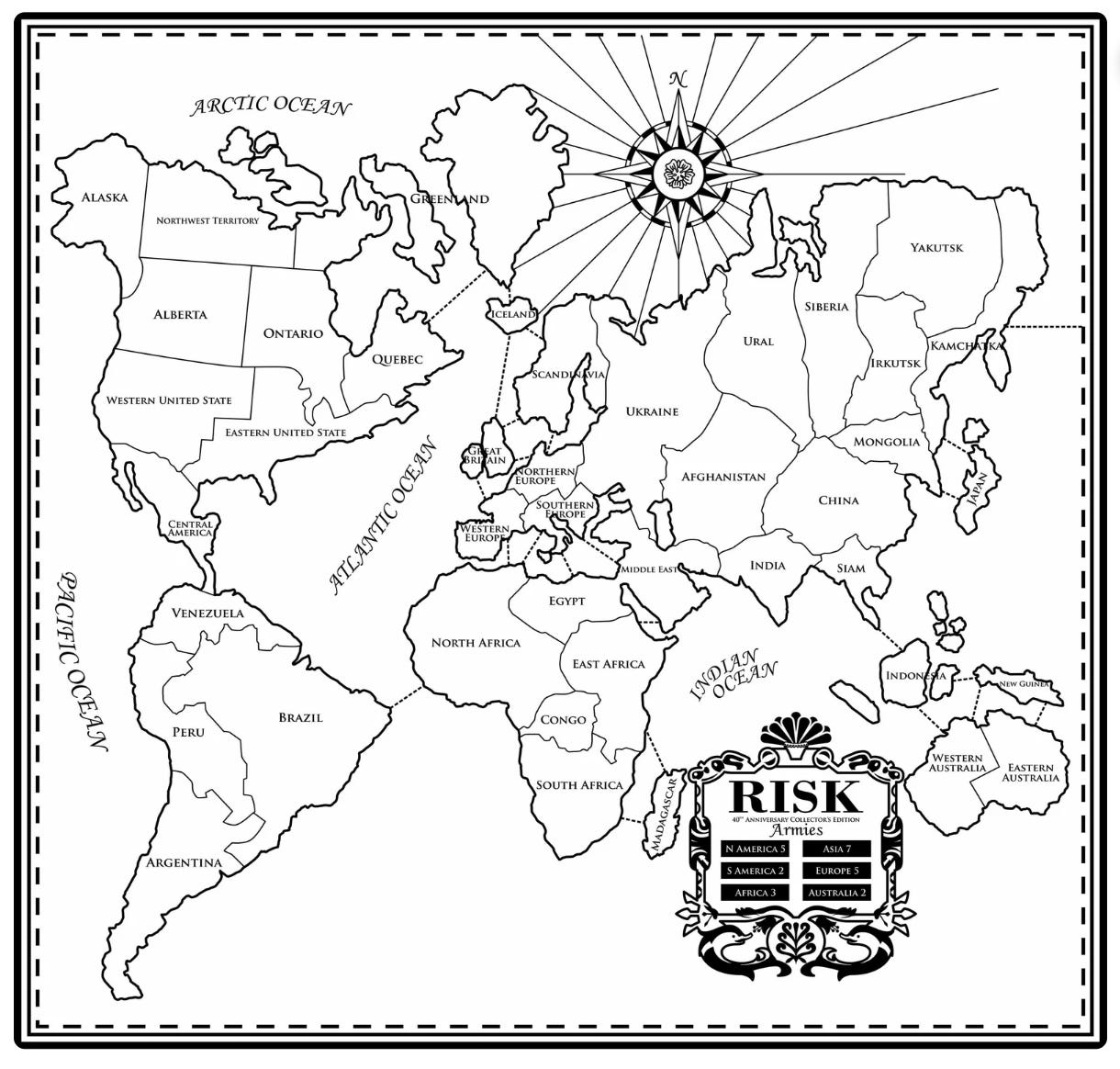
One of the more light-hearted suggestions is that Trump’s grand strategy is significantly shaped by an acquaintance with a certain popular game.
As Robert Colvileremarks: “Lots of people puzzled by what Trump’s up to but it’ll all become clear when he takes Kamchatka”
Oil Empire:
As for the logic of the “Donroe doctrine”, Javier Blas has been in fine form. I think his reading is excessively rationalistic. But it is undeniably a strong take.
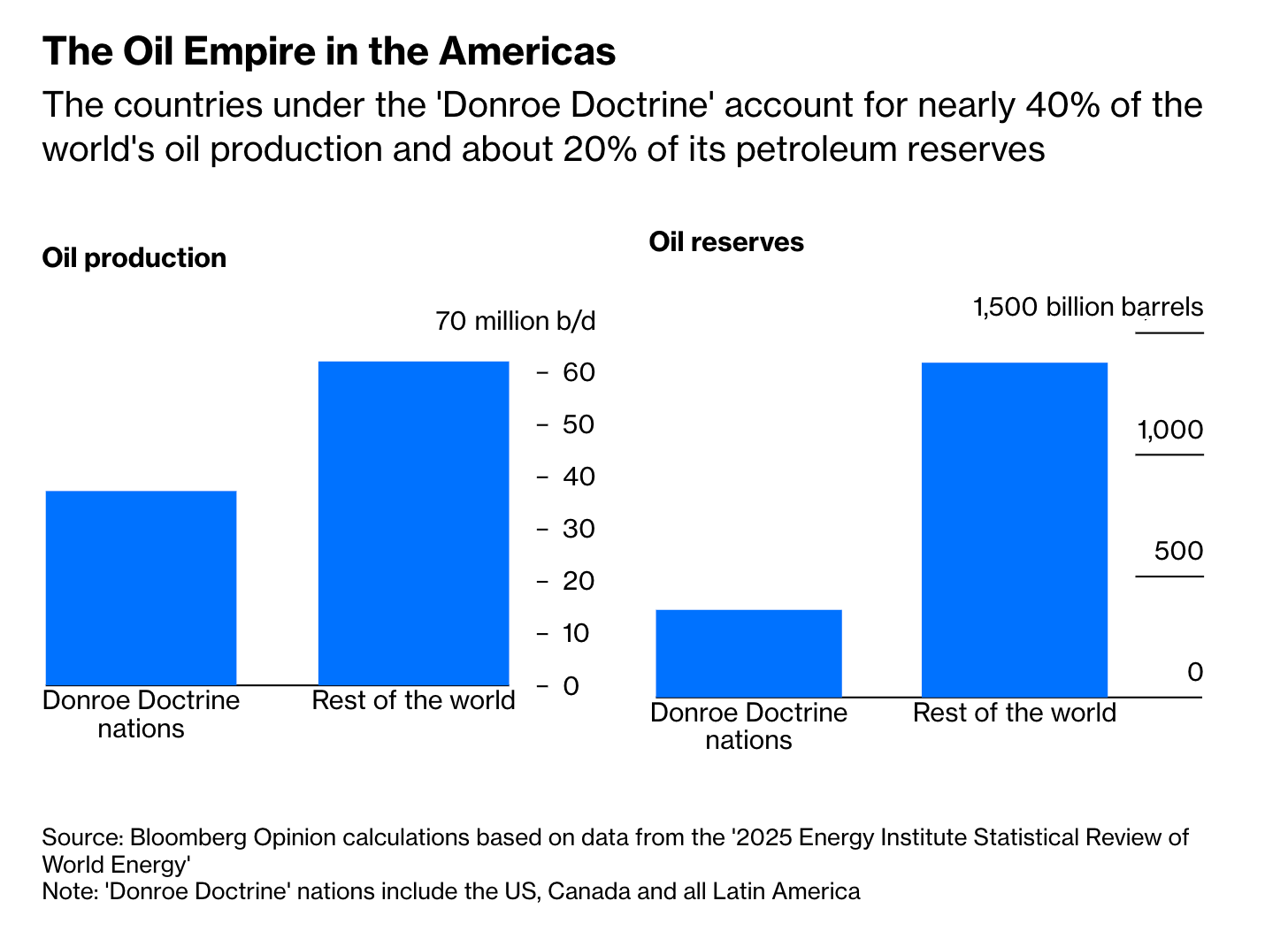
Let’s do the math. Start with the oil production of the US and add Canada. Then include Venezuela and the rest of Latin America, from Mexico to Argentina and everywhere else in between: Brazil, Guyana, Colombia. Like it or not, all of them are living under the “Donroe Doctrine” — an increasingly belligerent Washington’s sphere of influence over the Americas. Together they account for nearly 40% of the world’s oil output.
Then it’s a choice of language to describe what the US administration will do with all those barrels. It may try to exert direct control as in Venezuela, or oversee, influence and simply enjoy the benefits of what’s produced. Whatever the word, President Donald Trump now has his very own oil empire. And I’m talking about actual barrels already flowing into the market, not underground reserves that would take time and money to be developed1. With such resources Trump has an economic and geopolitical lever no US president has had since Franklin D. Roosevelt in the 1940s. At home and nearby, his country can tap a vast sea of oil. The implications of getting unfettered access to Venezuela’s reserves, the world’s largest, were immediately apparent to anyone in the energy and commodities business, particularly American foes. Oleg Deripaska, a US-sanctioned Russian oligarch, put it well on Saturday: Washington would have the means to keep the oil price close to $50 a barrel — giving it a winning hand in the future against anyone threatening to push the price higher by curbing supply. The Kremlin envoy Kirill Dmitriev said seizing power in Venezuela offered “huge leverage” over the global energy market. Having de facto control of the Western Hemisphere’s petroleum wealth is a geopolitical game changer. For decades, US military adventurism was constrained by the impact of any war on energy costs. Today the White House has primacy over oil-producing allies and adversaries alike — whether it’s Saudi Arabia or Iran, Nigeria or Russia. The