Carney’s Wealth Tests the Limits of Canada’s Ethics Laws
Deep Dives
Explore related topics with these Wikipedia articles, rewritten for enjoyable reading:
-
Mark Carney
17 min read
Related to "Carney’s Wealth Tests the Limits of Canada’s Ethics Laws" (34 min read)
-
Conflict of interest
5 min read
Related to "Carney’s Wealth Tests the Limits of Canada’s Ethics Laws" (43 min read)
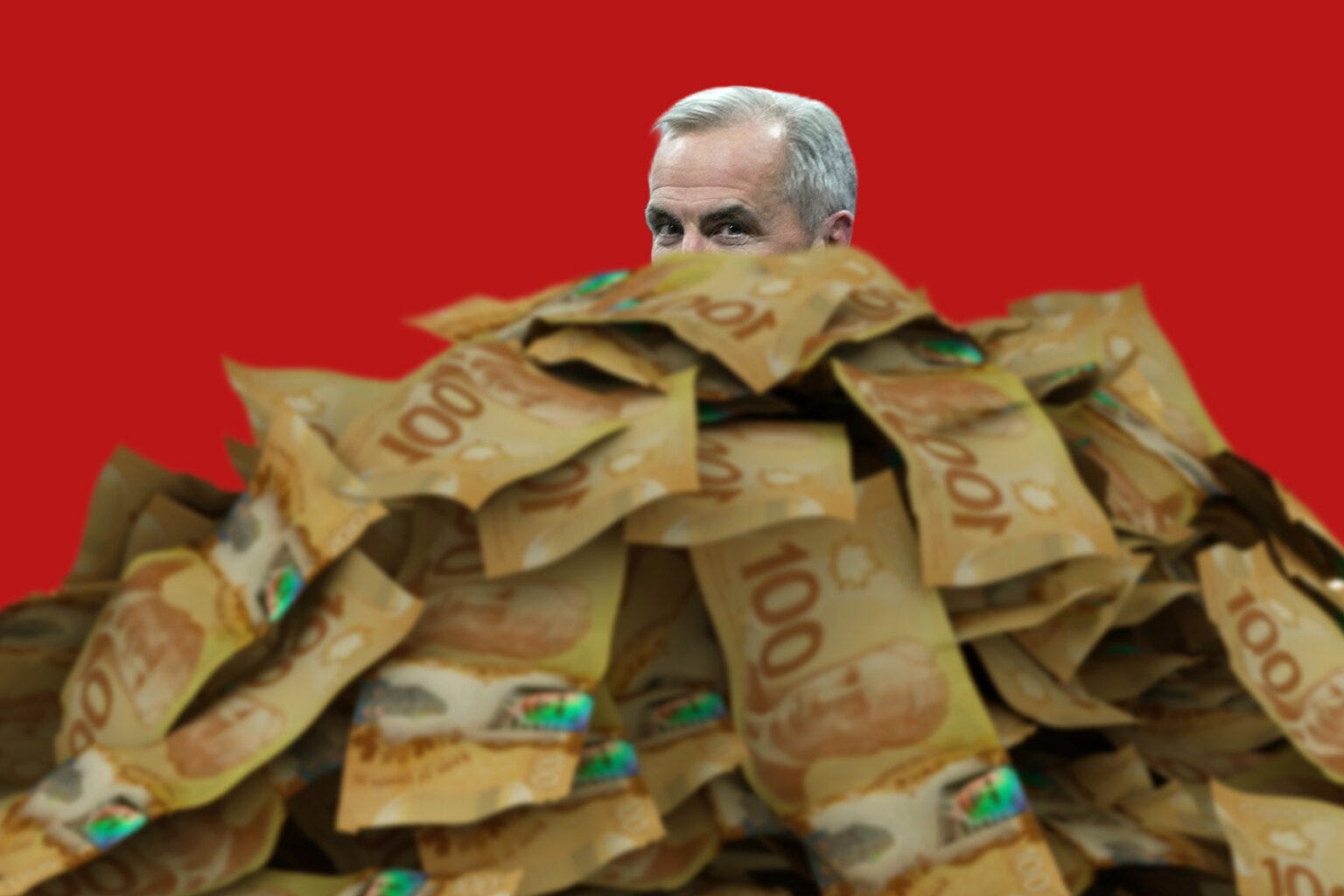
iStock / Sean Kilpatrick, The Canadian Press / The Walrus
This story was originally published on thewalrus.ca
Mark Carney cultivates the image of a sophisticated technocrat ready to fight Donald Trump’s tariff war. Accountability advocates warn his private-sector record tells a different story. “Prime Minister Carney has as many financial conflicts as Trump,” claims Duff Conacher, co-founder of Democracy Watch, one of Canada’s leading government watchdogs.
Launched in 1993, the non-partisan group campaigns for stricter oversight of public officials of all stripes. It files complaints with ethics commissioners, challenges government actions in court, and pushes for democratic reforms at the federal and provincial levels. High on Conacher’s list is strengthening conflict-of-interest rules.
Carney is a particular concern. He may not be hawking branded sneakers, fragrances, or coins like his American counterpart, but much of Carney’s reputation—and wealth—was forged inside the very financial institutions he’s now expected to regulate.
The prime minister spent a decade at Goldman Sachs, the powerful Wall Street investment bank, before serving as governor of both the Bank of Canada and, later, the Bank of England—two government roles that present themselves as neutral but are deeply enmeshed in the priorities and assumptions of global markets. Then, right before entering politics in 2025, Carney logged four years at Brookfield Asset Management, one of the largest private equity firms on earth. He held senior positions that likely left him very rich, with substantial holdings. Those investments, Conacher argues, risk blurring the line between what’s good for the country and what’s good for Carney.
Upon becoming Liberal leader, Carney moved to wall off his old financial life. He transferred his extensive portfolio into a blind trust controlled by someone at arm’s length with no personal, familial, or professional ties. In theory, Carney can neither know nor direct how his assets are being managed while he remains in office. And an ethics screen bars him from participating in policy decisions affecting firms he’s been associated with, such as Stripe, the multi-billion-dollar fintech giant on whose board he once sat.
These safeguards don’t go nearly far enough, counters Conacher. Even as the ethics commissioner, who answers to Parliament, is ultimately in charge of compliance, the day-to-day work of actually policing the ethics screen falls to an official appointed by the prime minister himself. And the blind trust is scarcely blind, as Carney is very aware of his initial
...This excerpt is provided for preview purposes. Full article content is available on the original publication.