Lawrence Freedman on Strategy
Deep Dives
Explore related topics with these Wikipedia articles, rewritten for enjoyable reading:
-
1981 Defence White Paper
4 min read
Linked in the article (7 min read)
Lawrence Freedman is the dean of strategic studies. He’s written books about the Falklands War, nuclear strategy, political-military relations, Kennedy’s foreign policy, the revolution of military affairs, and (my personal favorite) the history of strategy.
Freedman is now part of the father-son substack duo covering war and UK politics.
In part one of this far-reaching conversation, we discuss:
How the Falklands saved Thatcher’s premiership, making her the Iron Lady.
Why the great strategic decisions of history rarely have clear, pivotal moments.
Parallels between Putin, Xi, and the Argentine junta — what the Falklands campaign tells us about Ukraine, Taiwan, and the future of war.
How nuclear war went from being a “winnable” geopolitical contest to the apocalyptic dog that didn’t bark.
Cold War arms control treaties and what they can and can’t tell us about AI risks.
Have a listen in your favorite podcast app.
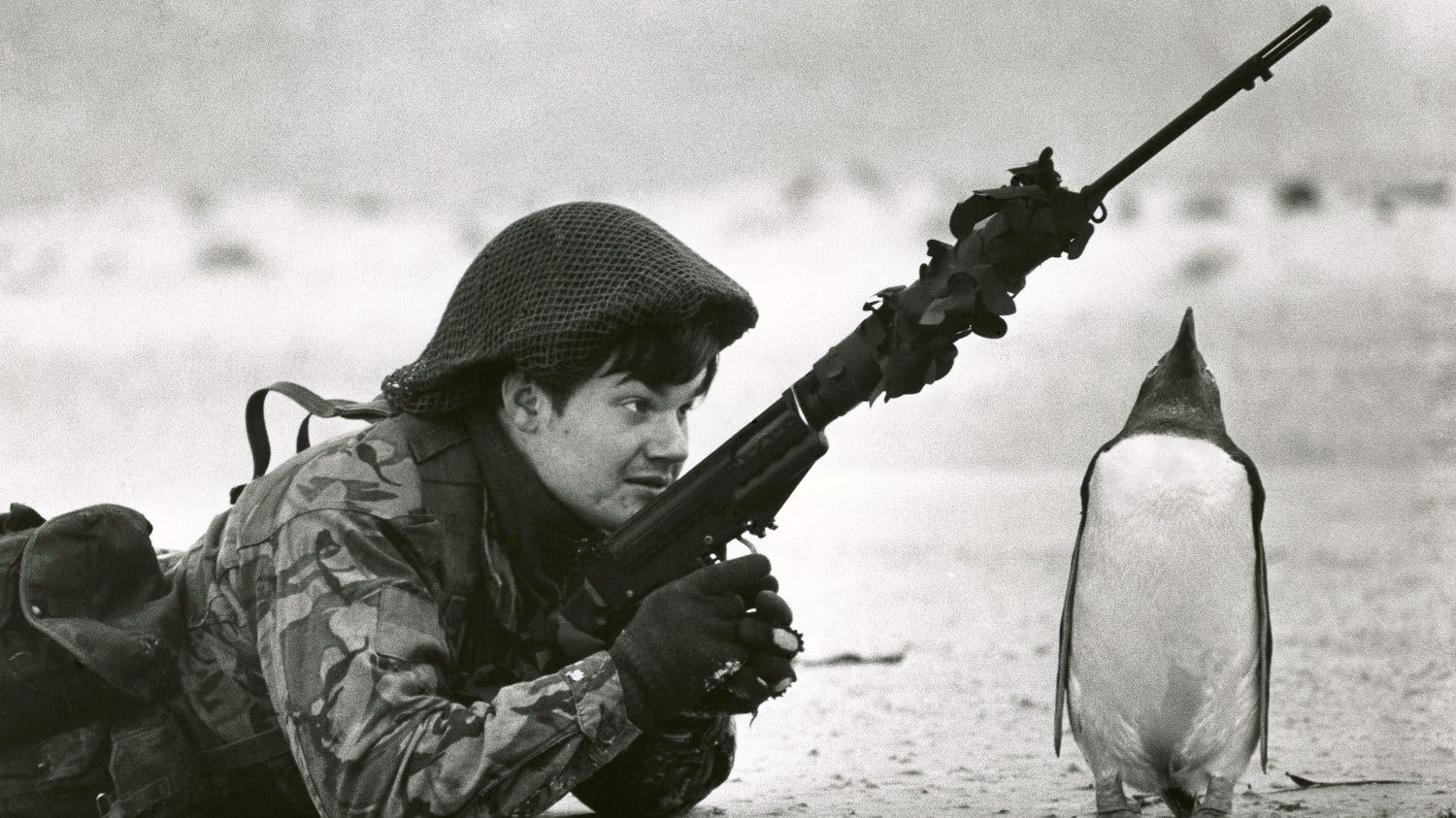
Note: We recorded this episode summer 2023.
Lessons from the Falklands War
Jordan Schneider: Let’s start with the Falklands War. I was reading the official history you wrote about 15 years ago. There were some Taiwan parallels that started to emerge. Am I crazy for seeing some connections there?
Lawrence Freedman: It’s about the defense of islands and the occupation of islands. The Japanese interestingly have looked to the Falklands for similar reasons. It tells you something about the problems of amphibious operations.
It’s obviously very different in one respect in that there was not a lot of population on the Falklands. There were not the issues of, to a degree anyway, popular resistance or the risk to civilians as a result of fighting. It does tell you about the challenges of maritime operations to take islands.
Jordan Schneider: What struck me was the buildup to the war.
You had this really weird dynamic of the UK telling the islanders, “You guys, something’s got to give here. The current path is unsustainable. This is too expensive. We’re not really going to be up for this. It’s halfway across the world. It doesn’t really matter all that much to us.”
Then, you had this very confusing multiyear back-and-forth. The Argentine autocracy was facing coups and other internal tumult. All of a sudden, an invasion creeped up on the UK.
Lawrence Freedman: There’s no doubt that in the Foreign Office at least, the preference was to
...This excerpt is provided for preview purposes. Full article content is available on the original publication.