On the French (Supposed) Laziness
Very short summary: This essay examines the French supposed laziness through a microeconomic lens, separating preference- from incentive-based mechanisms that account for a lesser willingness to work. I consider pure laziness, Beckerian endogenous tastes, and identity norms; and weigh incentives from taxation, alleged superior leisure, and a potential low‑effort trap shaped by innovation dynamics and expectations. The argument downplays simple laziness, highlights taxes, norms, and learned leisure. Also, pessimistic expectations can become self-fulfilling, depressing effort and growth.
Tyler Cowen recently asked the question: Are the French lazy? I want to expand on his reflections, with the benefit of having some insider knowledge on this issue. This is a fair question, in light of the well-acknowledged fact that the French (and Europeans in general) work less than Americans. For many, that is one of the main explanations for Europe’s relatively poor economic performance. On the other hand, a few economists like Gabriel Zucman argue that, far from being a problem, working less has been a “collective choice” made in France and Europe, reflecting Europeans’ different conception of the good life. In this spirit, in what follows, I will avoid talking about “laziness” as the word has an obvious negative connotation. I will rather talk about “low willingness to exert effort” (LWTE). I do not write this essay as a polemic; rather, I use basic microeconomic reasoning to clarify what might explain the French LWTE.
Let’s start with some facts. Consider first the average annual hours worked in some selected OECD countries (source: OECD):
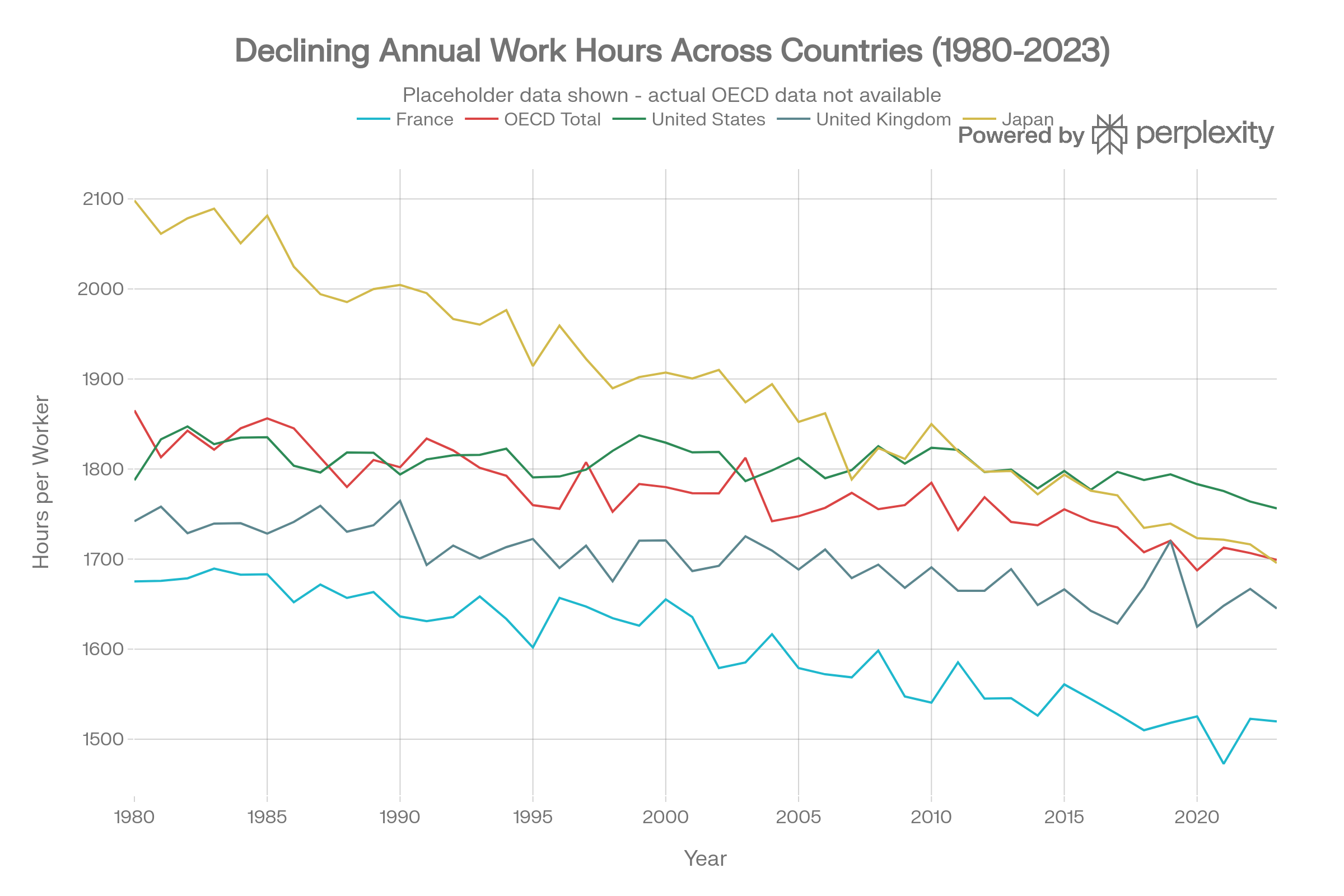
There is a general trend of declining annual hours worked—an important point because that suggests that working less is not necessarily the sign of increased “laziness,” unless we just assume that everyone on Earth is becoming lazier. However, France is significantly below the OECD average, and far from the US. This is arguably a statistical manifestation of the French LWTE. This is combined with significant differences in employment rates, which range from 69% in France to 75% in the US, with an OECD average of 72% (source: OECD). Now, this is partially compensated by the fact that France has a relatively high GDP per hour worked (a measure of labor productivity), though lower than in the US (source: OECD):
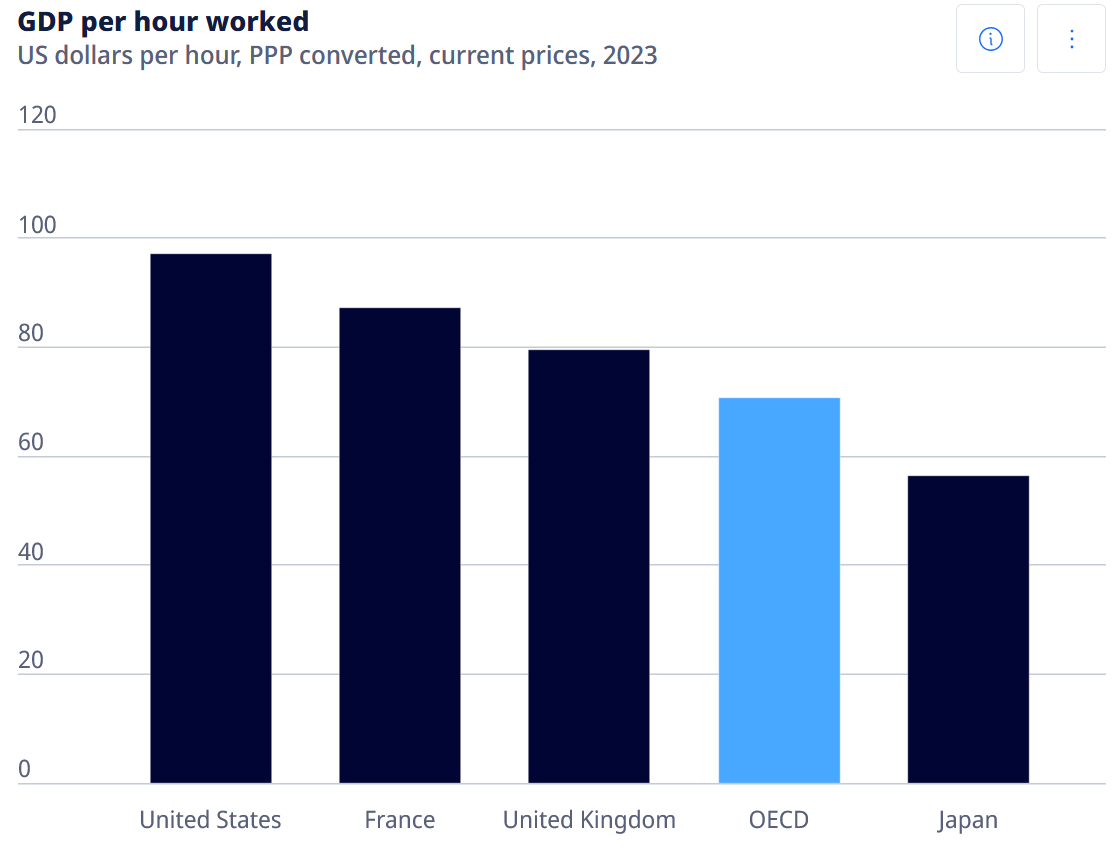
So, stylized facts indeed suggest that the French exhibit LWTE and, though this is partially compensated by relatively high labor productivity, this can be viewed as a significant
...This excerpt is provided for preview purposes. Full article content is available on the original publication.