Christ Agonistes
Deep Dives
Explore related topics with these Wikipedia articles, rewritten for enjoyable reading:
-
The Varieties of Religious Experience
14 min read
William James's seminal 1902 work is central to the article's argument about pragmatic approaches to religion and the psychological benefits of faith. Understanding this text deeply would illuminate James's specific arguments about mysticism, conversion, and the 'sick soul' that the article references.
-
Pascal's wager
11 min read
James's mountain ledge thought experiment and his pragmatic defense of religious belief echo Pascal's famous argument that betting on God's existence is rational even without proof. This philosophical precursor contextualizes the tradition of justifying faith through practical consequences rather than evidence.
-
New Atheism
1 min read
The article directly references Christopher Hitchens and Richard Dawkins as 'New Atheists' whose critiques of religion shaped the cultural moment that Ash's generation is now reacting against. Understanding this early 2000s intellectual movement provides essential context for the claimed religious revival.
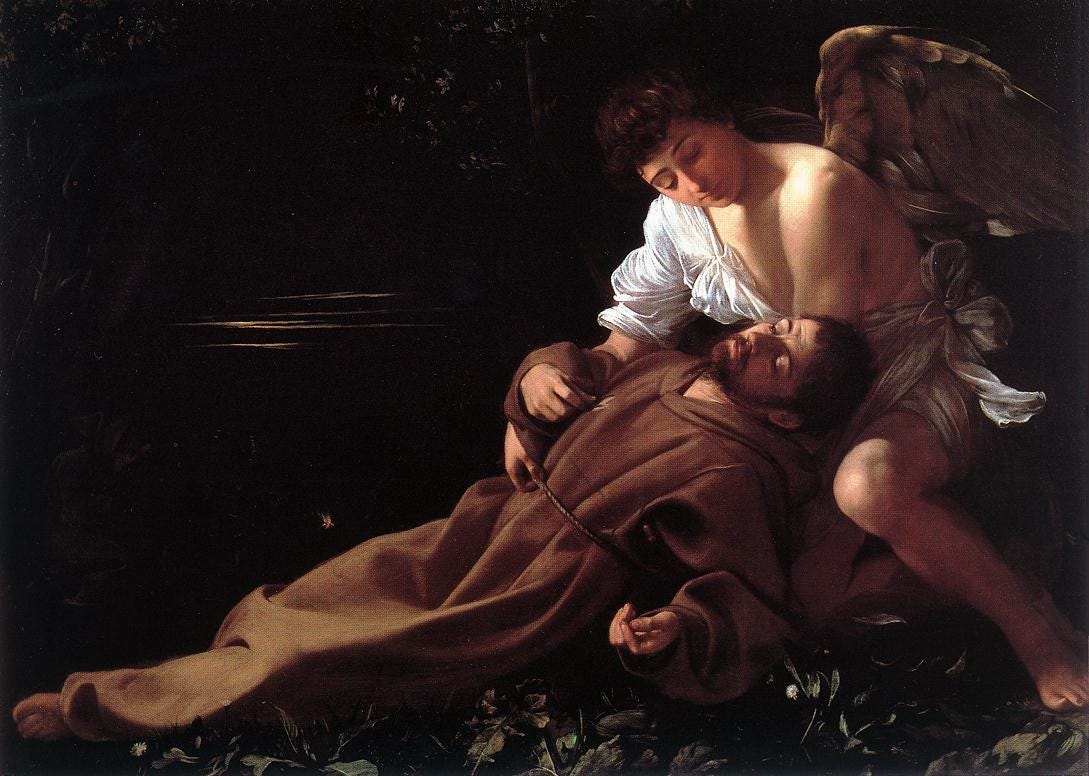
William James would like you to imagine that you are stuck on a mountain ledge, “from which the only escape is by a terrible leap.” Now for the good news: if you have faith that you can jump across, then you will. But let yourself brood on the odds of success and “you will hesitate so long that, at last, all unstrung and trembling, and launching yourself in a moment of despair, you roll in the abyss.”’ The thought experiment underlines that you must “believe what is in the line of your needs, for only by the belief is the need fulfilled.” If you succumb to pessimism about the worth or meaning of our world, then your despair may become so self-fulfilling that it even ends in suicide. But if you live in the faith that is a spiritual order beyond this realm, which justifies its evils, you will pull through.
The argument that only a religious faith in life’s meaning makes it worth living has a very specific and now dated context. James conjured up this ledge during an 1895 address to a Young Men’s Christian Association at Harvard University. Its ominous tone suggests there is nothing new about the funk currently afflicting the educated elites of Western countries. He had no sooner began his address than the light drained from his words: he knew that some Americans shared Walt Whitman’s exhilaration in the daily hustle of existence, but his attention was drawn to the army of suicides, “whose rollcall, like the famous evening drum-beat of the British army, follows the sun round the world and never terminates.” James conceded that people kill themselves for many reasons, but he was haunted by “metaphysical” suicides: people who decided on an abrupt exit from a world in which it no longer seems worthwhile to remain.
The “nightmare” weighing on these sick souls was something we have long since taken in our stride: the collapse of natural theology. Many sensitive people in James’s day suddenly found it impossible to trace God’s benevolence in the operations of the natural world. After Darwin, life was the dynamic but amoral product of evolution by natural selection, the fruit of countless accidents. James recognized that we could deal with the “speculative melancholy” these realizations induce by energetic struggle with daily evils, ignoring questions about whether they
...This excerpt is provided for preview purposes. Full article content is available on the original publication.