Who's Afraid of Broken Populism?
Deep Dives
Explore related topics with these Wikipedia articles, rewritten for enjoyable reading:
-
Buchenwald concentration camp
12 min read
The article opens with an image reference to Buchenwald and uses Nazi exterminations as its most extreme example of how right-wing disorder produces violence rather than collapse. Understanding the specific history of Buchenwald provides concrete grounding for the article's theoretical argument.
-
Paranoid-schizoid and depressive positions
13 min read
The article explicitly references Melanie Klein alongside Freud and Lacan to explain why incoherent or contradictory objects become more psychologically overwhelming rather than weaker. Klein's object relations theory, particularly her work on persecutory anxieties and fragmented objects, is the direct theoretical foundation for the article's central argument.
-
8 January Brasília attacks
14 min read
The article discusses Bolsonaro's coup attempt and Supreme Court conviction at length as a key example of how internal right-wing conflict enables rather than prevents violence. The specific details of this attack—which the reader may only vaguely know—illustrate the article's thesis about broken populism.
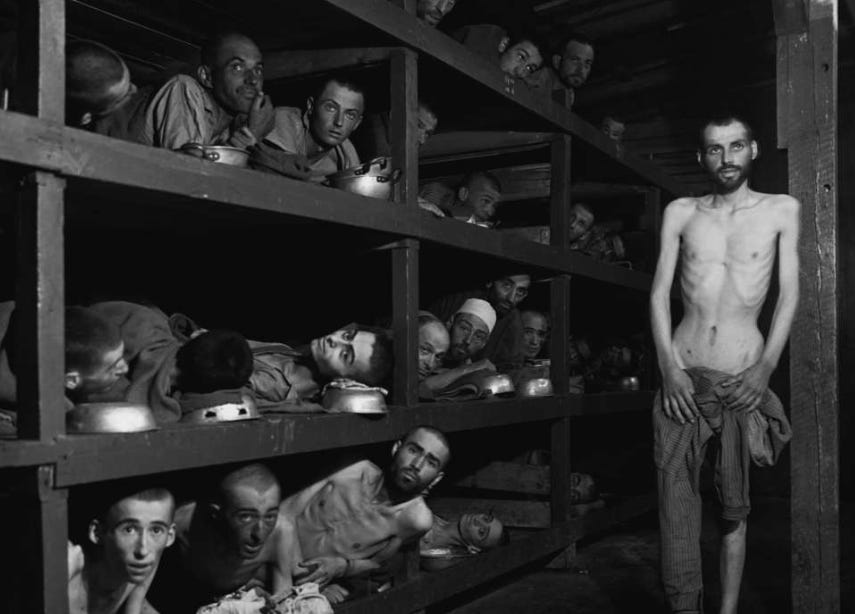
With a desperate optimism, today’s liberal voices seem to enthusiastically welcome the signs of internal disorder facing right-wing parties across the world. They welcome these far-right cracks as signs that the right-wing empire is collapsing. If we should learn one thing from recent history, however, it is that internal conflict and inconsistency do not prevent far-right violence, but rather justify it. With the help of psychoanalysis we can even better understand why this liberal optimism is unwarranted.
One of the more baffling psychoanalytic insights from Freud to Klein and Lacan is that the more an unpleasant idea or feared object seems irrational or self-contradictory, the more pathologically effective it becomes as a traumatic agent. Rather than weakening the persecutory function of an unconscious wish or a traumatic phantasmatic object, inconsistency only makes the wish or the object less containable and more subjectively overwhelming.
When an object, however unpleasant, is coherent, we are able to locate and isolate it, to treat it as a stable identity which can be consciously confronted and remedied. But it is in fact the very inability to coherently articulate the identity of an object which, rather than defeating the object by virtue of its inconsistency, makes it impervious to conscious articulation and therefore renders its destructive potential all the more malleable. On the political front, this psychoanalytic fact is making itself unpleasantly clear with today’s populist politics, and it is a lesson which should not be forgotten when we look at the media’s confused response to all of the anomalies emanating from the right-wing camp across the world.
Over the last few weeks, liberal newspapers and commentators in the UK have been getting excited over the apparent (and often very real) cracks in Reform UK, which continues to threaten to mark the end of the UK’s bipartisan politics between Labour and Tories. Through leaked calls and messages, including evidence of backbiting, top-down silencing, and even the break between Farage and the far-right agitator Tommy Robinson, it seems that the UK’s right wing is facing serious struggles and an ironic lack of internal agreement.
Similarly in the US, internal disorder on the political right appears to be making itself present to the media. The Epstein files have led a lot of conservatives to distance themselves from Trump, considering his very likely involvement with Jeffrey Epstein (with even Elon Musk
...This excerpt is provided for preview purposes. Full article content is available on the original publication.