Austin's new attic anxieties
Deep Dives
Explore related topics with these Wikipedia articles, rewritten for enjoyable reading:
-
Floor area ratio
11 min read
The article centers on how attic space counts against FAR limits. Understanding floor area ratio as a zoning tool—its history, how different cities calculate it, and its effects on urban density—provides essential context for why this ruling matters.
-
Zoning in the United States
11 min read
The dispute involves single-family zoning regulations and the HOME ordinance meant to increase density. Euclidean zoning, named after the 1926 Supreme Court case Village of Euclid v. Ambler Realty, explains how American cities came to separate land uses and limit building sizes—the very framework being contested here.
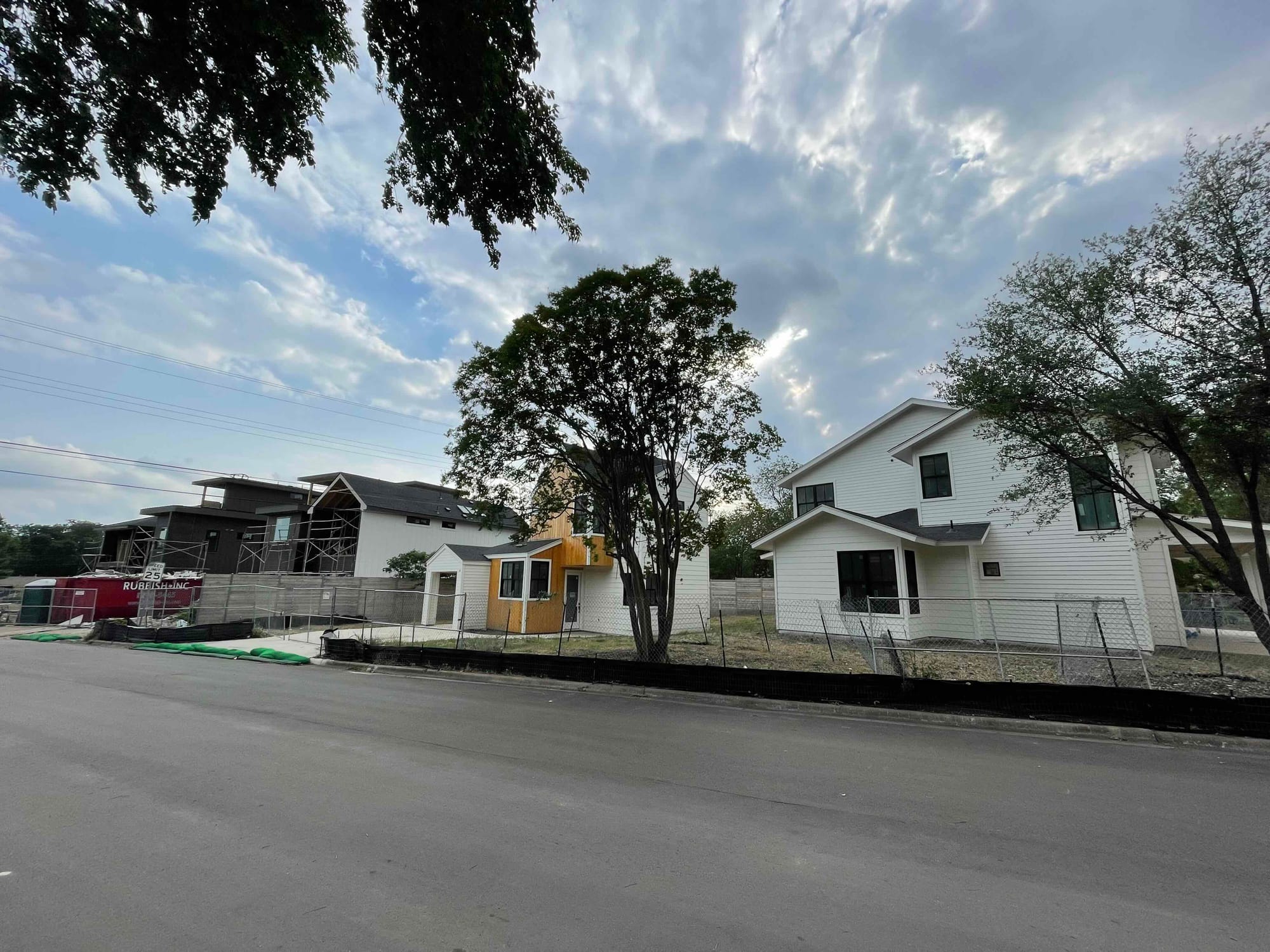
Homebuilders in Austin say that a recent ruling by an obscure city board is going to make roofs uglier and more expensive.
The Board of Adjustment is a quasi-judicial panel that is not really intended to make policy, but it somewhat unintentionally did so at an Oct. 13 hearing. The board, composed of volunteers appointed by City Council, ruled that any attic space above 6 ft in height counts against the total allowable floor space in a house built under the HOME ordinance. Even attic floors that are not load-bearing or air conditioned now count against the Floor to Area Ratio (FAR), the key regulation that limits the size of buildings in city code.
The BoA was ruling on a building permit for a three-unit development submitted by an applicant in Central Austin who had drawn the ire of her neighbors, one of whom hired Bobby Levinski, an attorney with Save Our Springs, to represent them in objecting to the permit.
I'm not going to go into the details of the permit in question. What is important is the implication of the ruling, which cast aside almost two decades of building precedent and undermines the intent of zoning policies that passed City Council with near-unanimous approval.
This excerpt is provided for preview purposes. Full article content is available on the original publication.