The Miraculous and Miserable City
Deep Dives
Explore related topics with these Wikipedia articles, rewritten for enjoyable reading:
-
Georg Simmel
12 min read
The article references Simmel's 1903 essay 'The Metropolis and Mental Life' as a foundational text in urban studies. Understanding Simmel's broader sociological work on modernity, alienation, and social forms would deepen appreciation of the intellectual context the article explores.
-
Berlin Conference
12 min read
The article mentions the 1884 Berlin Conference as context for understanding imperial expansion and urbanization. This pivotal moment in colonial history directly shaped the economic forces driving metropolitan growth that the article analyzes.
-
Robert Walser
12 min read
The article discusses Walser's micro-stories about Berlin life as a counterpoint to Simmel's pessimism. Walser's fascinating biography—including his mental breakdown and decades of silence—adds poignant context to his urban writings.
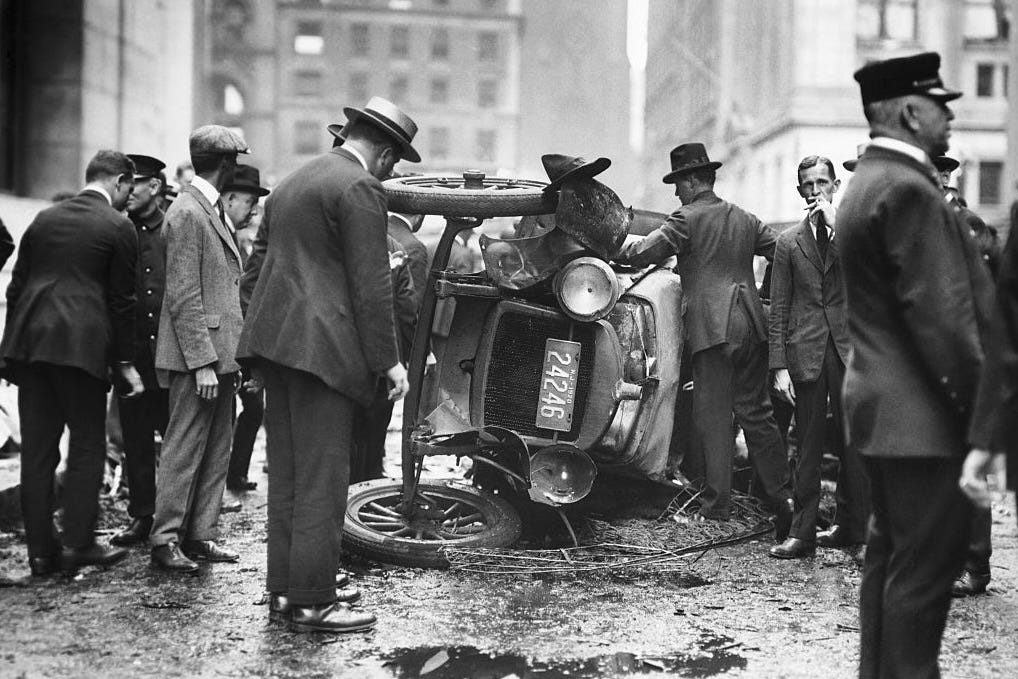
At the turn of the 20th century, the city became a source of concern, something to study, something to ponder. On the back of the Industrial Revolution and the concurrent disappearance of older, more rural forms of life, millions of people in what is called “The West” began to move to urban centers. With Empire and imperialism at their height — recall that the Berlin Conference, where the imperial powers divided up Africa, happened only in 1884 — the city expanded and became the metropolis. This process of cramming human life into smaller and smaller spaces was vividly described by Friedrich Engels as early as 1844, when he referred to London suffering from “colossal centralisation.”
The facts and figures for this period are stunning. For example, in the United States, between 1880 and 1900, the total number of urban residents grew by 15 million people. It is widely believed that London was the first major metropolitan center to reach 2 million people, sometime in the mid-1800s. New York was the first urban center to reach 10 million people, sometime around 1936. In 1800 20.5% of the United Kingdom’s population lived in cities. By 1925 that figure was over 75%.
It is around 1900, indeed 1903 to be exact, that the growth of these cities begins to become an active problem for us. George Simmel writes his “The Metropolis and Mental Life” in 1903, positing the city as an alienating, unnatural nightmare. As the 20th century continued, a robust discipline of urbanism would crop up. So too, would an emerging literature. The city would become the subject of our prose, and the question of how to write the city in fact defines many decisive moments in the history of literary modernism.
Concurrent with Simmel’s negative evaluations of urban life, the Swiss writer Robert Walser moved to Berlin and began penning fanciful micro-stories that posited a rosier view of the city. In his “In The Electric Tram” our author is ebullient: “Riding the ‘electric’ is an inexpensive pleasure. When the car arrives, you climb aboard, possibly after first politely ceding the right of way to an imposing gentlewoman, and then the car continues on. At once you notice that you have a rather musical disposition.” This is from 1908. By 1916, however, Walser’s stories of city life are getting a little darker.
...This excerpt is provided for preview purposes. Full article content is available on the original publication.