New Wind and Solar Subsidy Guidance Just Dropped
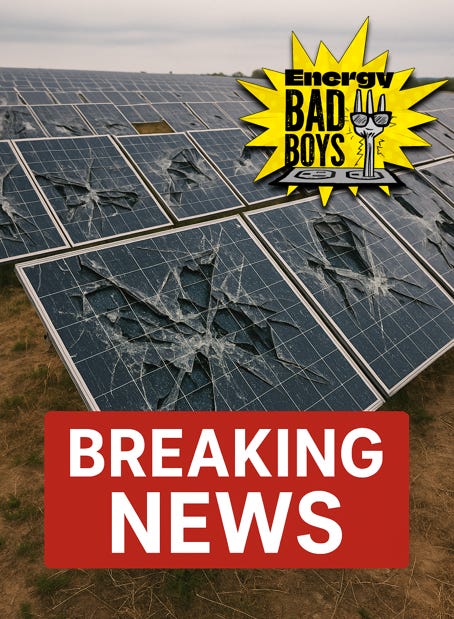
We interrupt our regular Saturday morning publication schedule to inform you of some breaking news: On Friday, the U.S. Treasury issued its much-anticipated updated guidance on how wind and solar projects can qualify for subsidies under the One Big Beautiful Bill Act.
According to Bloomberg Tax, the updated guidance came after an executive order by President Trump to revise the language related to the start of construction rules so they’re not circumvented, “including by preventing the artificial acceleration or manipulation of eligibility and by restricting the use of broad safe harbors unless a substantial portion of the subject facility has been built.”
As a result, the administration has officially ended the five percent safe harbor rules for subsidy eligibility, which essentially allowed wind and solar developers to lock in subsidies for four years after the credits were supposed to expire if they spent five percent of a project's cost up front.
For example, the tax credits were scheduled to expire in 2019. However, if a wind or solar developer spent five percent of the project’s cost on December 31st, 2019, they would have four years to finish construction on the project and still qualify for full federal subsidies.
Now, projects will have to physically start construction "of a significant nature" on these facilities to qualify for the subsidies.
What does "a significant nature" mean?
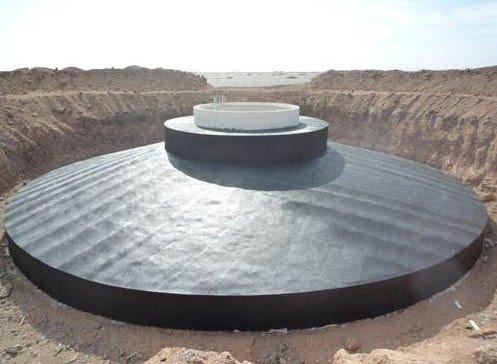
According to the guidance, for wind projects, it can mean the beginning of the excavation for the foundation, the setting of anchor bolts into the ground, or the pouring of the concrete pads of the foundation. For solar, it may include the installation of racks or other structures to affix photovoltaic (PV) panels, collectors, or solar cells to a site.
It does not mean:
Planning or designing
Securing financing
Exploring Researching
Conducting mapping and modeling to assess a resource
Obtaining permits and licenses
Conducting geophysical gravity, magnetic, seismic, and resistivity surveys
Conducting environmental and engineering studies
Clearing a site
Conducting test drilling to determine soil condition (including testing the strength of a foundation)
Excavating to change the contour of the land (as distinguished from excavation for a foundation) - Removing existing foundations, turbines, and towers, solar panels, or any components that will no longer be part of the applicable wind or solar facility (including those on or attached to building structures)
By replacing the ability for project owners to spend five percent of the project
...This excerpt is provided for preview purposes. Full article content is available on the original publication.