Iran's Jewish Population Belies Claims Of Tehran's Genocidal Intent
Deep Dives
Explore related topics with these Wikipedia articles, rewritten for enjoyable reading:
-
History of the Jews in Iran
10 min read
The article references the nearly 3,000-year Jewish presence in Persia/Iran but doesn't explore this deep history - understanding the Cyrus the Great connection and Persian-Jewish relations through millennia provides essential context
-
Dhimmi
1 min read
The article describes Jews as a 'protected minority' under Khomeini's fatwa with specific legal restrictions - this is the Islamic concept of dhimmi status, which most Western readers don't understand but which explains the legal framework governing Iranian Jews
For decades, Israeli government officials — chief among them, Prime Minister Benjamin Netanyahu — have accused Iran of plotting a new Holocaust against the millions of Jews who call the Zionist state home. Netanyahu has said Iran is “planning another genocide against our people,” and wants to “destroy another six million plus Jews.”
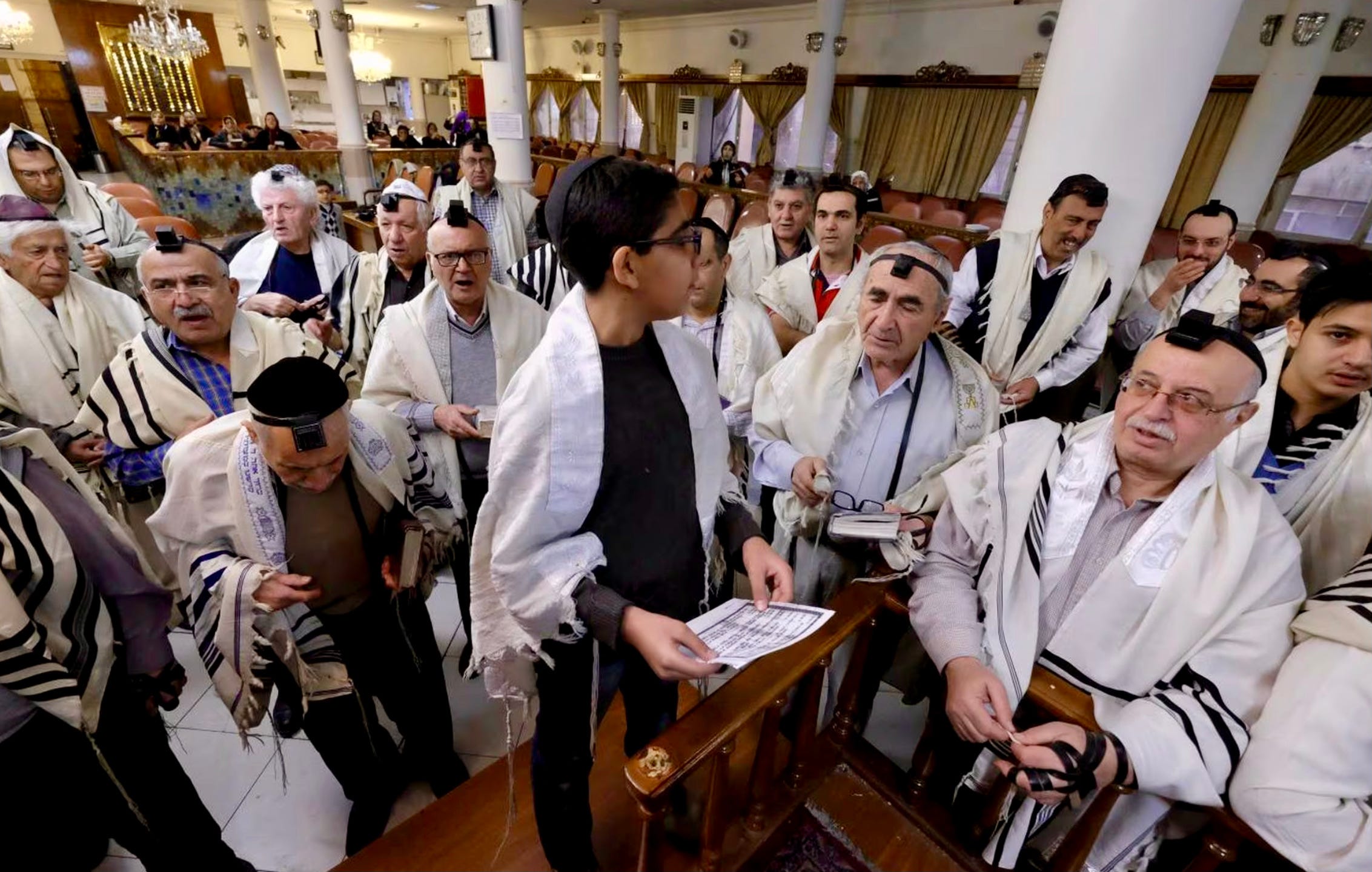
Western journalists are quick to quote these claims, yet slow to publicize contradictory evidence — such as the fact that Iran is home to the Middle East’s second-largest population of Jews, who freely practice their faith, peacefully coexist within the Islamic republic and even have a seat in the legislature.
It’s said that “charity begins at home.” If we’re to believe Netanyahu and his confederates in America, wouldn’t an Iranian genocide against Jews begin there too?
Having long been subjected to the genocidal-Iran narrative, the average American probably assumes there’s no such thing as an Iranian Jew. However, according to varying estimates, there are 9,000 to 20,000 of them in a land where the Jewish presence goes back nearly 3,000 years.
That’s well lower than the 100,000 or more Jews who lived in Iran in the years leading up to the 1979 revolution. The uncertainty of what life would be like in an Islamic republic — culturally, economically and in terms of personal safety — prompted tens of thousands to leave for Israel, the United States and other countries.
Many of them were alarmed when Habib Elghanian, a prominent Iranian Jewish industrialist with ties to the deposed Shah, was arrested just a few weeks after the revolution and charged with corruption and spying for Israel. Prosecutors also accused him of soliciting money for the Israeli Defense Forces, and thus being complicit “in murderous air raids against innocent Palestinians.” In May 1979, he was executed by firing squad.
Though Elghanian’s execution shook Iranian Jews, it also precipitated a critical development that has helped assuage their fears ever since.
The day after the execution, two rabbis and four younger intellectual Jews arranged a visit with the Ayatollah Khomeini. By conveying that Iran’s Jews considered themselves Iranian first and would support their fellow citizen’s choice of a new system of government, they hoped to elicit a guarantee against Jews being targeted.
To their surprise, Khomeini welcomed them as VIPs. After a literal standoff that saw the Jewish delegation and the ayatollah
...This excerpt is provided for preview purposes. Full article content is available on the original publication.