A global green industrialisation initiative can have a ‘win-win-win’ outcome: Henry Huiyao Wang & Wang Zhi
Deep Dives
Explore related topics with these Wikipedia articles, rewritten for enjoyable reading:
-
Asian Infrastructure Investment Bank
10 min read
The article mentions the AIIB as a key multilateral institution for financing green infrastructure in the Global South. Understanding its structure, China's founding role, and how it differs from Western-led institutions like the World Bank provides crucial context for the proposed initiative's feasibility.
-
South–South cooperation
13 min read
The article explicitly discusses South-South and North-South cooperation frameworks. This Wikipedia article explains the historical development of developing nations collaborating outside Western-dominated institutions, which is foundational to understanding the diplomatic and economic dynamics the authors are proposing.
-
Feed-in tariff
1 min read
The article discusses how China's green manufacturing reduced solar and wind costs globally. Feed-in tariffs were the policy mechanism that enabled Germany and later China to scale renewable energy production, directly leading to the cost reductions and manufacturing dominance described in the article.
Below is the latest opinion column of Henry Huiyao Wang in the South China Morning Post.
A global green industrialisation initiative can have a ‘win-win-win’ outcome
China’s green manufacturing capacity could be aligned with the West’s technological and capital strengths and the Global South’s development needs
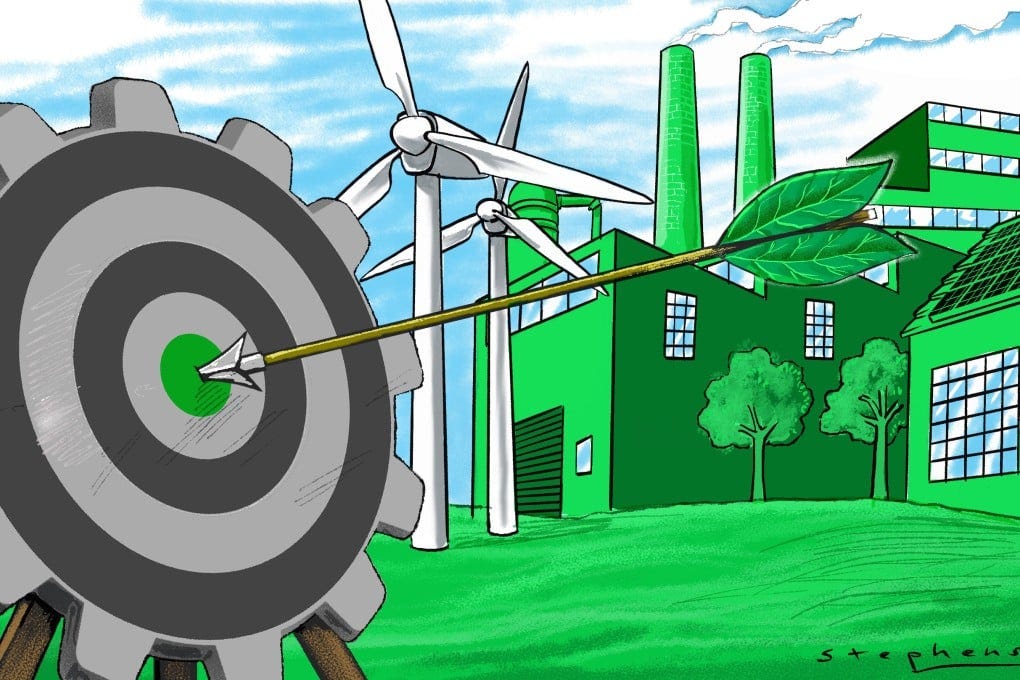
The world stands at a crossroads, amid an accelerating climate crisis, geopolitical tensions reshaping global trade and the demand from Global South nations to exercise their right to industrialise without repeating the polluting mistakes of the past.
A new consensus is urgently needed that moves beyond zero-sum competition and towards collaborative solutions. The path to decarbonisation creates a trilemma of competing interests that threatens progress for all.
First, Western anxieties must be addressed. Some Western governments still believe in the green transition. However, others fear job losses in traditional industries and a decline in international competitiveness. Western countries need a transition that can secure their industrial base and retain jobs that many depend on.
Second is the Global South’s dilemma. These nations have a right to develop. However, many are trapped between a path reliant on fossil fuels that leads to climate vulnerability and a green path that often seems financially and technologically out of reach. They face prohibitive borrowing costs and lack access to financing.
Finally, there is China, which has gone through its painful “pollute first, clean up later” phase. Fortunately, Beijing now produces over 80 per cent of the world’s solar panels and around 60 per cent of wind power turbines. Its progress has reduced the costs of solar and wind power, making renewables more affordable worldwide. China can now help Global South nations build clean, modern industrial systems.
We propose a “Global Green Industrialisation Initiative” to align China’s unparalleled green manufacturing capacity with the technological and capital strengths of the West and the vast development needs of the Global South.
The core of this plan is already in motion. According to the think tank Ember, African markets imported 15,032 megawatts of solar panels from China in the 12 months up to June, a 60 per cent year-on-year increase. Once installed, these imports could add over 5 per cent to total power output in 16 nations. Sierra Leone could generate 61 per cent of its power output in 2023. In Nigeria, the savings from avoiding diesel could recoup the cost of the solar panels in six months. To scale
...This excerpt is provided for preview purposes. Full article content is available on the original publication.