Where have the heretics gone?
Deep Dives
Explore related topics with these Wikipedia articles, rewritten for enjoyable reading:
-
Galileo affair
15 min read
The article explicitly references Galileo as a historical example of heresy that Mike Maples draws inspiration from. Understanding the actual confrontation between Galileo and the Catholic Church provides concrete historical context for the article's discussion of intellectual dissidence and paradigm shifts.
-
Paradigm shift
15 min read
The article's central theme revolves around how new paradigms emerge during 'periods of fervid homogeneity' and how founders must 'flip the perspective.' Thomas Kuhn's concept of paradigm shifts in scientific revolutions directly informs this venture capital framework.
-
Mimesis
15 min read
The article directly references Peter Thiel shouting 'mimesis!' in the context of creative homogeneity in AI startups. Thiel's application of René Girard's mimetic theory to entrepreneurship and competition is foundational to understanding why 'creative homogeneity' is problematic in venture investing.
Friends,
Where have the heretics gone?
There is a feeling in the venture landscape at the moment of intense, ferocious orthodoxy. Everyone agrees that AI is a significant technology. The question of its impact is only one of degree. Does it count as heresy to simply pay more for the same company everyone agrees is compelling? Equally, is there any originality in sniffing that prices are too high?
AI is not the only example. To a lesser extent, the same can be said of sectors once considered untouchable. With the exception of contrarians like Founders Fund, VCs of the 2010s balked at backing defense and industrial companies. Now, they are in fashion. The result is that the space for heresy has shrunk.
Of course, this is very good news, for it is usually in periods of fervid homogeneity that a new paradigm emerges. Only when everything looks dull and solved is it possible for an idea to emerge and flip the perspective.
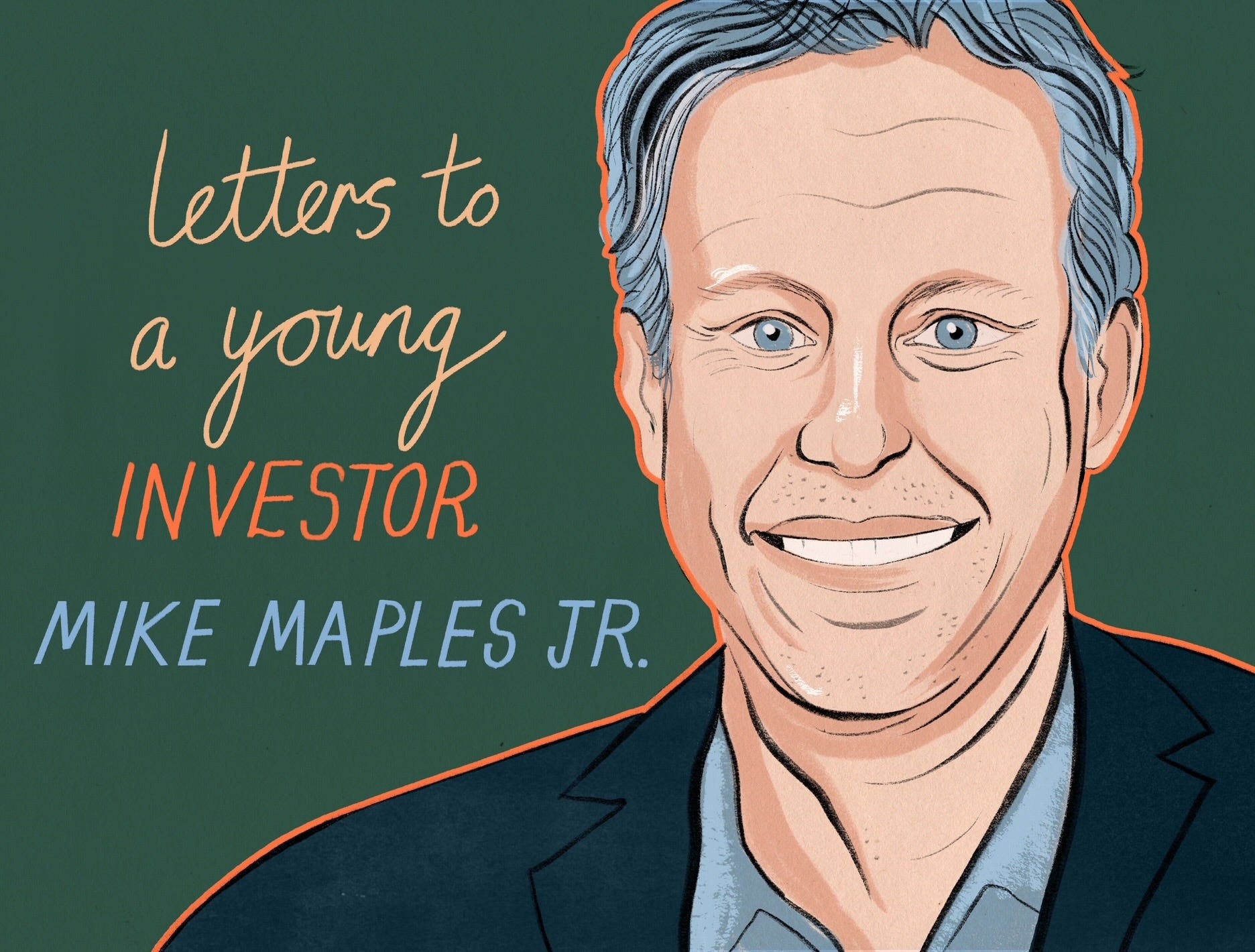
Floodgate founder Mike Maples, Jr. has made a career out of finding unlikely ideas, primed for major impact. More than many other VCs, he has made a concerted effort to uncover what it takes for an idea to be truly “different.” And so, in this edition of “Letters to a Young Investor,” I asked for his thoughts on what constitutes a true heresy and where investors might find them in the age of AI.
You’ll find an honest appraisal of the difficulty of thinking differently and what it takes to translate that into investing decisions.
What you’ll learn:
The three ingredients of heresy. Heresy isn’t just about inverting the consensus position. To find a truly heretical idea, Mike argues that a founder needs to have gone through (i) a different life experience that allows them to (ii) see something others don’t, and then must (iii) have the courage to act on it.
Using AI to solve a problem. Many of the companies gaining attention in AI are using the technology for its own sake, not to solve a real problem. Mike is increasingly excited by founders from the material sciences and drug discovery spaces that have been able to leverage modern AI to solve problems they’ve thought about for years.
Finding “new scarcities.” Every new technology creates a new scarcity. As Mike explains, when computation became cheap, software became scarce, given how
This excerpt is provided for preview purposes. Full article content is available on the original publication.