The Surprisingly Long Life of the Vacuum Tube
Deep Dives
Explore related topics with these Wikipedia articles, rewritten for enjoyable reading:
-
Triode
1 min read
Linked in the article (16 min read)
-
Glow discharge
1 min read
Linked in the article (13 min read)
-
Incandescent light bulb
14 min read
Linked in the article (42 min read)
The last several decades of technological progress have, in large part, been about finding more and more things we can do with semiconductors and the technology for producing them. Microchips have found their way into virtually every car, aircraft, appliance, and electronic device. Light-emitting diodes are steadily replacing older, less efficient methods of generating light (such as incandescent bulbs). Solar photovoltaic panels have become the most rapidly deployed energy source in history. Semiconductor lasers have enabled fiber-optic communication. Semiconductor-based charge-coupled devices (CCDs) and CMOS sensors are used for digital imaging. The list goes on.
But decades before the invention of the transistor, another enormous technological ecosystem was built around a device that manipulated the flow of electrons — the vacuum tube. In the first half of the 20th century, vacuum tube technology found its way into all manner of devices, from radios to TVs to the earliest computers. And like semiconductors today, vacuum tubes had applications far beyond electronic logic — the phenomenon they leveraged could be applied to everything from lighting and displays to video cameras and radars. And while the vacuum tube feels like an ancient technology that has long been superseded, much of the technological edifice still stands.
Origins of the vacuum tube
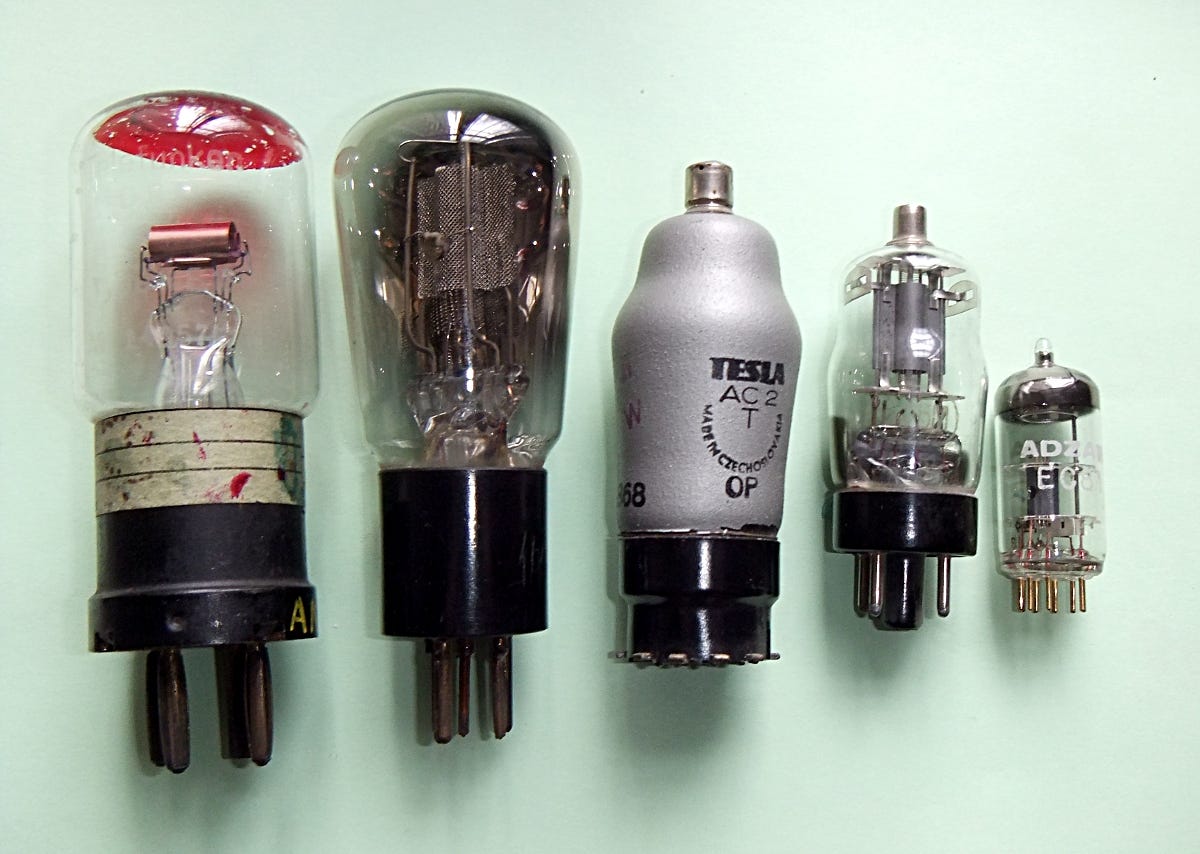
A vacuum tube is an evacuated tube (often, though not always, made of glass) containing electrodes, between which electrons flow. These tubes, along with various offshoots and technological cousins, were the product of two parallel strands of development.
The first line of descent was via what are known as “gas discharge tubes” — tubes where electricity is discharged through a highly rarefied gas (gas at very low concentration and pressure). Not long after the German scientist Otto von Guericke invented the first vacuum pump in 1650, early scientists began using such pumps to study highly rarefied gasses. It was observed that running an electric current through rarefied gasses could make them glow colorfully, but for many years this was mostly regarded as an interesting curiosity.
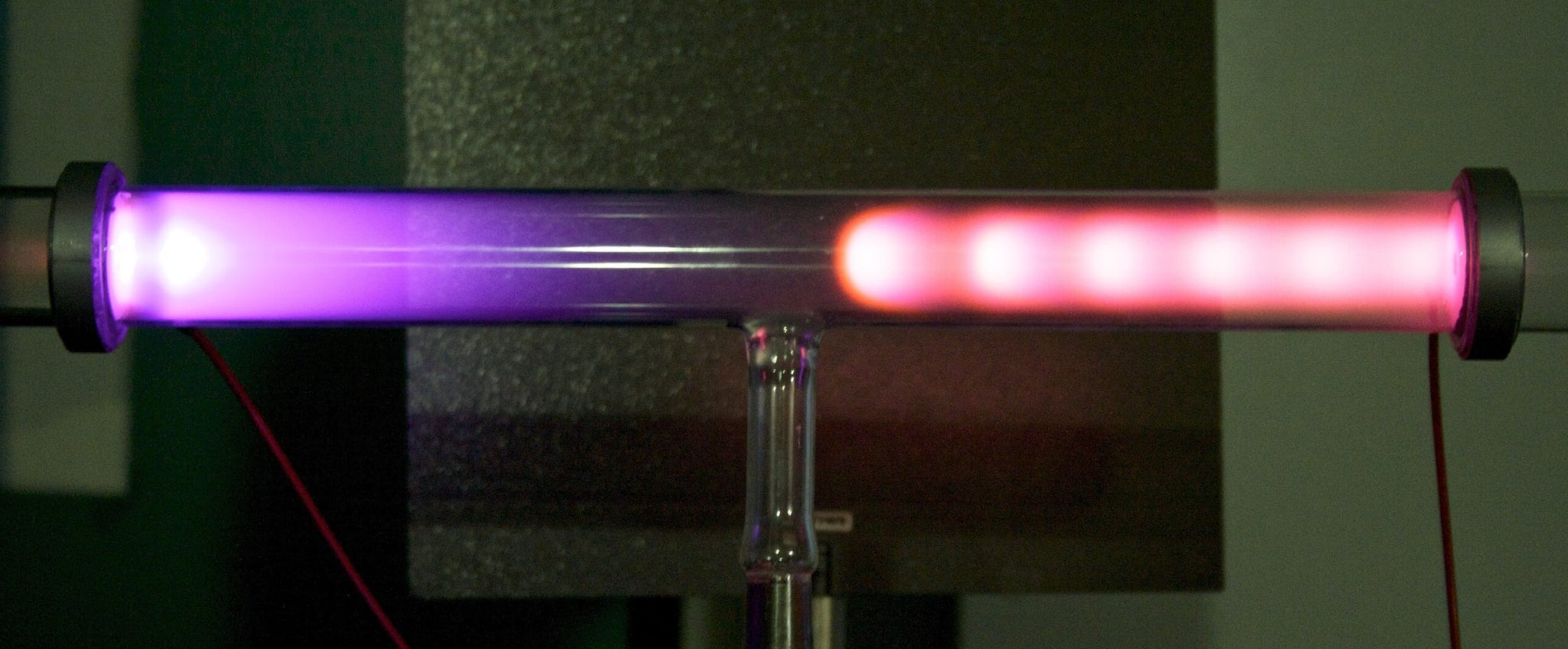
It wasn’t until the 1830s, with the experiments of the English chemist and physicist Michael Faraday, that the effects of electricity on rarefied gasses began to be studied more seriously. Faraday subjected a variety of rarefied gasses
...This excerpt is provided for preview purposes. Full article content is available on the original publication.