Building the Chiplet Ecosystem
Chiplets are an important semiconductor industry topic we’ve been covering, most recently here:
Breaking a complex system-on-chip into smaller, specialized dies improves yield and allows each chiplet to use the most cost-appropriate process node. In today’s era of steep wafer cost inflation (next-gen wafers are rumored to reach $45,000 per wafer), designers are increasingly enticed to reserve the most advanced nodes for the highest-value compute logic, while fabricating I/O, memory, and analog on older, cheaper processes.
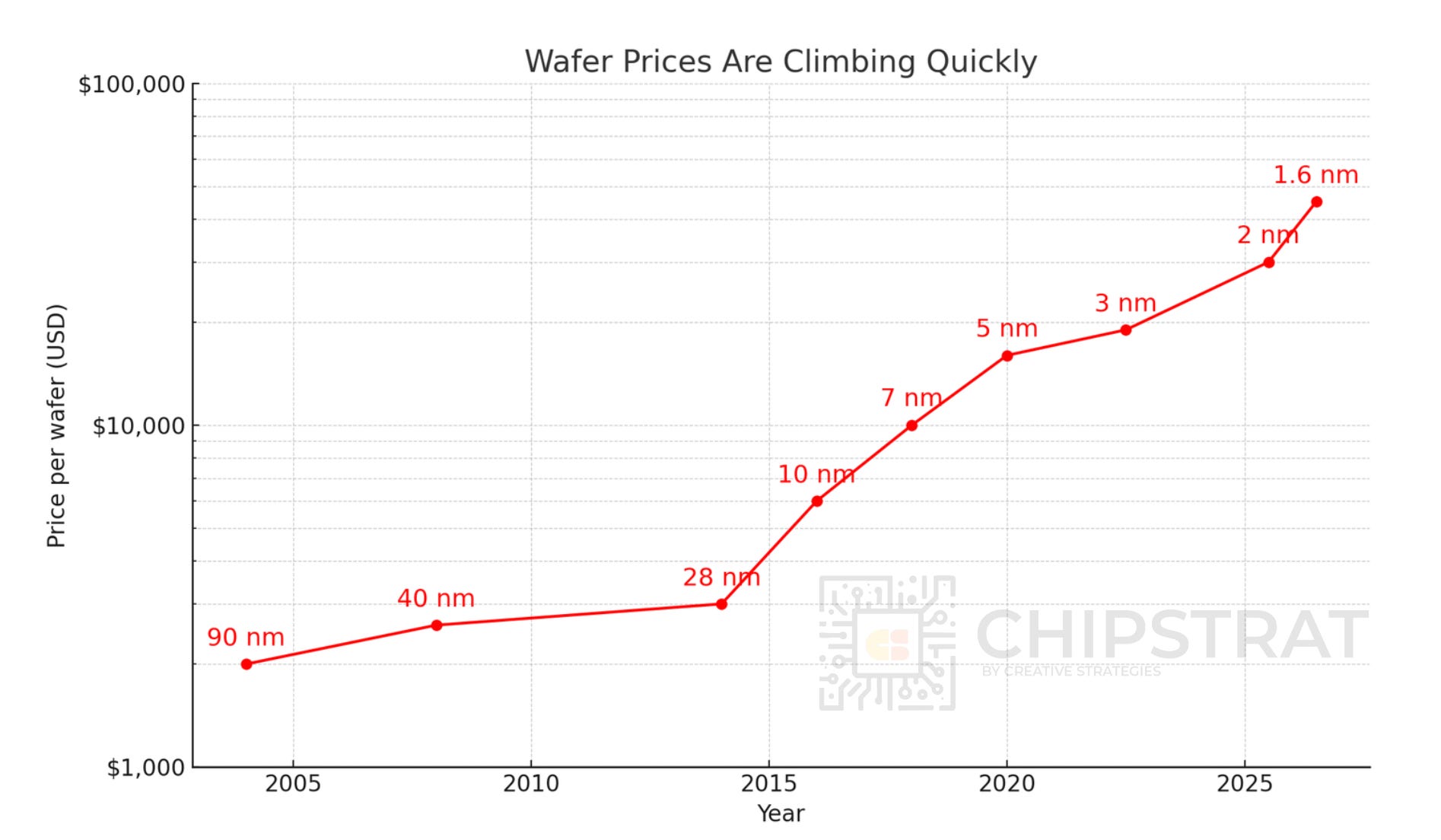
Broad chiplet adoption has lagged because early implementations were built for internal use rather than multi-vendor ecosystems. AMD proved chiplets could scale in volume, and Intel followed, but both relied on vertically integrated, proprietary designs aligned with their business models. These efforts validated the technical concept but offered no path to third-party interoperability.
Startups pushed ahead with chiplet-based systems, yet in the absence of shared standards, mixing in-house and external dies required custom integration that undercut the very economic and design advantages modular architectures were meant to deliver.
The Benefits of Open Innovation for the Industry
To move from proprietary, single-vendor implementations to an open, multi-vendor market, the semiconductor industry needs a coordinated ecosystem.
Every part of the value chain has a role:
Tools: EDA providers must support chiplet-aware design, simulation, power and thermal partitioning, and timing closure.
Manufacturing: Foundries need validated 2.5D and 3D packaging flows, robust yield models, known-good-die testing, and proven multi-die validation processes.
Integration and Software: Design service firms must integrate chiplets from multiple vendors at the system level. IP providers need to standardize offerings for die-level interoperability so that a validated chiplet can be reused like hard IP.
But technical compatibility is only part of the challenge. Multi-vendor chiplets raise questions of trust, security, and accountability, along with ownership and liability. Who is responsible for a failing chiplet in a multi-vendor product?
These issues don’t have to be fully solved up front; many will be worked out as the ecosystem matures.
Building a Multi-Vendor Ecosystem
A viable multi-vendor chiplet ecosystem depends on trust and coordination across the supply chain, anchored by shared standards for how chiplets connect and communicate. With consistent rules, vendors can deliver interoperable components that address a wider set of markets.
This alignment benefits everyone. Large players can amortize the cost of high-performance compute dies across multiple SKUs, while smaller companies can compete with differentiated accelerators,
...This excerpt is provided for preview purposes. Full article content is available on the original publication.