Blackout roulette in Ukraine’s elevators
Deep Dives
Explore related topics with these Wikipedia articles, rewritten for enjoyable reading:
-
Rolling blackout
11 min read
The article describes scheduled power outages and emergency blackouts that Ukrainians must plan their lives around. This topic explains how rolling blackouts work as a grid management tool, their history in various countries during crises, and the technical reasons utilities implement them.

Featured Subscriber’s Comment:
“It is absolutely vital to know what the Ukrainian people are experiencing day in and day out. Tim is a treasure.”
By: Aaron Hallquist
If you find our work valuable, subscribe and consider supporting us. Independent reporting on Ukraine depends on readers like you.
“Sashko… Sashko… Are you okay?” Tim yelled into a closed elevator door in a completely dark hall of our office building. “We haven’t forgotten about you.”
When we step out for lunch, each second matters.
Being off by even a minute can mean spending the next few hours locked in a metal box somewhere between floors, as blackouts wait for no one.
This past month, our colleague Sashko miscalculated — and as he waited in the elevator for the operator to come and free him, he fell asleep.
Tim went to find out which floor Sashko got stuck on.
Power outages have become a usual part of life for Ukrainians due to Russian shelling of energy facilities. We adjust our daily routines to the blackout schedules, planning showers, cooking, and leaving the house around the timetable that energy companies publish the night before or that morning.
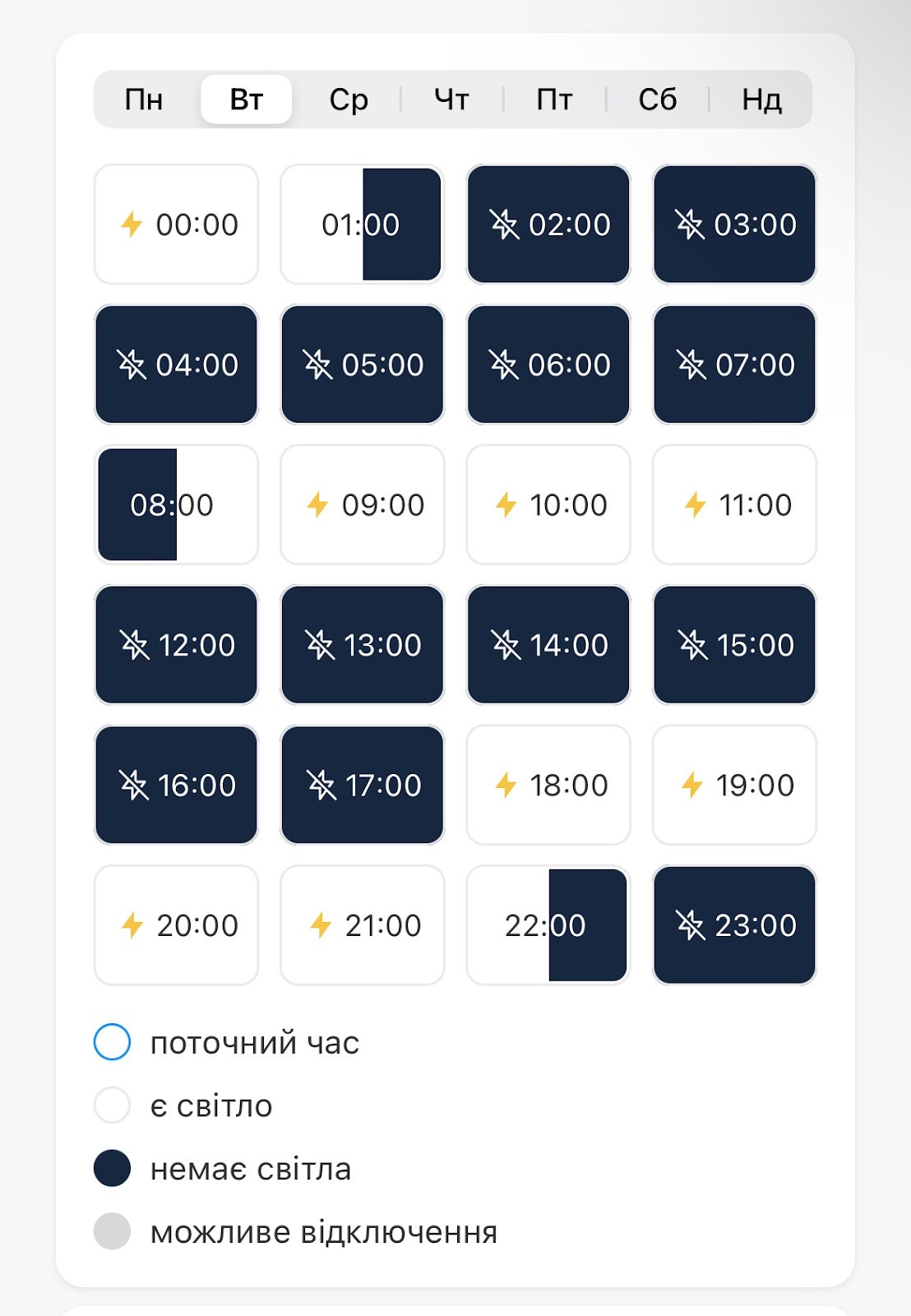
As of December 5, six regions have experienced emergency power outages, and four remain without electricity, indicating that Ukraine’s energy system has once again become unstable from the latest attacks. In large cities, where buildings rarely have alternative power sources and high-rises stretch up to 20 floors, the most vulnerable groups are hit hardest.
Blackouts, as is the case with many other wartime symptoms, are a test of how prepared Ukrainian society is to care for those who rely on electricity the most.
Oleksandr Karan has been repairing elevators for more than 20 years. He got this job thanks to his mother, who worked as an elevator dispatcher — she took calls reporting breakdowns and sent mechanics to the addresses. Inspired by her, Oleksandr studied to become a mechanic and began to work in the early 2000s.
It was never an easy job, as it requires patience, physical strength, and knowledge of the intricacies of elevator mechanisms. Even still, he remembers his early years at work with a touch of nostalgia.
“It used to be interesting
...This excerpt is provided for preview purposes. Full article content is available on the original publication.