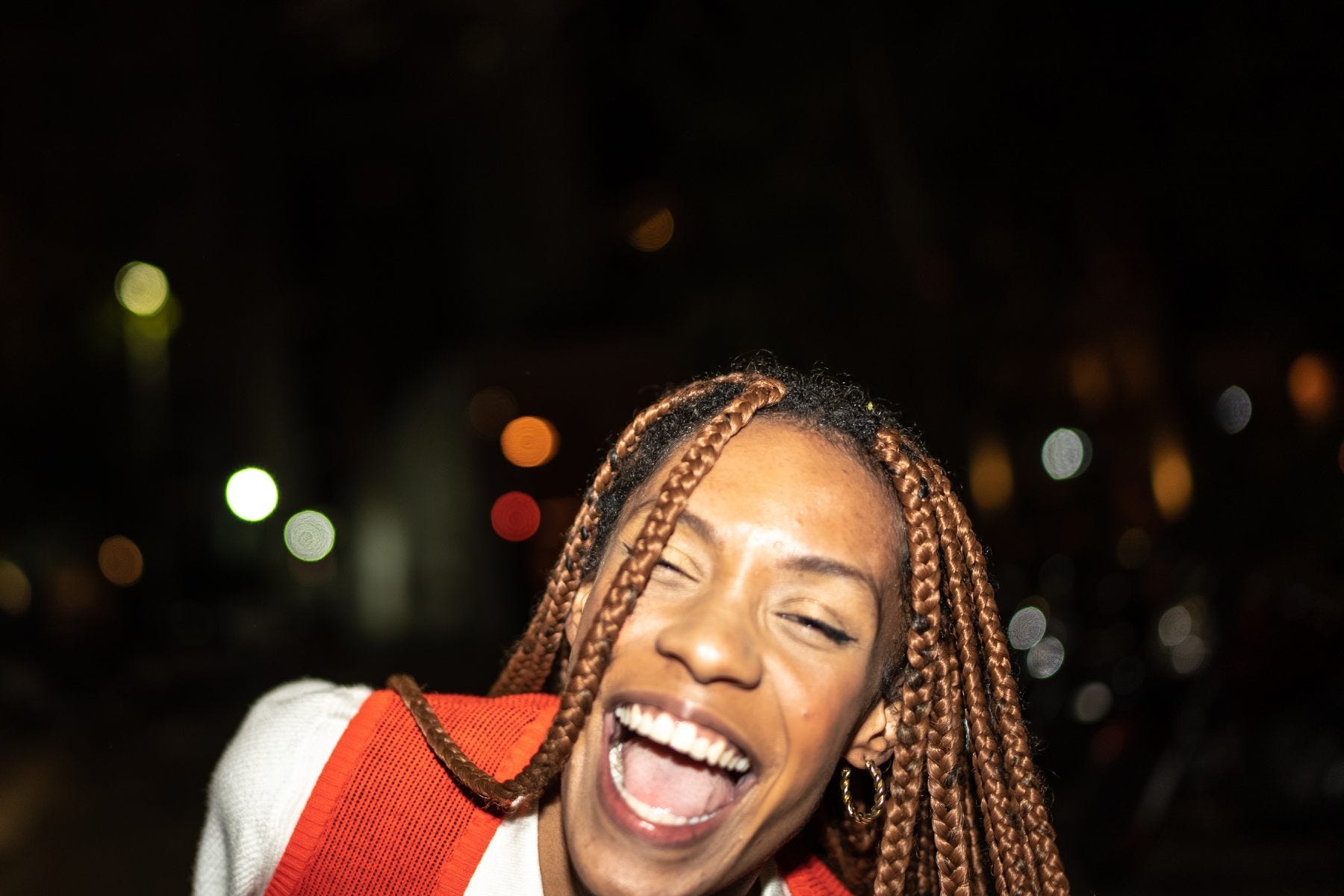
There Must Be Room for Black Joy in Public Spaces
FG Trade/iStock
This story was originally published on thewalrus.ca
By Jay Pitter
I have a decades-old memory of me swaying to music in a 1970s-style shopping mall and being sharply reprimanded by my mother, who felt that a Black person dancing in public was undignified and reinforced racist stereotypes.
I was maybe eight years old. Too young to fully understand the implications of her admonishment, I hung my head from the weight of my mother’s shame projected onto my lanky little body. All I knew was that she believed that, for Black people, especially poor Black people like us, our survival and dignity hinged on presenting well in public.
In the summer of 2020, an uprising was ignited by the public execution of George Floyd. Then in my forties, a professional placemaker and adjunct urban planning professor, I had a greater understanding of my mother’s, and other Black elders’, preoccupation with how their children conducted themselves in public. I was acutely aware of public policies that restricted our public expressions and freedoms and had witnessed countless incidents demonstrating our disproportionate risks. Within my lifetime, the penalty for a Black person perceived to be misstepping in public had never been more clear than it was in the final, excruciating nine minutes and twenty-nine seconds of George Floyd’s life.
The notion that Black people and other groups experiencing disproportionate harm should be able to navigate public spaces without being murdered should be a given. Still, I believe that we should expand our expectations and strive for even more—public joy.
It is not enough to say that joy is already woven into our classic and contemporary texts. There is a difference between creating real or figurative traumascapes with glimmers of joy and laying down joy as a narrative foundation. When joy becomes the premise, the place upon which we build our realities in literature and life, new possibilities within and beyond our communities arise. There is a wealth of documentation focused on our public degradation; why not bend the narrative arc toward Black public joy?
You can’t share stories from thewalrus.ca on Facebook or Instagram because of Meta’s response to the Online News Act, but you can share this Substack article there
To understand the concept of Black public joy, or public joy of any kind, it’s imperative to first begin by defining, or at least exploring, the dimensions of joy itself.
...This excerpt is provided for preview purposes. Full article content is available on the original publication.