The Deterrence Industrial Base
As the threat of a Taiwan contingency looms larger, the U.S. and its allies face a clear strategic imperative: We must build and sustain a strategic, agile, and resilient industrial base ecosystem to deter Chinese aggression before a shot is fired.
“China continues to pursue unprecedented military modernization and increasingly aggressive behavior that threatens the U.S. homeland, our allies, and our partners. China is outpacing the U.S. in testing not only these critical technologies but also technologies from across their military industrial base.” ADM Samuel Paparo, INDOPACOM Commander
Welcome to the era of the Deterrence Industrial Base—a 21st-century construct that fuses speed, scale, software, and steel to project credible combat power at scale across the Indo-Pacific.
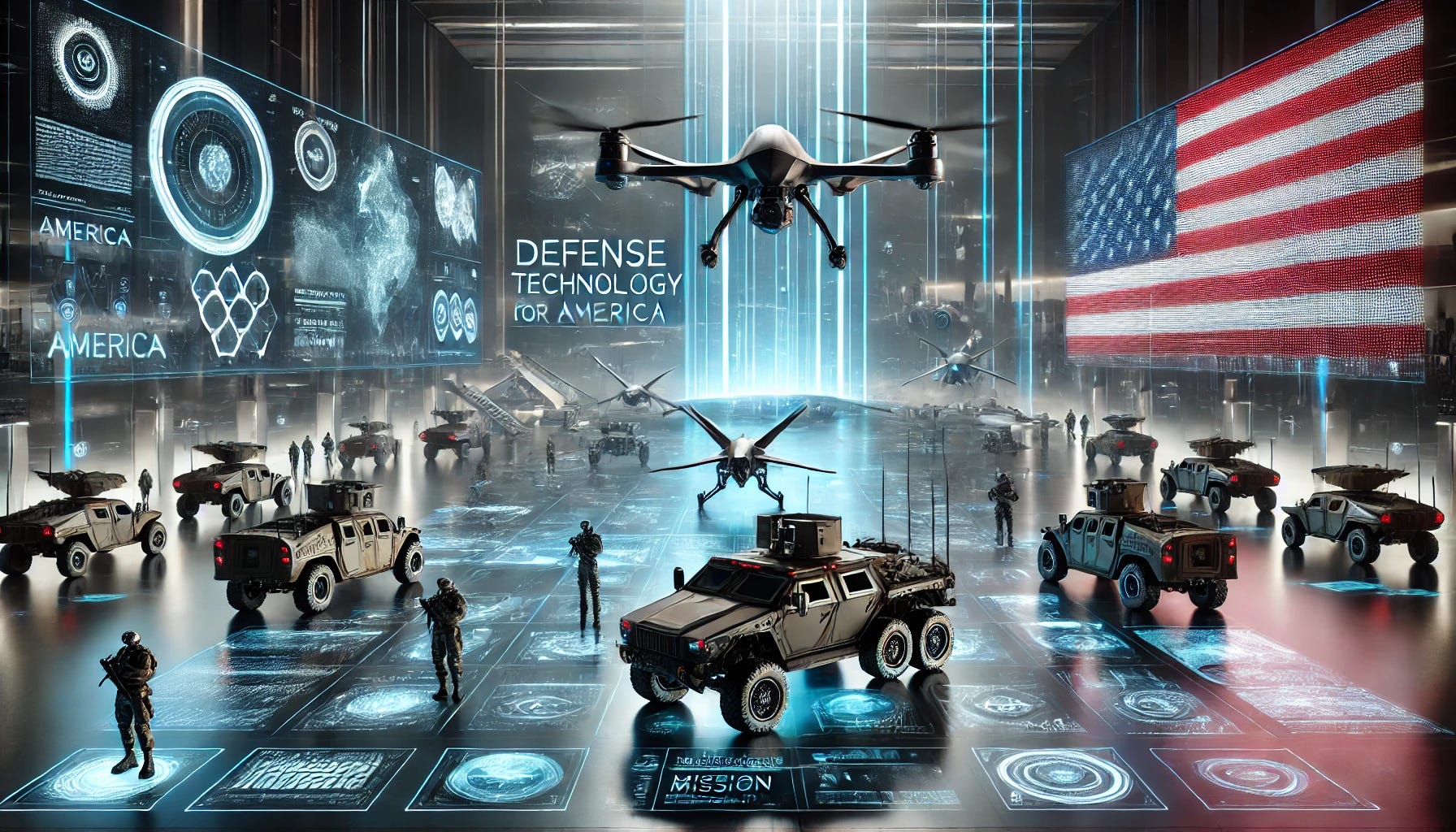
Deterring a Chinese invasion of Taiwan requires a multifaceted approach:
Integrating exquisite major weapon systems with mass-produced attritable platforms.
Securing supply chains for strategic minerals and access to key subcomponents / GFE (e.g. crypto).
Leveraging systems and capabilities from both the traditional and non-traditional defense industrial base.
The ability to harness AI and autonomy for mission collaboration as well as supply chain transparency and deliver rapid updates on a continual basis.
Ensuring wartime surge capacity through diversification of production sources along with friend-shoring some production capacity forward.
Align with allies for co-design, co-production, and exercises.
Key Objectives: Deterrence Through Industrial Readiness
Conventional deterrence in the Indo-Pacific cannot rest solely on exquisite platforms or resources already in theater. It requires a dynamic, resilient, and scalable defense industrial base—one that can:
Rapidly produce defensive and asymmetric capabilities at scale.
Provide strategic and tactical decision advantage with AI and autonomy.
Sustain U.S. and allied forces for prolonged combat in contested environments.
We need the U.S. industrial base to pivot to a wartime footing to deter war.
Mass Production of Attritable Systems: Quantity as Quality
China’s advantage in force size and mass production demands a counter strategy of affordable, scalable, and attritable systems. Small, autonomous drones designed for high-risk scouting, jamming, and precision strikes, extend the reach of larger manned and unmanned platforms or provide mass around Taiwan. Similarly, UUVs enhance undersea deterrence with persistent ISR and mine-laying capabilities. Mobile missile launchers and one-way attack drones are also critical.
Scale programs to field thousands of attritable unmanned and autonomous systems, with funding redirected from RDT&E to procurement. Billion-dollar production contracts incentivize industry to fund, develop, and iterate on these systems for the DoD to acquire the
This excerpt is provided for preview purposes. Full article content is available on the original publication.