Weekly Readings #208 (01/26/26-02/01/26)
A weekly newsletter on what I’ve written, read, and otherwise enjoyed.
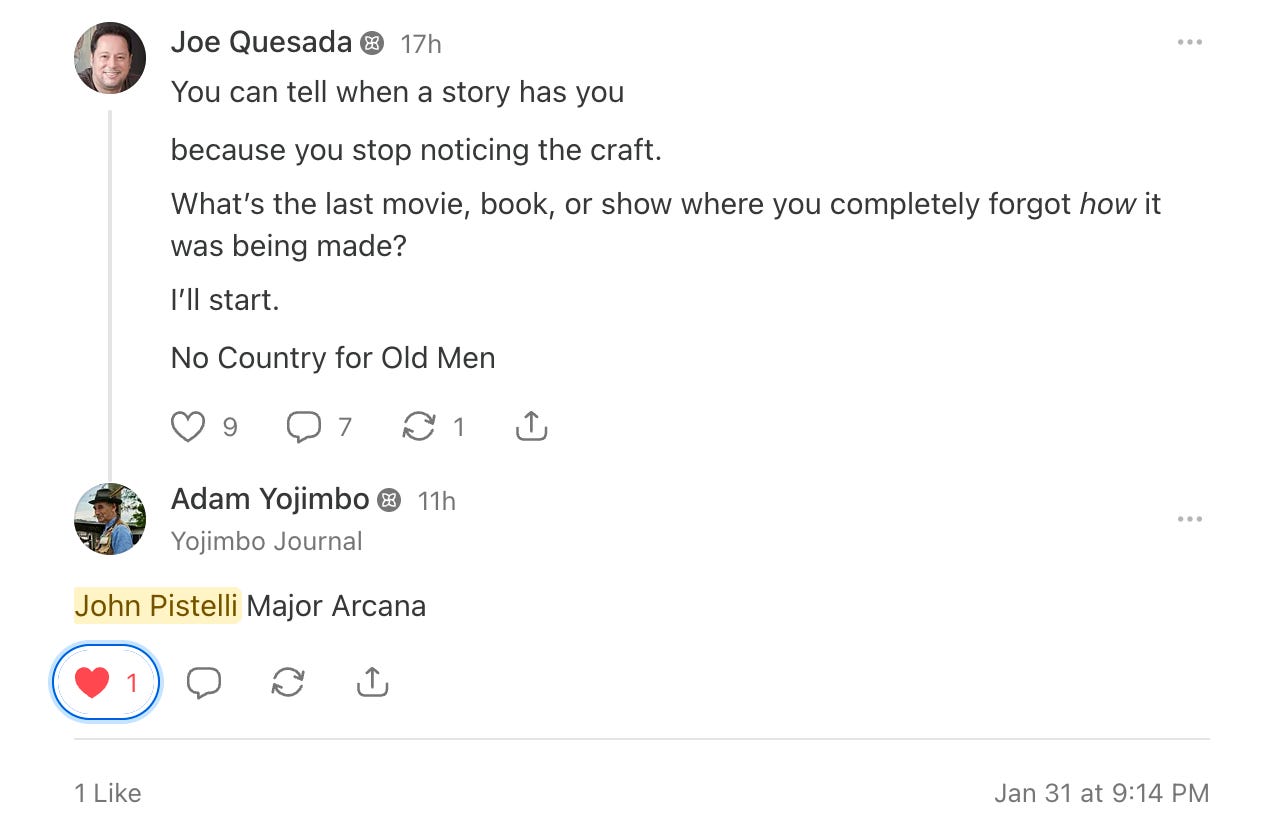
Welcome or welcome back to Grand Hotel Abyss! First, a gentle reminder of this full-moon first of the month about the availability of my recent novel Major Arcana, still selling steadily and being discussed widely some 10 months after its publication, as you can see in the screenshot above. (And given Major Arcana’s subject matter, I love that this recommendation came in a reply to Joe Quesada. But I promise you will still enjoy Major Arcana if you don’t know who Joe Quesada is.1) You can order Major Arcana in all formats (print, ebook, audio) here; you can also find it in print wherever books are sold online. You can buy it directly from Anne Trubek’s distinguished Belt Publishing, too—we receive more of a profit that way—or you might also suggest that your local library or independent bookstore acquire a copy. Please also leave a Goodreads, Amazon, or other rating and review. Thanks to all my readers!
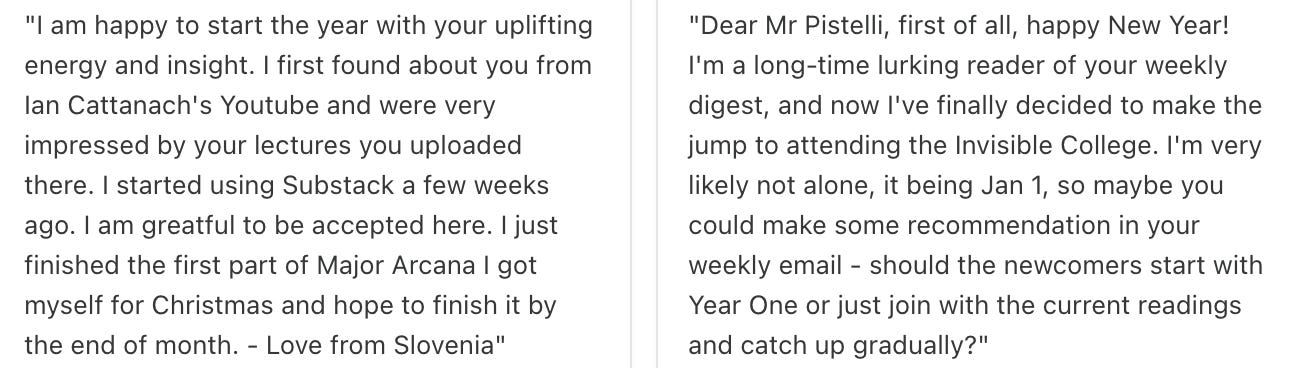
Then there’s The Invisible College, my literature podcast for paid subscribers to this Substack. Above are screenshots from paid subscriber messages sent around the beginning of the year.2 The second question inquires about the best way to enjoy the College, given its ever-expanding over-two-year archive, with almost 100 two- to three-hour episodes on subjects from Homer to Joyce, and from ancient to contemporary literature. I would say there’s no need to start at the beginning; while we do address some running themes, particularly when it comes to authors who participate in what I think of as a “secret tradition,” such as the Greek tragedians, Shakespeare, Goethe, Joyce, and assorted Romantic and modernist poets, you can dip into this tradition at your leisure, especially since its “secret” quality means I never fully explain it in any one episode, nor do I fully understand it, nor am I sure it exists. I also never impose it where it doesn’t belong; it tends to have little to do with the realist novel, for example, which is usually some combination of Christian and secular rather than occult and gnostic, so I don’t bring it up when talking about Austen or Dickens, Tolstoy or Dostoevsky. In other words, you’re welcome to start anywhere. This week’s episode, “A Poem of Humankind,” the third of four on The
...This excerpt is provided for preview purposes. Full article content is available on the original publication.