My dissertation in 2500 words
Please like, share, comment, and subscribe. It helps grow the newsletter and podcast without a financial contribution on your part. Anything is very much appreciated. And thank you, as always, for reading and listening.
About the Author
Jimmy Alfonso Licon is a philosophy professor at Arizona State University working on ignorance, ethics, political economy, AI, and God. Before that, he taught at University of Maryland, Georgetown, and Towson University. He loves classic rock and Western, movies, and combat sports. He lives with his wife, a prosecutor, at the foot of the Superstition Mountains.
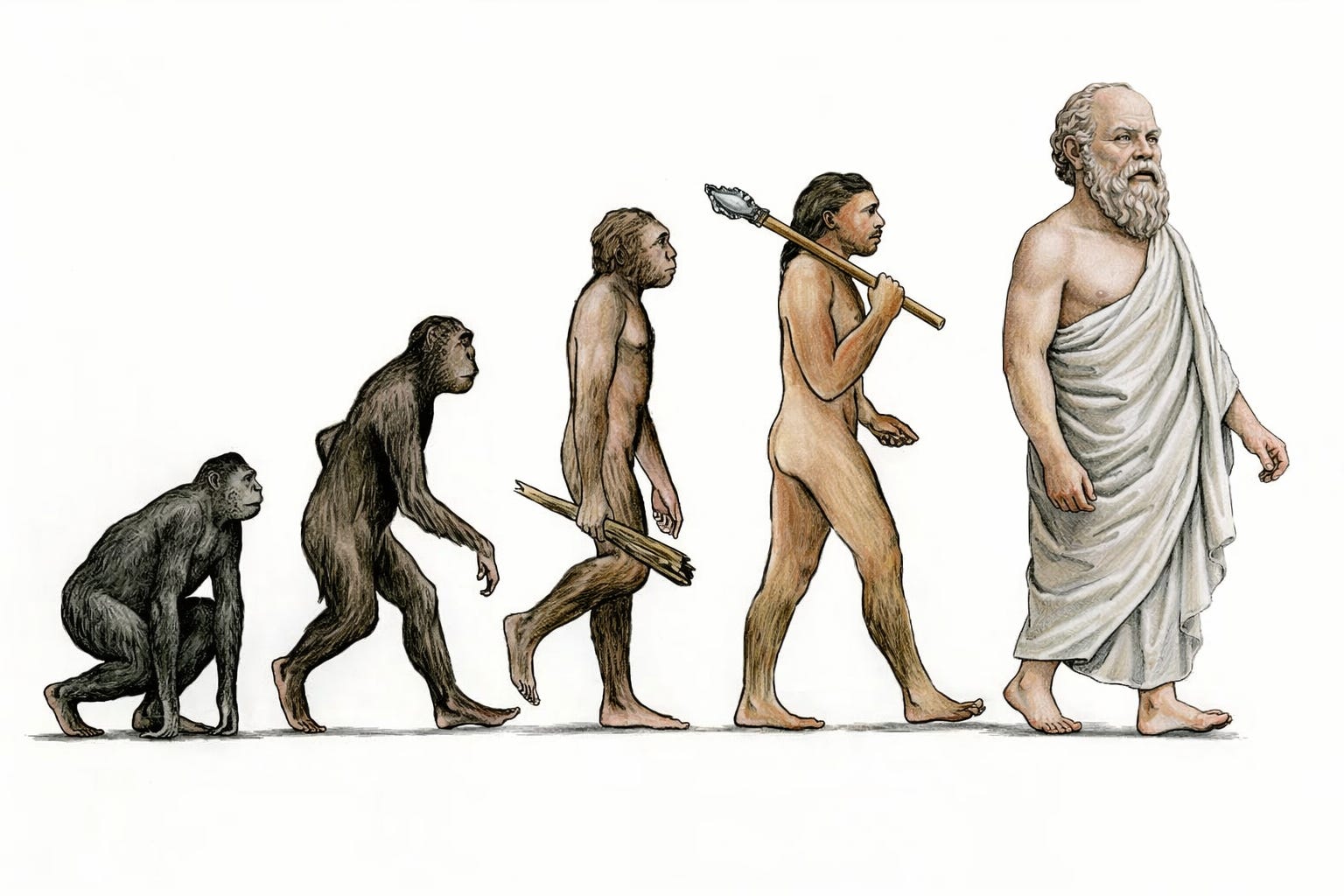
Several fans have asked over the last year for a digestible version of my dissertation. So, after much ado, here it is. My dissertation (titled: Some Epistemological and Practical Challenges to Moral Realism: Evolutionary Debunking, Overgeneralization, and Afterward) is best understood as an extended conditional argument: if robust moral realism is true, and if familiar facts about human psychology and evolution are taken seriously, then what, if anything, happens to our moral knowledge? And what do what do about our moral beliefs from there. This question unifies all four chapters.
The target throughout is robust moral realism. This is the metaethical view that there are irreducibly normative moral facts that are independent of any actual or idealized human attitudes and that do not enter into causal explanations. On this view, moral truths are neither projections of our evaluative practices nor reducible to natural facts, and they do not explain our moral judgments in the way that electrons explain vapor trails or pathogens explain illness.
That conception of moral facts is attractive for reasons like promising objectivity without relativism, normativity without reduction, and a standpoint from which genuine moral error is possible. But it also invites a distinctive epistemological problem. If moral facts are causally inert, and if our moral psychology is the product of evolutionary forces that are indifferent to moral truth, then it becomes unclear why we should expect our moral beliefs to bear any reliable relation to those facts.
The dissertation explores that problem in stages. The first three chapters develop and refine evolutionary debunking arguments against robust moral realism, while the final chapter asks how agents should think and deliberate if those arguments succeed—what do we do with our moral beliefs if they are debunked by evolution?
CHAPTER ONE places evolutionary debunking arguments in
...This excerpt is provided for preview purposes. Full article content is available on the original publication.