Jewish Cabals Part II: The Parushim
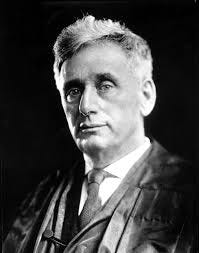
Pictured above: Supreme Court Justice and Leader of The Parushim Louis Brandeis
“Hence, the debate over “emancipation” was contrived and created for an ignorant gentile audience. Emancipation in reality meant that Jews, being far better organized and operating from a different moral playbook, would rule society entirely, creating it into a mass of “animals,” as Moses Hess put it. The target of Marx’s critique was the well-known weirdo atheist Bruno Bauer, who was not Jewish. In the previous year Bauer had written an essay also called The Jewish Question, in which he argued that Jews had to “give up their Judaism if they were to become worthy of equal rights,” or that’s how Hal Draper put it. However, all of this turns on what the term “Judaism” means. By itself, it is hardly descriptive, as it can either refer to a culture, an ethnicity or a religion; by itself, it says nothing. Some of the more naive gentile writers still think it’s just a “different church” than everyone else, but the religious aspects of the group are certainly secondary to their ethnic cohesion. Judaism is a rejection of Logos.”1
Karl Marx’s Theses on the Jews and the Necessity of Free Trade: Zur Judenfrage (1844) by Matthew Raphael Johnson
It is regularly forgotten how unpopular World War I was with Americans; Both prior to, during, and after the war. Court historians, the media apparatus, politicians, and academia form a bulwark to ensure the curated narrative for why and how America entered the war continues to be promoted and reinforced. The lie disseminated from the power centers of society is perpetuated by those who accept it at face value; once the narrative is implanted it produces compound interest for The Nuremberg/Civil Rights Regime. The below quote is from a 1940 article published in Time Magazine. Some polls from prior to and during The Great War have objection at over 70 percent. Even after hostilities concluded the war was unpopular for various reasons.2 Such as: Heritage and kinship with the adversary, President Wilson being elected on a non interventionist platform, and the role of financial and banking interests in causing the conflict.3
...Last week a Gallup poll pointed up a major shift in U. S. opinion. A 1937 poll had reported that 64% of U. S. citizens thought it had been a mistake for the U. S. to go into
This excerpt is provided for preview purposes. Full article content is available on the original publication.