The Tariff Exemption Behind the AI Boom
Thanks for reading! If you haven’t subscribed, please click the button below:
By subscribing, you’ll join over 72,000 people who read Apricitas!
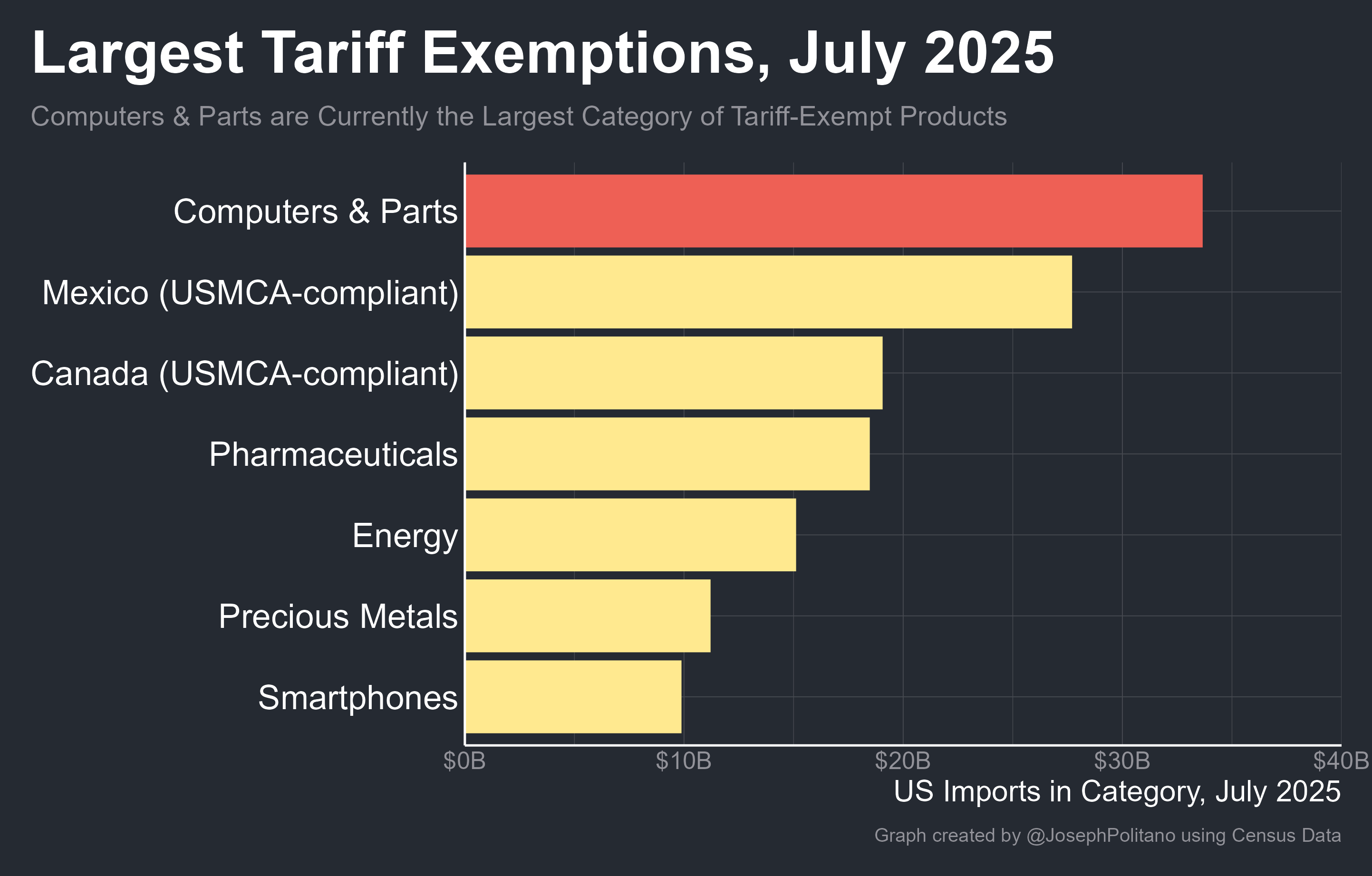
During his second term, Donald Trump has pursued the largest trade war in modern American history, sending tariffs to the highest level since the infamous Smoot-Hawley Act of 1930. Yet at the same time, roughly half of American imports remain completely exempt from his trade war—billions in goods are carved out because of their country of origin or product category. Mexican and Canadian goods that comply with Trump’s first-term USMCA deal remain tariff-free, as do energy products like crude oil, precious metals like gold, and products slated for future tariffs like pharmaceuticals. The single largest of these exemptions, covering an astonishing $34B of imports per month, is for computers and parts—an exemption that AI companies are now completely reliant on for their record-breaking investment push.
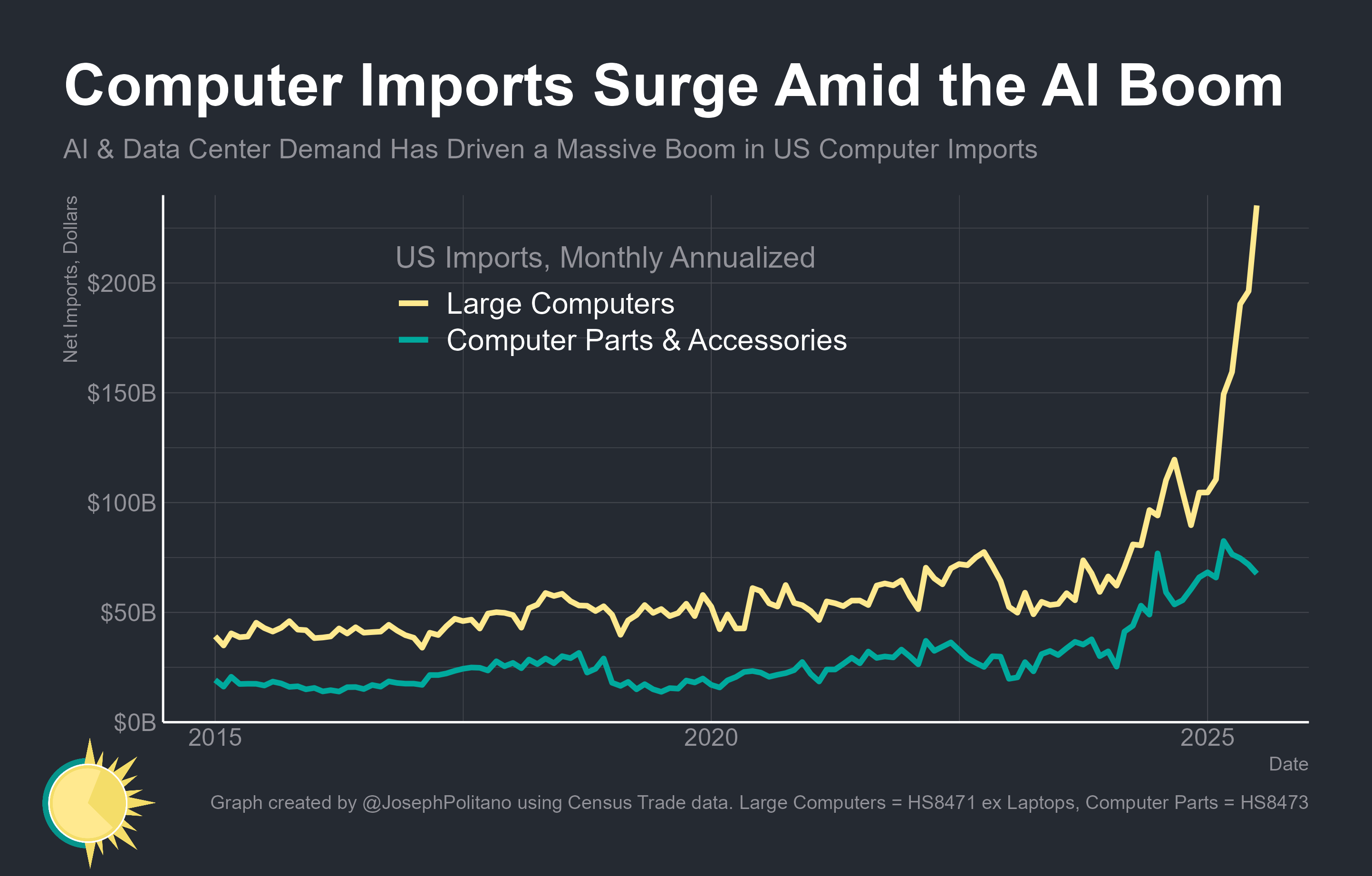
American tech companies have been in a frenzy to develop increasingly advanced AI models ever since the release of ChatGPT in late 2022. Training and running these models require processing unprecedented levels of information, which in turn requires some of the largest data centers ever built, which themselves require thousands of advanced computers to operate. However, the modern electronics used in data centers have the most complex supply chains in human history, and America makes up only a small part of the direct manufacturing involved. Thus, imports of the large computers commonly found in data centers now exceed $235B annualized, up 227% compared to before the launch of ChatGPT, while imports of computer parts exceed $67B annualized, up more than 100%. Without this exemption, importers would have paid an extra roughly $8.9B so far this year (naively applying the 10% baseline tariff rate that has been in place since April), or roughly $19.2B (applying the country-level tariff rates in place as of today). The current AI boom would simply be impossible if tech companies had to pay the same tariffs that car manufacturers or homebuilders currently face.
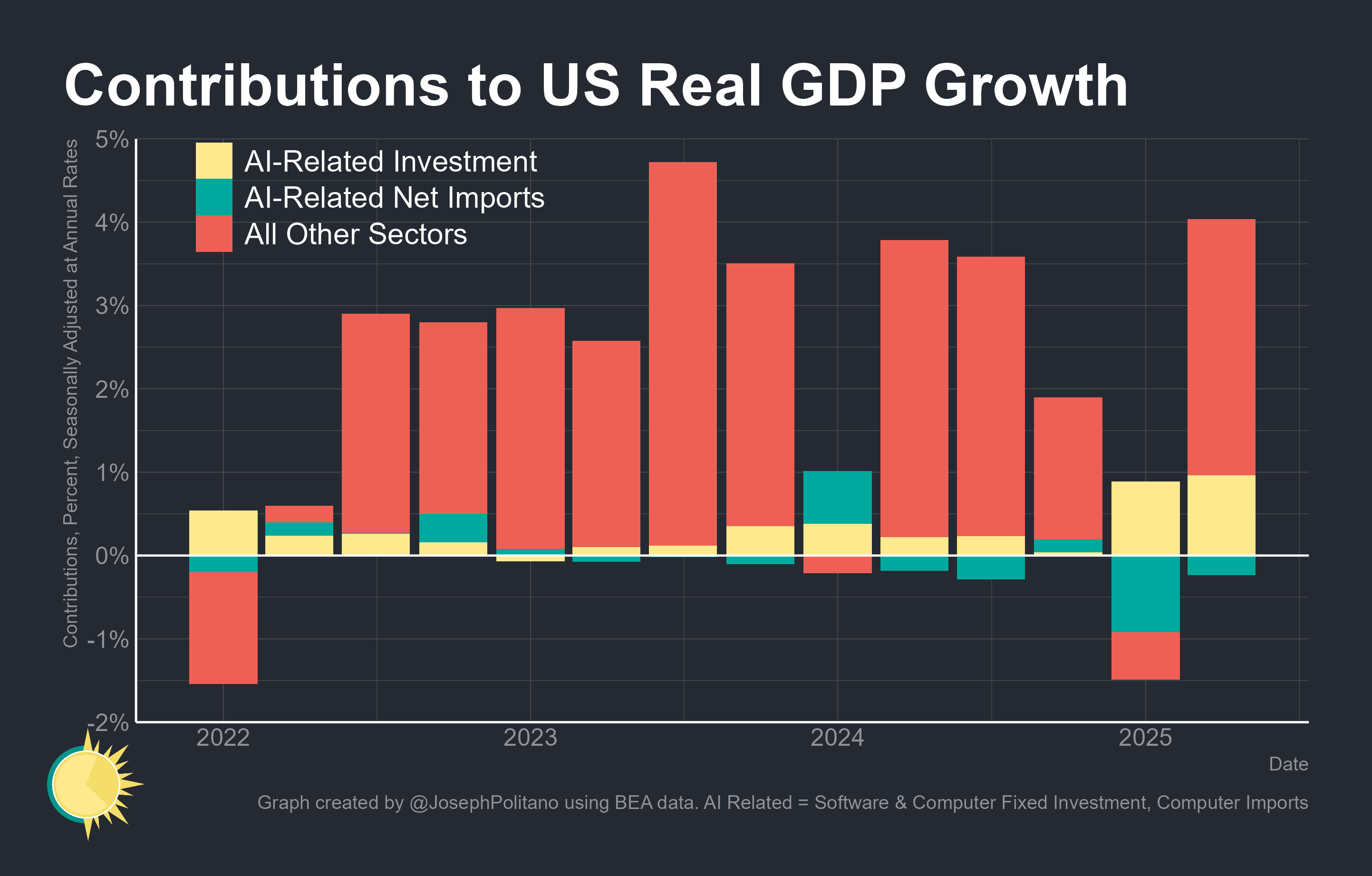
Meanwhile, US economic growth is increasingly driven by today’s AI buildout. In Q2, computer & software investment officially contributed roughly 0.71% to the 3.8% annualized pace of growth, which is almost certainly an underestimate given how official data struggles to capture investment in electronic parts. Large parts of the US economy are now totally dependent on this tariff exception for computer imports.
On
...This excerpt is provided for preview purposes. Full article content is available on the original publication.