How did the English Reformation happen?
This is a huge question with a seemingly simple answer: Henry VIII and his need for a divorce. Everyone knows this. Tudor history is a mainstay of school curricula in Britain and of popular TV costume dramas. Indeed, the advantage for writers and producers of setting a drama in the 16th century is that the backstory and many of the main characters are so well known.
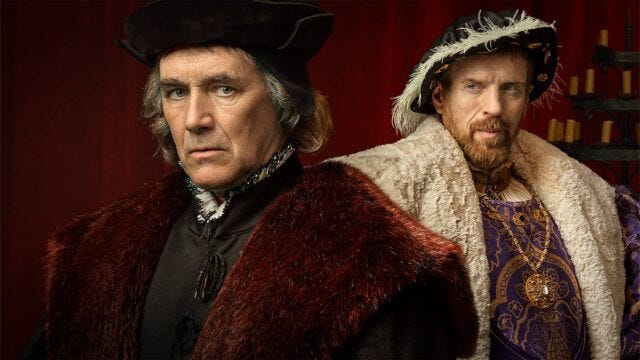
It may be surprising, therefore, to realize that the causes and the consequences of the English Reformation are a matter of fierce historical debate among specialists. Was traditional Christianity moribund by the early 16th century? Or vibrant and popular? We know that people were willing to die (and kill) for religion but equally if religion was so central to the identity of early modern Englishmen and women, why were so many willing to change their faith according to who was in power? How rapid or gradual was the process of Reformation? How long did the Reformation take? Was it ever “completed”?
One way to make sense of this tangle of questions is to revisit a very basic question: What was the political economy of the English Reformation? This is what I try to do in a new paper with Desiree Desierto and Marcus Shera.
As this quote from Patrick Collinson (the historian, not the tech entrepreneur) indicates, the Reformation was a truly transformative event.
“England, which at the beginning of the sixteenth century seems to have been one of the most Catholic countries in Europe, became, by the seventeenth century, the most virulently anti-Catholic, and the almost dominant ideology of anti-Catholicism fueled the civil wars that engulfed all parts of the British Isles in mid-century and later provoked the Bloodless Revolution, from which what passes for a British constitution derives” (Collinson, 2004, p 10).
We think that focusing on the Dissolution of the Monasteries provides crucial insights into the political economy of this transformation.
This will be the first of a two posts describing the gist of our argument.
Part (1) below will examine how the allocation of land following the Dissolution created a vested interest opposed to Mary’s policies of restoring Catholicism in the 1550s. Part (2) will demonstrate that the political economy interests created by the Dissolution
...This excerpt is provided for preview purposes. Full article content is available on the original publication.