We're Through Being Cool
From Jordan Peterson to Andrew Tate, today’s techbros and manosphere influencers are either entirely unconcerned with being cool or, like Elon, exceptionally bad at it. Far from the poster-king Dril, whose ironically-detatched shitposts ruled the platform Elon killed, these influencers seem way more invested in the vehement avoidance of feminization than they are in being hip or avant-garde. Peterson’s infamous all-beef diet takes the stereotype that vegetables are feminine and beef is, above all the meats, the quintessentially masculine food to its most absurd extreme: if eating vegetables is girly, then real men should abstain. In summer 2025, right-wing influencers Matt Walsh and Alexander Augustine posted that for a man to have any concern at all with matters of style or artistry was “gay”:
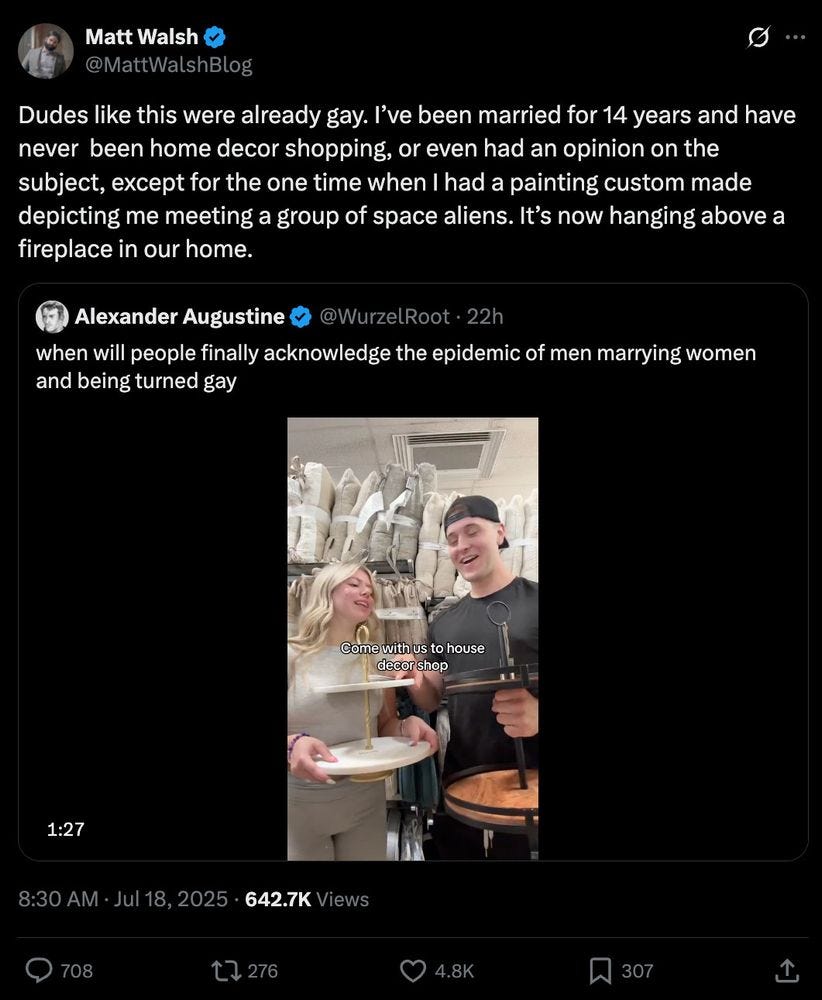
Augustine’s post presents a man in a nominally heterosexual marriage as being “turned gay” by joining his wife in implicitly feminine pursuits like “home decor shopping.” White masculine cool traditionally appropriated stereotypically feminine traits like emotional sensitivity (Lauren Goodlad called post-punk the purview of “men who feel and cry”) or big hair and makeup (think New York Dolls, Bowie, 80s hair metal) and made them signs of elite masculinity qua transgression, rebellion, innovation, and the like. In this exchange between Augustine and Walsh, however, femininity is something to be rejected, not appropriated, to the point that it’s not having sex with women that makes a guy straight or “gay,” but his ability to dominate or be dominated by either feminine inclinations like shopping or interior design or women themelves/one’s wife. Walsh and Augustine focus on the appearance of mastery and avoiding any whiff of either femininity or subordination (which are effectively the same to them), as though Walsh’s bad taste in art (a painting of him meeting extraterrestrials) laudable because it shows his fortitude against anything so feminine as a refined sense of aesthetic judgment.
It is perhaps no coincidence that this view of masculinity from a guy who goes by “Alexander Augustine” is basically the same as the ancient Greek one. David Halperin describes ancient Greeks as “puritans about virility…thematized as domination.” In this context, to be a man was to be full master of both oneself and others, top of a supposedly natural hierarchy of ruler and ruled. Anything that threatened to weaken that mastery - such as what Halperin calls the “excessive desire” that cannot be tamed by reason - was to
...This excerpt is provided for preview purposes. Full article content is available on the original publication.