Structuring and Designing the Future Force
Deep Dives
Explore related topics with these Wikipedia articles, rewritten for enjoyable reading:
-
Roman consul
11 min read
The article explicitly compares combatant commanders to Roman proconsuls, noting Rome had 28 across its provinces. Understanding the actual role, powers, and span of control of Roman provincial governors provides historical context for evaluating whether modern military command structures are appropriately sized.
-
Unified combatant command
12 min read
The article discusses major proposed restructuring of CCMDs including CENTCOM, EUCOM, AFRICOM, INDOPACOM, and others. Understanding the history, legal basis under Goldwater-Nichols, and evolution of the unified command structure would help readers evaluate whether the proposed consolidation is truly unprecedented or follows historical patterns.
-
Military–industrial complex
12 min read
The article critiques the 'entrenched oligopoly of five large defense contractors' and Congressional pork spending on programs DoD didn't request. Eisenhower's original warning and the concept's evolution provides essential historical and theoretical framework for understanding these acquisition reform arguments.
Welcome to the latest edition of Defense Tech and Acquisition.
Major shakeups planned for CCMDs and defense primes.
Senate passes the NDAA and the President signed it into law.
New strategies and tech to adapt and scale against China aggression.
The Army has a new hypersonic missile and seeks vendor IP
The Navy announces first PAE, RCO details, and a new frigate.
The Air Force pursues CCA Inc 2 - with no requirements.
Space Force rationalizing acq/ops and going alone in GEO.
Golden Dome gets AI help from former CDAO chief.
China threat brief continues to show carrier vulnerability.

Overmatched
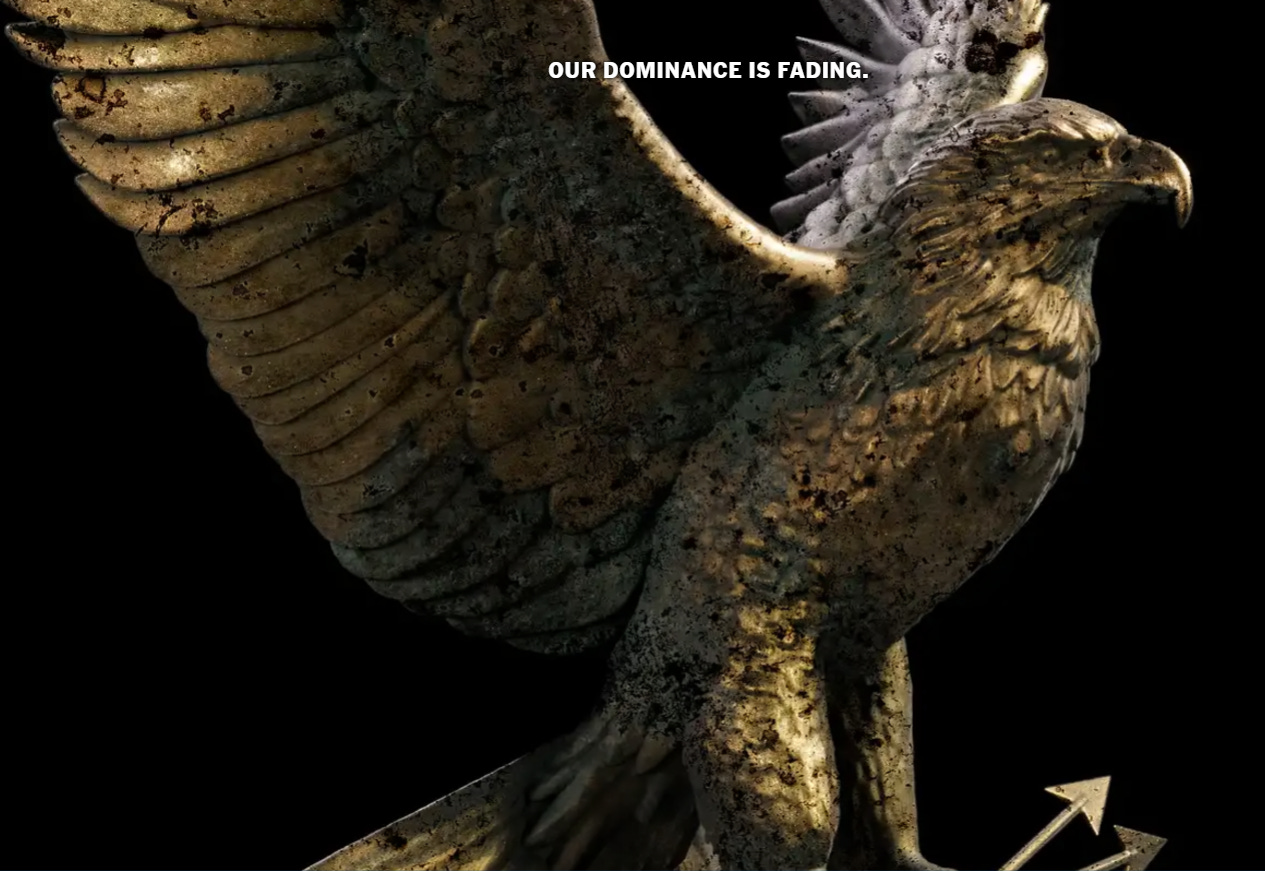
The NYT did a 3-part series on the potential conflict between the U.S. and China and our likely preparedness for that level of protracted warfare. Below is a short summary of those pieces.
Summary Points
Pete Hegseth said in the Pentagon’s war games against China, “we lose every time.”
When a senior Biden official received a China brief in 2021, he realized that “every trick we had up our sleeve, the Chinese had redundancy after redundancy.”
The assessment shows the Pentagon’s overreliance on expensive, vulnerable weapons as adversaries field cheap, technologically advanced ones.
It is an ancient and familiar pattern. Despite ample warnings, leaders trained in one set of assumptions, tactics and weapons fail to adapt to change.
A strong America has been crucial to a world in which freedom and prosperity are far more common than at nearly any other point in human history.
One reason is inertia in Congress and the Pentagon. The channels through which funds flow to weapons systems are deep and difficult to reroute.
An entrenched oligopoly of five large defense contractors wants to sell the Pentagon ever-costlier evolutions of the same ships, planes and missiles.
Another factor is military culture. Senior officers tend to be wedded to the technologies and tactics in which they made their careers.
There is also a conceptual failure: the idea that more sophisticated is always better - with systems that are bespoke, complex and wildly expensive.
In the short term, the transformation of the American military may require additional spending, primarily to rebuild our industrial base.
Ultimately, a stronger U.S. national security depends less on
This excerpt is provided for preview purposes. Full article content is available on the original publication.